2026 U.S. Sustainable Apparel Regulations: New Designer’s Guide

Anúncios
The 2026 U.S. regulatory landscape for sustainable apparel is evolving, demanding new designers understand forthcoming mandates on material sourcing, production, and transparency to ensure compliance and foster eco-conscious practices.
Anúncios
Navigating the 2026 U.S. regulatory landscape for sustainable apparel is no longer optional for emerging designers; it’s a foundational requirement for success and impact. As the fashion industry faces increasing scrutiny over its environmental footprint, understanding the forthcoming changes and recent updates is crucial for building a resilient, responsible, and future-proof brand.
Understanding the evolving regulatory environment
The U.S. government, alongside various state-level initiatives, is steadily increasing its focus on sustainability within the apparel sector. This evolving regulatory environment reflects a broader societal demand for greater corporate responsibility and environmental stewardship. For new designers, remaining informed about these shifts is not just about compliance, but about seizing opportunities for innovation and market differentiation.
Anúncios
Historically, the apparel industry has operated with relatively few environmental mandates compared to other sectors. However, the tide is turning. Concerns over textile waste, water pollution from dyeing processes, microplastic shedding, and unethical labor practices are pushing legislators to act. These legislative efforts aim to create a more circular economy, reduce waste, and promote transparency across the supply chain, fostering a level playing field for businesses committed to sustainable practices.
Key drivers of change
- Consumer demand: A growing segment of consumers actively seeks out sustainable and ethically produced clothing, pressuring brands to adapt.
- Environmental impact: The fashion industry’s significant contribution to global pollution and resource depletion necessitates systemic change.
- Technological advancements: Innovations in material science, manufacturing processes, and traceability tools make sustainable practices more feasible.
- Global precedents: European Union regulations, such as the EU Strategy for Sustainable and Circular Textiles, often influence U.S. policy discussions.
Understanding these drivers helps new designers anticipate future regulatory directions and proactively integrate sustainable practices into their business models. This forward-thinking approach can transform potential compliance challenges into strategic advantages, positioning brands as leaders in the sustainable fashion movement.
Key federal and state initiatives for 2026
As 2026 approaches, several federal and state initiatives are poised to significantly reshape the sustainable apparel landscape in the U.S. These regulations aim to address various aspects of the product lifecycle, from material sourcing to end-of-life management, demanding a comprehensive approach from designers. While federal legislation often sets broader guidelines, state-level mandates can introduce specific, sometimes more stringent, requirements that impact regional operations.
At the federal level, discussions continue around a potential national framework for extended producer responsibility (EPR) for textiles, which would hold brands accountable for the entire lifecycle of their products. This could involve fees to fund recycling infrastructure or mandates for take-back programs. Additionally, the Federal Trade Commission (FTC) is expected to update its Green Guides, providing clearer definitions for environmental marketing claims, which will directly impact how designers communicate their sustainability efforts to consumers.
California’s leadership in sustainability
- Textile recycling targets: California is exploring legislation to set ambitious targets for textile waste reduction and recycling, pushing brands to design for circularity.
- Chemical restrictions: The state continues to lead in restricting harmful chemicals in products, potentially impacting dyes, finishes, and material treatments used in apparel.
- Transparency in supply chains: Building on existing laws, California may expand requirements for supply chain transparency, particularly concerning labor practices and environmental impact.
Other states like New York are also introducing significant legislation, such as the Fashion Act, which proposes comprehensive due diligence requirements for large apparel and footwear companies regarding environmental and social impacts. While these initially target larger entities, their influence often trickles down, setting new industry standards that smaller brands and new designers will eventually need to meet. Staying abreast of these diverse legislative developments is crucial for strategic planning and risk mitigation.
Material sourcing and transparency requirements
The origin and composition of materials are central to sustainable apparel, and 2026 regulations will increasingly focus on these aspects. New designers must prepare for stricter requirements regarding the traceability of their raw materials and the transparency of their supply chains. Consumers and regulators alike are demanding to know where materials come from, how they are produced, and what environmental and social impacts they entail.
This includes mandates for disclosing the use of certain fibers, such as organic cotton or recycled polyester, and providing evidence of their certifications. For instance, claims of ‘organic’ or ‘recycled’ will likely require robust documentation and third-party verification to avoid accusations of greenwashing. Designers will need to engage more deeply with their suppliers, ensuring they meet specific environmental and social standards, and be prepared to provide this information to regulatory bodies and consumers.
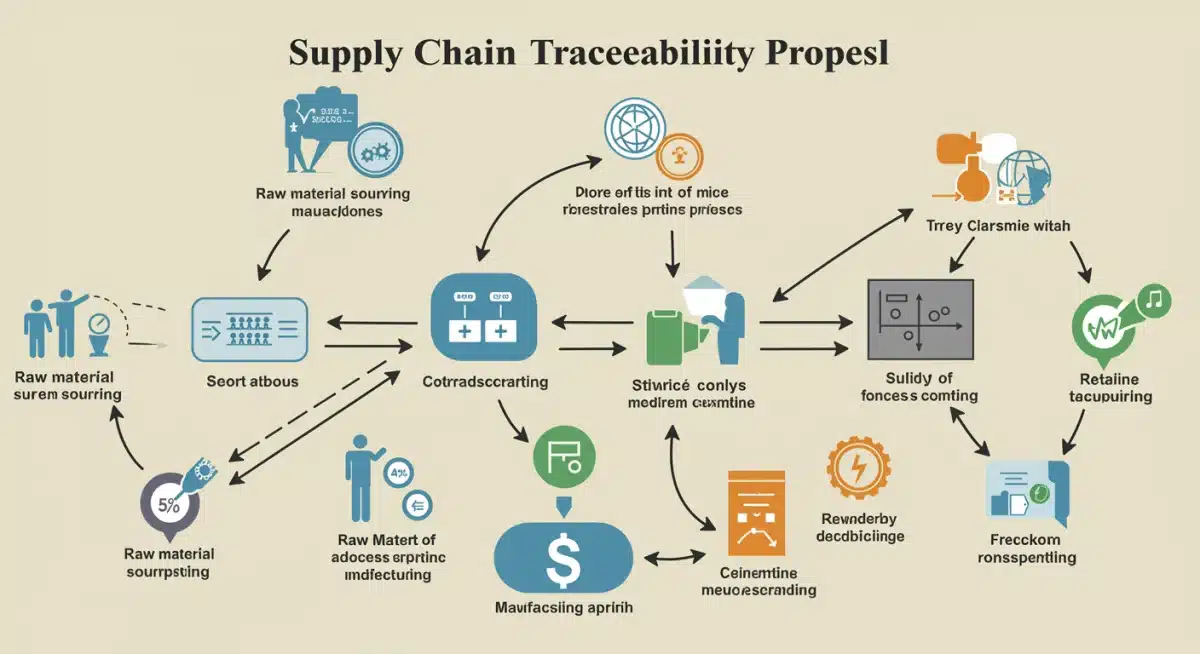
Enhanced traceability tools
- Blockchain technology: Increasingly used to create immutable records of a product’s journey from raw material to finished garment, enhancing transparency.
- Digital product passports: Proposed in some regions, these digital tools could provide comprehensive information about a product’s sustainability attributes, accessible via QR codes.
- Certification standards: Adherence to recognized certifications like GOTS (Global Organic Textile Standard) or GRS (Global Recycled Standard) will become even more critical.
The push for greater transparency extends beyond environmental impacts to include social considerations, such as fair labor practices and safe working conditions. New designers will need to implement due diligence processes to verify that their supply chain partners adhere to these standards. This comprehensive approach to material sourcing and transparency builds consumer trust and ensures compliance with forthcoming regulations, making it a cornerstone of sustainable design.
Designing for circularity and waste reduction
The imperative to reduce waste and promote circularity is a driving force behind the 2026 U.S. sustainable apparel regulations. New designers are increasingly expected to adopt design principles that minimize environmental impact throughout a product’s entire lifecycle, from creation to end-of-life. This paradigm shift moves away from the traditional linear ‘take-make-dispose’ model towards a more regenerative system where products and materials are kept in use for as long as possible.
Designing for circularity involves several key considerations, including material selection, product durability, repairability, and recyclability. Regulations may mandate specific design features, such as avoiding mixed-material compositions that are difficult to recycle, or requiring a certain percentage of recycled content in new garments. Furthermore, brands might face requirements to provide repair services or take back used garments for recycling or repurposing, shifting the burden of waste management onto producers.
Strategies for circular design
- Monochromatic material use: Designing garments from a single type of fiber simplifies the recycling process.
- Durability and timelessness: Creating high-quality, classic pieces that withstand trends and wear reduces the frequency of consumption.
- Design for disassembly: Using construction methods that allow for easy separation of components for repair or recycling.
- Upcycling and repurposing: Integrating processes for transforming discarded materials into new products, minimizing landfill waste.
Embracing circular design principles not only helps new designers comply with future regulations but also appeals to a growing eco-conscious consumer base. It fosters innovation in material science and production methods, leading to more resilient and responsible business models. By prioritizing waste reduction and circularity from the outset, designers can contribute significantly to a more sustainable fashion industry.
Impact on manufacturing and production processes
The 2026 U.S. regulatory landscape will also impose significant changes on manufacturing and production processes within the sustainable apparel sector. New designers must understand that these regulations will likely target aspects such as water usage, chemical management, energy consumption, and waste generation during the production phase. The goal is to minimize the environmental footprint of garment creation, pushing for cleaner and more efficient operations.
For instance, regulations might introduce stricter limits on the discharge of wastewater from dyeing and finishing facilities, requiring advanced filtration systems. There could also be mandates for the use of non-toxic dyes and chemicals, or requirements for brands to demonstrate a clear chemical management policy across their supply chain. Energy efficiency in factories, potentially through the adoption of renewable energy sources, may also become a regulated area, especially for those seeking to make ‘low carbon’ claims.
Technological shifts in production
- Waterless dyeing technologies: Innovations like CO2 dyeing or digital printing reduce water consumption and chemical use.
- Automated cutting and sewing: Minimizes material waste and increases efficiency, often with lower energy footprints.
- On-demand manufacturing: Reduces overproduction and inventory waste by producing garments only when ordered.
- Local production: Shortens supply chains, reducing transportation emissions and allowing for closer oversight of environmental practices.
These shifts necessitate that new designers thoroughly vet their manufacturing partners, ensuring they are equipped to meet these evolving standards. Collaborating with factories that are already investing in sustainable technologies and practices will be crucial. By integrating responsible production processes into their brand ethos, designers can not only comply with regulations but also build a reputation for ethical and environmentally conscious manufacturing.
Marketing and labeling for sustainable claims
As the U.S. regulatory landscape for sustainable apparel tightens, the way new designers market and label their eco-friendly products will face increased scrutiny. The Federal Trade Commission (FTC) is vigilant about preventing ‘greenwashing’ – misleading claims about environmental benefits – and 2026 is expected to bring clearer, more enforceable guidelines. Designers must ensure that their sustainability claims are accurate, substantiated, and easily understood by consumers, avoiding vague or overly broad statements.
This means moving beyond generic terms like ‘eco-friendly’ or ‘sustainable’ without providing specific evidence. Labels will likely need to detail the exact percentage of recycled content, the specific certifications achieved, or the precise environmental benefit of a particular material or process. For example, stating ‘made with recycled polyester’ will need to be backed by verifiable data on the recycled content and the source of the material. Clear, concise, and truthful communication will be paramount.
Guidelines for credible claims
- Specificity: Clearly define what ‘sustainable’ means for your product (e.g., ‘made with 70% organic cotton,’ ‘produced using 50% less water’).
- Substantiation: Back up all claims with credible evidence, such as third-party certifications, life cycle assessments, or verifiable data.
- Transparency: Provide consumers with easy access to detailed information about your supply chain, materials, and production processes.
- Avoid overstatements: Do not make claims that imply a product is entirely sustainable if only a portion of it is. Focus on verifiable attributes.
New designers should view these regulations not as obstacles, but as an opportunity to build trust and credibility with their audience. By being transparent and precise in their marketing and labeling, they can differentiate their brand in a competitive market and educate consumers about the true value of sustainable fashion. Investing in robust data collection and clear communication strategies will be essential for navigating these evolving standards.
Preparing your brand for 2026 and beyond
The dynamic 2026 U.S. regulatory landscape for sustainable apparel presents both challenges and unparalleled opportunities for new designers. Proactive preparation is key to not only ensuring compliance but also to building a resilient, ethical, and market-leading brand. The time to integrate sustainability into every facet of your business model is now, rather than waiting for regulations to become mandatory.
Start by conducting a thorough audit of your current supply chain, identifying areas where you can enhance transparency, reduce environmental impact, and improve social practices. Engage with suppliers to understand their sustainability commitments and explore innovative materials and production technologies. Education is paramount; stay informed about legislative developments at both federal and state levels, and consider joining industry associations that advocate for sustainable practices and provide valuable resources.
Strategic steps for new designers
- Invest in education and training: Equip yourself and your team with knowledge about sustainable design, materials, and regulatory compliance.
- Build a transparent supply chain: Partner with suppliers who share your commitment to sustainability and are willing to provide verifiable data.
- Embrace circular design principles: Design products for longevity, repairability, and recyclability from the outset.
- Develop clear sustainability communication: Ensure all marketing and labeling claims are accurate, specific, and substantiated to build consumer trust.
- Advocate for change: Participate in industry dialogues and support policies that promote a more sustainable fashion ecosystem.
By taking these strategic steps, new designers can transform regulatory compliance from a burden into a competitive advantage. This forward-thinking approach will not only safeguard your brand against future penalties but will also position you as a leader in the movement towards a more responsible and sustainable fashion industry.
| Key Regulatory Area | Impact for New Designers |
|---|---|
| Material Sourcing & Transparency | Increased demand for verifiable certifications and detailed supply chain disclosure. |
| Circular Design & Waste Reduction | Mandates for product durability, recyclability, and potential take-back programs. |
| Manufacturing & Production | Stricter limits on water usage, chemical discharge, and energy consumption. |
| Marketing & Labeling | Clearer FTC Green Guides, requiring specific, substantiated claims to avoid greenwashing. |
Frequently asked questions about sustainable apparel regulations
The main goal is to reduce the environmental and social impact of the apparel industry by promoting circularity, transparency, and responsible production. This includes minimizing waste, restricting harmful chemicals, and ensuring ethical labor practices throughout the supply chain.
Small and new designers will need to prioritize sustainable material sourcing, implement transparent supply chain practices, and ensure their marketing claims are substantiated. While some initial mandates might target larger brands, the industry standards will shift, requiring all players to adapt.
Designing for circularity involves creating products that are durable, repairable, and easily recyclable. This means selecting mono-materials, avoiding complex blends, and considering a garment’s end-of-life from the initial design phase to keep resources in use longer.
While a comprehensive federal Extended Producer Responsibility (EPR) scheme is still under discussion, several states are exploring or implementing such mandates for textiles. New designers should anticipate potential requirements for product take-back programs or contributions to recycling infrastructure funds.
Designers must ensure all sustainability claims are specific, accurate, and backed by verifiable evidence. Avoid vague terms and provide clear data, certifications, or detailed information about your sustainable practices to align with anticipated FTC Green Guides updates and avoid greenwashing accusations.
Conclusion
The 2026 U.S. regulatory landscape for sustainable apparel marks a pivotal moment for the fashion industry, particularly for new designers. These forthcoming regulations are not merely compliance hurdles but represent a fundamental shift towards a more responsible, transparent, and circular economy. By proactively embracing sustainable material sourcing, designing for circularity, optimizing production processes, and communicating claims with integrity, new designers can build brands that are not only compliant but also resonate deeply with increasingly conscious consumers. The future of fashion is sustainable, and those who lead this change will define the industry for years to come.