US Circular Economy Initiative: Diverting Textile Waste by 2030

Anúncios
A significant new circular economy initiative in the US is set to divert 2 million tons of textile waste annually by 2030, addressing environmental concerns and promoting sustainable industry practices.
Anúncios
The fashion and textile industries are at a critical juncture, facing immense pressure to adopt more sustainable practices. A groundbreaking new circular economy initiative has been launched in the US, aiming to divert 2 million tons of textile waste annually by 2030. This ambitious goal underscores a collective commitment to transforming how textiles are produced, consumed, and discarded, moving away from a linear ‘take-make-dispose’ model towards one that values resource longevity and regeneration.
Understanding the textile waste crisis in the US
The sheer volume of textile waste generated in the United States each year is staggering, posing significant environmental and economic challenges. From fast fashion trends to a lack of robust recycling infrastructure, several factors contribute to this growing problem. Addressing this crisis requires a multi-faceted approach, encompassing everything from consumer behavior to industrial innovation.
Anúncios
The scale of the problem
Every year, millions of tons of textiles end up in US landfills, representing a massive loss of valuable resources. These discarded materials often take hundreds of years to decompose, releasing harmful greenhouse gases and leachate into the environment. The environmental footprint extends beyond disposal, impacting water resources, chemical usage, and energy consumption during production.
- Landfill burden: Textiles comprise a significant portion of municipal solid waste, contributing to landfill overflow.
- Resource depletion: Virgin materials are continuously extracted to meet demand, straining natural resources.
- Pollution: Dyes and chemicals from textile production contaminate water, while synthetic fibers release microplastics.
- Economic loss: The value embedded in discarded textiles is lost, representing missed economic opportunities.
Drivers of textile waste accumulation
Several societal and industrial trends exacerbate textile waste. The rise of fast fashion, characterized by inexpensive, trendy clothing with a short lifespan, encourages frequent purchases and rapid disposal. Additionally, insufficient infrastructure for textile collection, sorting, and recycling means that even well-intentioned consumers often lack viable options for responsible disposal.
Consumer habits play a crucial role. Many individuals are unaware of the environmental impact of their clothing choices or simply lack convenient access to textile recycling programs. Educating the public and providing accessible solutions are key steps in mitigating this crisis.
The vision of a circular economy for textiles
A circular economy for textiles fundamentally rethinks the entire lifecycle of clothing and fabrics. Instead of a linear model, it envisions a system where materials are kept in use for as long as possible, their value is maximized, and waste is minimized. This initiative represents a significant step towards achieving that vision within the US textile industry.
Core principles of circularity
The circular economy operates on several foundational principles designed to create a regenerative system. These principles guide actions from design to disposal, ensuring that resources remain within the economic loop and environmental impact is reduced.
- Design for durability: Creating products that are built to last, reducing the need for frequent replacement.
- Material reuse: Prioritizing the repurposing and resale of garments and fabrics.
- High-value recycling: Developing technologies to effectively recycle textiles into new, high-quality materials.
- Resource regeneration: Utilizing renewable resources and ensuring materials can be safely returned to nature or industry.
Benefits of circular textile systems
Transitioning to a circular textile economy offers a multitude of benefits, extending beyond environmental protection to economic and social advantages. It fosters innovation, creates new business models, and can lead to more resilient supply chains.
Environmentally, it significantly reduces landfill waste, conserves natural resources, and lowers greenhouse gas emissions. Economically, it can stimulate job creation in areas like repair, resale, and advanced recycling, while also reducing reliance on volatile raw material markets. Socially, it promotes more conscious consumption and production patterns.
Key pillars of the new US circular economy initiative
The ambitious goal to divert 2 million tons of textile waste annually by 2030 is supported by several strategic pillars. These interconnected components address various stages of the textile lifecycle, from design and manufacturing to consumption and end-of-life management, fostering a holistic transformation.
Innovation in recycling technologies
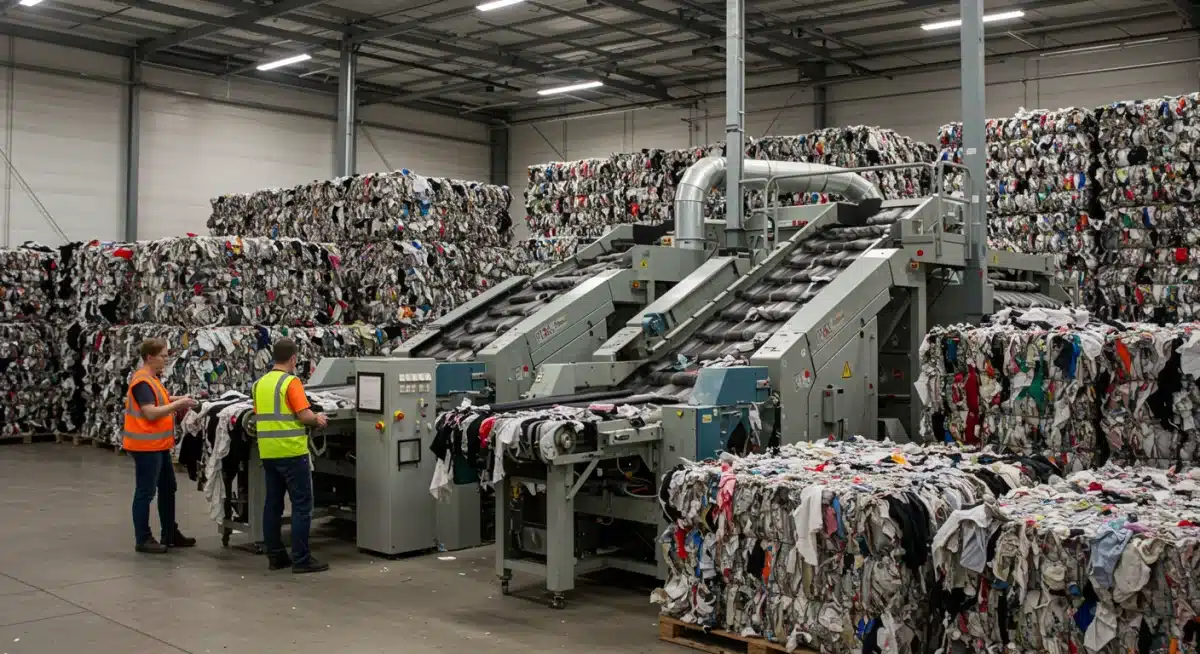
Central to this initiative is the advancement and scaling of textile recycling technologies. Current mechanical recycling methods often degrade fiber quality, limiting applications. The focus is on developing and commercializing chemical recycling processes that can break down textiles to their molecular components, allowing for the creation of new, high-quality fibers.
Investment in research and development is crucial to overcome current technological barriers. This includes exploring enzymatic processes, solvent-based recycling, and other cutting-edge solutions that can handle complex textile blends and recover a wider range of materials.
Extended producer responsibility (EPR) frameworks
EPR schemes are a cornerstone of many circular economy models, placing the responsibility for a product’s end-of-life management on the producers. In the context of textiles, this would mean brands and manufacturers contribute to funding and operating collection, sorting, and recycling infrastructure. This incentivizes them to design more durable, repairable, and recyclable products.
Implementing effective EPR policies requires careful collaboration between government, industry, and consumers. It ensures that the environmental costs of products are internalized, promoting a more equitable and sustainable system.
Consumer engagement and education
Shifting consumer behavior is vital for the success of any circular economy initiative. This pillar focuses on educating the public about the environmental impact of their textile choices and providing clear, accessible pathways for responsible consumption and disposal. Campaigns will promote conscious purchasing, clothing care, repair, and donation.
- Awareness campaigns: Informing consumers about textile waste statistics and impacts.
- Repair and care guidance: Empowering individuals to extend the life of their garments.
- Collection points: Expanding accessible drop-off locations for unwanted textiles.
- Transparency: Encouraging brands to provide clear information on product sustainability and recyclability.
By fostering a culture of conscious consumption, the initiative aims to reduce the volume of textiles entering the waste stream in the first place, complementing efforts in recycling and reuse.
Collaboration and partnerships driving change
Achieving a goal as ambitious as diverting 2 million tons of textile waste annually by 2030 necessitates broad collaboration across various sectors. This initiative is built on the premise that collective action, involving government, industry, academia, and non-profit organizations, is essential for systemic change.
Industry alliances and consortiums
Leading textile manufacturers, fashion brands, retailers, and recyclers are forming powerful alliances to share knowledge, pool resources, and develop common standards. These consortiums aim to create a unified approach to circularity, addressing challenges that no single entity could tackle alone. Collaborative efforts often focus on developing standardized sorting protocols, investing in shared recycling infrastructure, and advocating for supportive policies.
The involvement of major industry players lends significant weight to the initiative, demonstrating a commitment to sustainability that goes beyond individual corporate social responsibility programs. These alliances are crucial for driving innovation and scaling solutions.
Governmental support and policy frameworks
Government agencies play a pivotal role in creating an enabling environment for the circular economy. This includes developing supportive policies, offering incentives for sustainable practices, and investing in critical infrastructure. Policy frameworks can range from mandatory recycling targets to funding for green technology research and development.
- Legislation: Enacting laws that promote textile recycling and sustainable production.
- Grants and subsidies: Providing financial support for circular economy businesses and research.
- Infrastructure development: Investing in advanced sorting and recycling facilities.
- Public procurement: Using government purchasing power to favor circular products and services.
Without clear governmental direction and support, the transition to a fully circular textile economy would be significantly hampered. Policy acts as a catalyst for widespread adoption and compliance.
Academic research and development
Universities and research institutions are critical partners, providing the scientific and technological breakthroughs needed to advance textile circularity. Their work spans material science, chemical engineering, lifecycle assessments, and economic modeling, offering crucial insights and innovative solutions.
Collaboration with academia ensures that the initiative is grounded in scientific evidence and utilizes the latest research to inform strategies and overcome technical challenges. This intellectual partnership is vital for long-term success.
Economic and environmental impacts of the initiative
The successful implementation of this new circular economy initiative promises substantial economic and environmental benefits for the United States. Beyond merely reducing waste, it aims to foster a more resilient, innovative, and sustainable textile sector, creating new opportunities and mitigating ecological damage.
Job creation and economic growth
A shift towards circularity is not just about waste reduction; it’s about reimagining economic models. New industries will emerge around textile collection, sorting, repair, remanufacturing, and advanced recycling. This will lead to the creation of green jobs across various skill levels, stimulating local economies and fostering innovation.
The investment in new infrastructure and technologies will also drive economic growth, attracting capital and fostering a competitive advantage for US businesses in the global sustainable fashion market. Economic benefits extend to reduced reliance on imported virgin materials and increased resource security.
Reduced environmental footprint
The primary environmental benefit of diverting 2 million tons of textile waste annually by 2030 is a significant reduction in landfill burden and associated pollution. This directly translates to lower greenhouse gas emissions from decomposing textiles and less leachate contamination. Furthermore, by keeping materials in circulation, the demand for virgin resources (like cotton, polyester, and water) is reduced, lessening the environmental impact of extraction and production.
- Lower emissions: Reduced methane from landfills and CO2 from virgin production.
- Resource conservation: Less water, land, and energy used in textile manufacturing.
- Pollution prevention: Decreased chemical discharge and microplastic release.
- Biodiversity protection: Less pressure on ecosystems from resource extraction.
The initiative represents a proactive step towards a more sustainable future, addressing climate change and resource scarcity head-on through systemic change in the textile sector.
Challenges and opportunities on the path to 2030
While the initiative sets an inspiring goal, the journey to diverting 2 million tons of textile waste annually by 2030 is not without its challenges. Overcoming these hurdles will require sustained effort, adaptive strategies, and continued collaboration. However, these challenges also present significant opportunities for innovation and leadership.
Overcoming infrastructural limitations
One of the most significant challenges is the current lack of widespread, efficient infrastructure for textile collection, sorting, and advanced recycling. Building and scaling these facilities across the US will require substantial investment and strategic planning. The complexity of mixed textile waste, often containing various fiber types and embellishments, makes sorting particularly difficult and costly.
Developing standardized collection systems and automated sorting technologies will be crucial. This includes investing in optical sorting equipment and artificial intelligence to efficiently categorize textiles for different recycling streams.
Technological scaling and market adoption
Many advanced recycling technologies are still in their nascent stages or operate at pilot scale. Scaling these technologies to handle millions of tons of waste requires significant capital, engineering expertise, and robust supply chains for both feedstock and end products. Additionally, creating strong market demand for recycled fibers and upcycled materials is essential to close the loop effectively.
Incentivizing brands to incorporate recycled content into their products and educating consumers about the value of these materials will be key to driving market adoption and ensuring economic viability for circular businesses.
Policy harmonization and consumer behavior change
Achieving consistent policy frameworks across different states and municipalities can be complex, yet it is vital for creating a cohesive national approach to textile circularity. Furthermore, deeply entrenched consumer habits of fast consumption and disposal require sustained educational efforts and convenient alternatives to shift behavior effectively.
Opportunities lie in pioneering new business models, such as rental services, repair networks, and resale platforms, which can extend product lifespans and engage consumers in circular practices. The initiative can serve as a blueprint for other sectors, demonstrating the power of a concerted effort towards sustainability.
The future of textiles: A sustainable and circular vision
The launch of the new US circular economy initiative represents a pivotal moment for the textile industry. With its ambitious target to divert 2 million tons of textile waste annually by 2030, it signals a clear commitment to a more sustainable future. This is not merely an environmental endeavor; it is an economic transformation that promises innovation, job creation, and enhanced resource security.
Towards a regenerative system
Ultimately, the vision is to create a textile system that is regenerative by design, where waste is eliminated, materials are circulated, and natural systems are restored. This involves a continuous cycle of designing for longevity, optimizing material use, facilitating reuse and repair, and enabling high-quality recycling. The initiative aims to embed these principles deeply within the US textile value chain.
Success will be measured not just by tons diverted from landfills but by the systemic changes that lead to a fundamentally more sustainable and responsible industry. It requires a paradigm shift from all stakeholders, recognizing that textiles are valuable resources, not disposable commodities.
Leading by example
The US initiative has the potential to set a global precedent, demonstrating how a major economy can tackle its textile waste crisis through collaborative and innovative circular economy strategies. By achieving its 2030 goal, the US can showcase the feasibility and benefits of circularity, inspiring other nations and industries to follow suit. This leadership is crucial in addressing the global environmental challenges posed by textile consumption.
The path ahead is challenging, but the collective will and strategic framework provided by this initiative offer a compelling roadmap. It is a call to action for everyone involved, from designers and manufacturers to policymakers and consumers, to play their part in weaving a more sustainable future for textiles.
| Key Point | Brief Description |
|---|---|
| 2030 Diversion Goal | Aim to divert 2 million tons of textile waste annually from landfills. |
| Circular Economy Focus | Shifting from linear to regenerative textile systems. |
| Key Pillars | Includes innovation, EPR, consumer engagement, and collaboration. |
| Impacts | Expected job creation, economic growth, and reduced environmental footprint. |
Frequently asked questions about the US textile circular economy initiative
The primary goal is to divert 2 million tons of textile waste annually from landfills across the United States by the year 2030. This ambitious target aims to significantly reduce environmental impact and foster sustainable practices within the textile industry.
The initiative addresses fast fashion by promoting design for durability, encouraging repair and reuse, and establishing robust recycling infrastructure. It also aims to educate consumers about conscious consumption, shifting away from the disposable culture often associated with fast fashion trends.
EPR frameworks place the responsibility for textile waste management on producers, incentivizing them to design more sustainable and recyclable products. This financial and operational responsibility encourages brands to invest in circular solutions and contribute to recycling infrastructure.
Economically, the initiative is expected to create new green jobs in areas like textile collection, sorting, repair, and advanced recycling. It will also foster innovation, attract investments, and enhance resource security by reducing reliance on virgin materials, stimulating local economies.
Individuals can contribute by making conscious purchasing decisions, extending the lifespan of their clothes through care and repair, donating usable items, and utilizing accessible textile recycling programs. Supporting brands committed to circularity also plays a vital role in the initiative’s success.
Conclusion
The launch of the New Circular Economy Initiative Launched in US Aims to Divert 2 Million Tons of Textile Waste Annually by 2030 marks a pivotal moment in the nation’s journey toward sustainability. This comprehensive plan, encompassing technological innovation, policy reform, and extensive collaboration, offers a robust framework for transforming the textile industry. By addressing the pervasive issue of textile waste head-on, the initiative not only promises significant environmental benefits but also paves the way for new economic opportunities and a more responsible consumption culture. Its success will undoubtedly serve as a beacon for other sectors and nations striving for a truly circular future.