Mastering Circular Design: A 2026 Curriculum Guide for Eco-Fashion Innovators
Anúncios
Mastering Circular Design: A 2026 Curriculum Guide for Eco-Fashion Innovators
The fashion industry stands at a critical juncture. For decades, its linear ‘take-make-dispose’ model has fueled environmental degradation, resource depletion, and social inequalities. However, a transformative shift is underway, driven by a growing awareness of sustainability and the urgent need for systemic change. This shift is embodied in the principles of circular design, a revolutionary approach that seeks to eliminate waste and pollution, circulate products and materials at their highest value, and regenerate natural systems. As we look towards 2026 and beyond, the demand for professionals skilled in circular fashion design is skyrocketing, making a specialized curriculum not just relevant, but essential for aspiring eco-fashion innovators.
Anúncios
This comprehensive guide outlines a forward-thinking curriculum for mastering circular fashion design by 2026. It’s designed for students, educators, and industry professionals eager to lead the charge in creating a regenerative and equitable fashion future. Our focus is on equipping individuals with the knowledge, skills, and mindset to innovate within a circular economy framework, moving beyond mere sustainability to true regenerative design.
Understanding the Foundations of Circular Fashion Design
Before diving into advanced concepts, a solid understanding of the core principles of the circular economy is paramount. This foundational module sets the stage for all subsequent learning in circular fashion design.
Anúncios
1. The Linear vs. Circular Economy Model
Students will gain a deep understanding of the differences between the traditional linear model (extract, produce, consume, dispose) and the circular model. This includes analyzing the environmental, social, and economic impacts of both systems. Case studies of companies successfully transitioning to circular models will be explored.
2. Key Principles of Circularity
- Eliminate Waste and Pollution: Designing out waste from the outset, rather than managing it at the end of the product lifecycle. This involves understanding material flows and identifying potential sources of waste.
- Circulate Products and Materials: Keeping products and materials in use for as long as possible through strategies like repair, reuse, refurbishment, and recycling. This necessitates designing for durability and disassembly.
- Regenerate Natural Systems: Moving beyond simply reducing harm to actively restoring and enhancing natural capital. This includes practices like regenerative agriculture for natural fibers and pollution prevention.
3. Systems Thinking in Fashion
A crucial aspect of circular fashion design is adopting a systems thinking approach. This means understanding how all components of the fashion value chain are interconnected and how decisions in one area can impact others. Students will learn to map value chains, identify leverage points for intervention, and consider the holistic impact of their design choices.
Module 1: Sustainable Materials and Textile Innovation
The choice of materials is perhaps the most critical determinant of a garment’s environmental footprint. This module delves into the science and ethics of textile selection, focusing on circularity.
1. Bio-based and Regenerative Materials
- Organic and Regenerative Fibers: In-depth study of cotton, linen, hemp, wool, and silk produced using organic and regenerative farming methods that improve soil health, biodiversity, and water retention.
- Innovative Bio-materials: Exploration of emerging materials like mushroom leather (Mylo), algae-based textiles, pineapple leaf fibers (Piñatex), and citrus waste fabrics. Understanding their production processes, properties, and potential for scalability.
2. Recycled and Upcycled Textiles
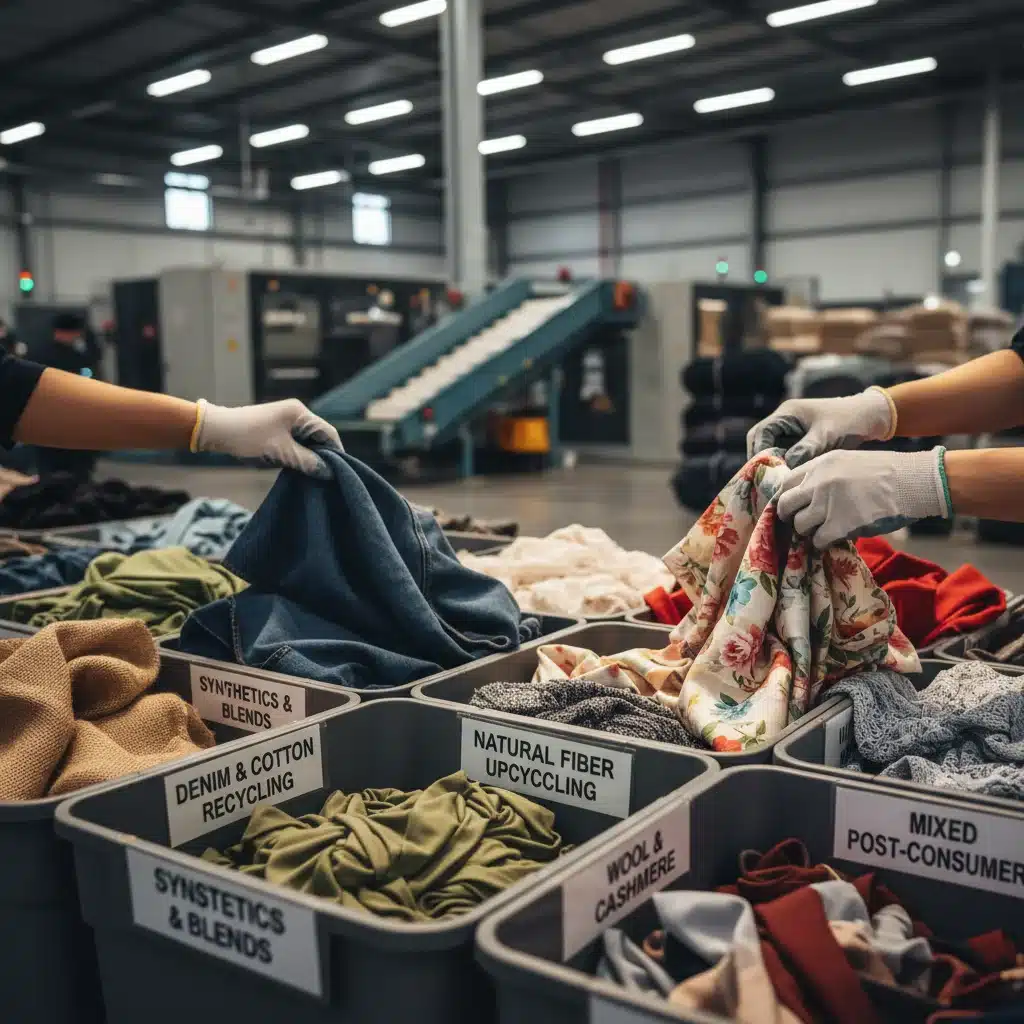
- Pre-consumer and Post-consumer Recycling: Differentiating between these two forms of recycling and understanding the technologies involved (mechanical vs. chemical recycling). Focus on challenges and opportunities in textile-to-textile recycling.
- Upcycling Techniques: Practical workshops on transforming textile waste into new, higher-value products. This includes creative cutting, deconstruction, and reconstruction methods.
3. Material Lifecycle Assessment (LCA)
Students will learn to conduct basic LCAs to evaluate the environmental impact of different materials from raw material extraction to end-of-life. This includes understanding metrics like carbon footprint, water footprint, and ecotoxicity. Tools and software for LCA will be introduced.
4. Dyeing and Finishing Innovations
Exploring low-impact dyeing methods (e.g., natural dyes, digital printing, closed-loop dyeing systems) and sustainable finishing treatments that reduce water, energy, and chemical consumption. Focus on non-toxic alternatives and biodegradable finishes.
Module 2: Designing for Longevity and Resource Efficiency
At the heart of circular fashion design is the concept of designing products that last longer and can be kept in use. This module focuses on strategies for durability, versatility, and emotional connection.
1. Design for Durability and Quality
- Material Selection for Longevity: Choosing appropriate materials that withstand wear and tear, maintain aesthetic appeal, and can be easily repaired.
- Construction Techniques: Mastering garment construction methods that enhance durability, such as reinforced seams, robust fastenings, and quality craftsmanship.
- Timeless Aesthetic: Designing garments that transcend fleeting trends, encouraging prolonged use and reducing the desire for constant replacement.
2. Design for Repair, Reuse, and Adaptability
- Modular Design: Creating garments with interchangeable components (e.g., detachable sleeves, collars) that allow for customization, repair, and extended wear.
- Repairability Features: Incorporating design elements that facilitate easy repair, such as accessible seams, standard button sizes, and readily available replacement parts.
- Multi-functional and Adaptable Garments: Designing items that can be worn in multiple ways or adapt to different body shapes or stages of life (e.g., maternity wear, adjustable sizing).
3. Zero-Waste Pattern Cutting
Practical workshops on advanced pattern cutting techniques that minimize or eliminate textile waste during the cutting process. This includes tessellation, whole garment knitting, and innovative draping methods. Students will develop a portfolio of zero-waste designs.
Module 3: End-of-Life Strategies and Closed-Loop Systems
A truly circular product is designed with its end-of-life in mind. This module explores how to create closed-loop systems where materials are continuously cycled back into production.
1. Design for Disassembly and Recyclability
- Mono-material Design: Prioritizing garments made from a single type of fiber or easily separable components to simplify recycling processes.
- Fastener and Trims Consideration: Selecting fasteners (zippers, buttons) and trims that are either recyclable with the main fabric or easily removable for separate recycling/reuse.
- Digital Product Passports: Understanding the concept and application of digital product passports that provide information on a garment’s composition, care instructions, and end-of-life options.
2. Reverse Logistics and Take-Back Schemes
Analyzing successful models for collecting used garments from consumers, including brand take-back programs, textile collection points, and rental/subscription services. Understanding the operational challenges and opportunities in reverse logistics.
3. Industrial Symbiosis and Waste Valorization
Exploring how textile waste can be valorized and used as a resource in other industries (e.g., insulation, automotive industry). Understanding the potential for cross-sector collaboration to create industrial symbiosis.
Module 4: Business Models for a Circular Fashion Economy
Circular design requires innovative business models that support product longevity and service-based approaches. This module equips students with the entrepreneurial skills to thrive in this new landscape.
1. Product-as-a-Service (PaaS) Models
- Rental and Subscription Services: Designing garments for multiple users through rental or subscription models, reducing individual ownership and maximizing product utility.
- Leasing and Maintenance Contracts: Exploring models where brands retain ownership of garments and offer maintenance and repair services, ensuring product longevity.
2. Resale and Second-Hand Market Integration
Understanding the growing importance of the resale market (e.g., Vestiaire Collective, The RealReal) and how brands can integrate second-hand sales into their core business strategies. This includes authentication, refurbishment, and marketing for pre-owned items.
3. Collaborative Consumption and Community Models
Exploring the potential of shared wardrobes, clothing swaps, and community-based repair initiatives to extend garment life and reduce consumption.
4. Measuring Circularity and Impact Reporting
Learning various metrics and frameworks for assessing the circularity of products and business models (e.g., Ellen MacArthur Foundation’s Circulytics). Understanding how to effectively communicate environmental and social impact to stakeholders and consumers.
Module 5: Digital Tools and Technologies for Circularity
Technology plays a pivotal role in enabling and accelerating the transition to circular fashion. This module focuses on the digital competencies required for modern circular fashion design.
1. 3D Design and Virtual Prototyping
Mastering 3D design software (e.g., CLO3D, Optitex) to reduce physical sampling, minimize material waste, and accelerate the design process. Creating realistic virtual prototypes for fit and aesthetic evaluation.
2. Blockchain for Supply Chain Transparency
Understanding how blockchain technology can enhance traceability, verify material origins, and ensure ethical production practices throughout the supply chain. Exploring its role in product authentication and circularity tracking.
3. AI and Data Analytics for Material Management
Utilizing artificial intelligence and data analytics to optimize material sourcing, predict textile waste streams, and improve recycling efficiency. Exploring predictive maintenance for garments and personalized repair services.
4. Digital Product Passports and IoT Integration
Deep dive into the implementation of digital product passports (DPPs) using QR codes, NFC tags, or RFID chips embedded in garments. Understanding how IoT (Internet of Things) can enable real-time tracking and facilitate end-of-life management.
Module 6: Ethical Considerations and Social Impact
Circular design extends beyond environmental concerns to encompass social equity and ethical production. This module ensures a holistic approach to sustainable fashion.
1. Fair Labor Practices and Supply Chain Ethics
Examining labor conditions in textile production, fair wages, safe working environments, and the prevention of forced labor. Understanding ethical sourcing and supplier auditing processes.
2. Cultural Appropriation vs. Appreciation
Developing a critical understanding of cultural appropriation in fashion and fostering respectful design practices that celebrate diverse cultures without exploitation.
3. Inclusivity and Accessibility in Design
Designing for diverse body types, abilities, and cultural backgrounds. Exploring adaptive fashion and universal design principles to ensure fashion is accessible to all.
4. Consumer Behavior and Education
Understanding consumer psychology related to fast fashion and encouraging conscious consumption. Developing strategies for educating consumers on garment care, repair, and circularity.

Practical Application and Capstone Project
Theory is only as good as its application. This curriculum culminates in hands-on projects that allow students to apply their knowledge in real-world scenarios.
1. Industry Partnerships and Internships
Collaborating with leading sustainable fashion brands, textile recyclers, and innovation hubs to provide students with practical experience and networking opportunities. Internships focused on circular fashion design principles will be highly encouraged.
2. Circular Design Challenge
Students will participate in a design challenge, tasked with creating a fully circular garment or collection, from material sourcing to end-of-life strategy. This project will require detailed documentation of their design process, material choices, and proposed circular business model.
3. Portfolio Development
Throughout the curriculum, students will build a robust portfolio showcasing their circular design projects, material innovations, and sustainable business model proposals. This portfolio will be essential for demonstrating their expertise to potential employers or investors.
4. Public Exhibition and Pitch
The capstone project will conclude with a public exhibition and a pitch session, where students present their circular design solutions to a panel of industry experts, investors, and the wider community. This provides valuable feedback and potential opportunities for commercialization.
The Future of Circular Fashion Design Education
The field of circular fashion design is dynamic and ever-evolving. Therefore, a successful curriculum must also be adaptable and forward-looking. Continuous research, industry collaboration, and integration of emerging technologies will be crucial to keeping this curriculum at the forefront of sustainable innovation.
By 2026, the fashion industry will demand a new breed of designers and innovators – those who not only understand aesthetics and trends but also possess a deep commitment to environmental stewardship and social responsibility. This curriculum aims to cultivate these leaders, empowering them to transform the fashion landscape from a linear, extractive model to a regenerative, circular one.
Aspiring eco-fashion innovators are invited to embrace this comprehensive guide as a roadmap to mastering circular fashion design. The journey is challenging, but the rewards – a thriving industry, a healthier planet, and a more equitable society – are immeasurable. Let’s design the future of fashion, circularly.
Further Exploration: Key Principles of Circular Fashion Design
To truly master circular fashion design, it’s vital to continually revisit and deepen understanding of its fundamental tenets. These principles are not isolated concepts but rather interconnected pillars supporting a holistic approach to fashion production and consumption. They guide every decision, from initial concept to final disposal.
Design for the Environment
This principle focuses on minimizing negative environmental impacts throughout a product’s entire lifecycle. It means selecting materials with low ecological footprints, reducing water and energy consumption in manufacturing, avoiding hazardous chemicals, and designing for biodegradability or recyclability. For instance, a designer committed to circular fashion design would prioritize organic cotton over conventional cotton, or explore innovative closed-loop dyeing processes that recapture and reuse water and dyes, significantly reducing pollution.
Design for Longevity and Utility
Fast fashion thrives on planned obsolescence and fleeting trends. In contrast, circular fashion design emphasizes creating garments that are durable, timeless, and versatile. This involves choosing high-quality materials and construction techniques that ensure a long lifespan. It also means designing pieces that can be easily repaired, customized, or adapted to different styles and occasions, thereby extending their utility and emotional value to the consumer. Imagine a jacket designed with easily replaceable zippers and a modular system that allows for seasonal adaptations – this embodies design for longevity.
Design for Resource Recovery
At the end of a product’s first life, circular fashion design ensures that its materials and components can be recovered and reused, recycled, or biodegraded safely. This necessitates designing for disassembly, meaning garments are constructed in a way that allows for easy separation of different material types (e.g., removing buttons before recycling fabric). It also involves using mono-materials whenever possible to simplify recycling processes. The goal is to keep materials circulating within the economy, retaining their value and preventing them from becoming waste.
Design for Innovative Business Models
Beyond the physical product, circularity demands a rethinking of how fashion is consumed and owned. This includes exploring business models like product-as-a-service (e.g., rental, subscription), resale platforms, and repair services. These models shift the focus from selling new items to providing access to clothing and maintaining its value over time. For example, a brand might offer a take-back program where customers return old garments, which are then repaired, upcycled, or recycled, closing the loop and fostering brand loyalty while minimizing environmental impact. These models are integral to the success of circular fashion design.
Design for Transparency and Traceability
Consumers and regulators increasingly demand to know the origins and journey of their clothing. Circular fashion design embraces full supply chain transparency, from raw material extraction to manufacturing and distribution. Technologies like blockchain and digital product passports are instrumental in providing this visibility, allowing for tracking of materials, ethical labor practices, and environmental performance. This transparency builds trust and empowers consumers to make informed choices, reinforcing the values of circularity.
Design for Social Equity and Justice
A truly circular economy is also a just economy. This principle means ensuring that fair labor practices, safe working conditions, and equitable wages are upheld throughout the entire supply chain. It also involves respecting cultural heritage, avoiding cultural appropriation, and promoting inclusivity in design. Circular fashion design seeks to create positive social impacts, supporting communities and empowering workers, recognizing that environmental sustainability cannot be achieved without social justice.
By integrating these core principles into every facet of the design process, students and professionals can contribute meaningfully to the paradigm shift required for a truly sustainable and regenerative fashion industry. The 2026 curriculum emphasizes not just understanding these principles, but actively applying them to foster innovation and drive real-world change.