Lifecycle Assessment: Essential for U.S. Fashion Professionals in 2026

Anúncios
The landscape of the U.S. fashion industry is undergoing a profound transformation, driven by an escalating global awareness of environmental responsibility and consumer demand for ethical practices. As we approach 2026, the concept of sustainability is no longer a niche concern but a core imperative for businesses aiming for longevity and relevance. Central to this paradigm shift is the Lifecycle Assessment (LCA), an indispensable tool for U.S. fashion professionals. Understanding and implementing fashion LCA 2026 will be paramount for navigating the complexities of sustainable production, meeting regulatory demands, and genuinely contributing to a greener future.
This comprehensive guide delves into why LCA is becoming an essential educational and operational tool for the U.S. fashion sector. We will explore its fundamental principles, the methodology involved, its specific applications within the fashion supply chain, and the challenges and opportunities it presents. For any professional in the U.S. fashion industry, from designers to supply chain managers, grasping the intricacies of fashion LCA 2026 is not just an advantage; it’s a necessity.
Anúncios
The Imperative of Sustainability in U.S. Fashion by 2026
The fashion industry has historically been a significant contributor to environmental degradation, from excessive water consumption and chemical pollution in textile production to vast amounts of textile waste ending up in landfills. However, a seismic shift is underway. Consumers, particularly younger generations, are increasingly demanding transparency and accountability from brands. They are scrutinizing where their clothes come from, how they are made, and what their end-of-life impact is. This consumer pressure, coupled with emerging regulations and a collective desire for corporate social responsibility, is pushing the U.S. fashion industry towards more sustainable models.
By 2026, sustainability will be deeply embedded in brand identity and operational strategies. Companies that fail to adapt risk losing market share, facing reputational damage, and struggling with compliance. This is where fashion LCA 2026 enters the picture as a critical framework for informed decision-making. It provides a scientific, data-driven approach to understanding and mitigating environmental impacts across a product’s entire life cycle, moving beyond mere buzzwords to tangible, measurable progress.
Anúncios
What is Lifecycle Assessment (LCA)?
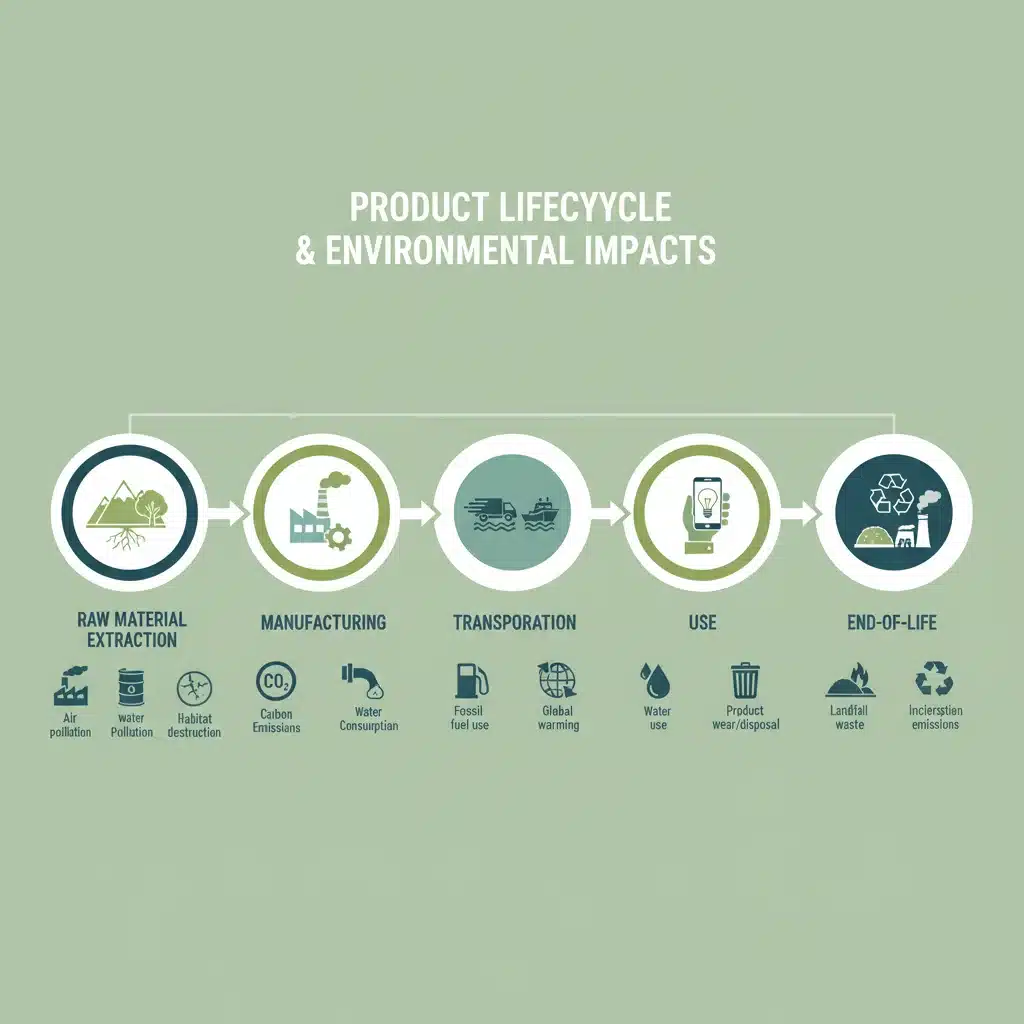
At its core, a Lifecycle Assessment (LCA) is a systematic analytical method used to evaluate the environmental impacts associated with all stages of a product’s life, from raw material extraction through materials processing, manufacturing, distribution, use, repair and maintenance, and disposal or recycling. It’s a ‘cradle-to-grave’ or ‘cradle-to-cradle’ analysis that quantifies various environmental burdens, such as greenhouse gas emissions, water usage, energy consumption, and waste generation.
Key Phases of an LCA
A typical LCA involves four main phases, as defined by ISO 14040 and ISO 14044 standards:
- Goal and Scope Definition: This initial phase sets the purpose of the study, defines the product system, its boundaries, and the functional unit (e.g., one t-shirt, 1 kg of fabric). It also specifies the types of environmental impacts to be assessed. For fashion LCA 2026, this might involve comparing the environmental footprint of organic cotton versus conventional cotton for a specific garment.
- Inventory Analysis (LCI): This is the data collection phase, where all relevant input and output data are quantified for each stage of the product’s life cycle within the defined scope. This includes energy and raw material inputs, and emissions to air, water, and soil. For fashion, this could mean tracking the water used in dyeing, the electricity consumed in weaving, or the CO2 emitted during transportation.
- Impact Assessment (LCIA): In this phase, the collected LCI data are translated into environmental impacts. Different impact categories are considered, such as climate change (global warming potential), ozone depletion, acidification, eutrophication, human toxicity, and resource depletion. This phase helps to understand the magnitude and significance of potential environmental impacts.
- Interpretation: The final phase involves evaluating the results from the LCI and LCIA to reach conclusions, explain limitations, and provide recommendations. This is where actionable insights are derived, helping fashion professionals identify hot spots for improvement and make informed decisions.
Why is Fashion LCA 2026 Crucial for U.S. Professionals?
The relevance of LCA for the U.S. fashion industry cannot be overstated, particularly as we look towards 2026. It offers a multitude of benefits that address both environmental concerns and business objectives.
1. Informed Design and Material Choices
LCA empowers designers and product developers to make environmentally conscious choices from the very beginning of the design process. By understanding the footprint of different materials (e.g., cotton, polyester, hemp, recycled fibers) and manufacturing processes, brands can select options with lower environmental impacts. This proactive approach is fundamental to designing truly sustainable collections and is a cornerstone of effective fashion LCA 2026 integration.
2. Supply Chain Optimization and Transparency
The fashion supply chain is notoriously complex and global. LCA provides a tool to map and analyze environmental impacts across this entire chain, identifying specific areas where improvements can be made. This could involve optimizing logistics, choosing suppliers with greener practices, or encouraging sustainable farming methods for raw materials. Enhanced transparency, a key demand from consumers and regulators by 2026, is a direct outcome of thorough LCA implementation.
3. Regulatory Compliance and Risk Mitigation
Governments worldwide, including in the U.S., are increasingly introducing stricter environmental regulations. LCA helps companies prepare for and comply with these evolving standards, minimizing legal risks and potential penalties. Proactive engagement with fashion LCA 2026 ensures brands are ahead of the curve, rather than reacting to new mandates.
4. Marketing and Communication of Sustainability Claims
In an era rife with ‘greenwashing,’ credible and verified sustainability claims are invaluable. LCA provides the scientific data needed to substantiate environmental claims, building consumer trust and enhancing brand reputation. When a brand states a product is ‘eco-friendly,’ LCA data can back up that assertion, offering a competitive edge in the increasingly crowded sustainable fashion market.
5. Cost Savings and Efficiency Gains
While often perceived as an upfront investment, LCA can lead to significant cost savings in the long run. By identifying inefficiencies in resource use (e.g., water, energy, waste), companies can optimize processes, reduce consumption, and minimize waste disposal costs. This makes fashion LCA 2026 not just an environmental tool but also a strategic business instrument.
Challenges and Considerations for Fashion LCA in 2026
Despite its immense benefits, implementing LCA in the fashion industry, especially by 2026, comes with its own set of challenges. Addressing these will be key to successful integration.
1. Data Availability and Quality
Accurate LCA relies on robust data, which can be difficult to obtain across a complex global supply chain. Many suppliers, particularly in developing countries, may not have sophisticated data collection systems. This can lead to data gaps or reliance on generic data, which may not accurately reflect specific product impacts. Developing standardized data collection protocols and fostering supplier collaboration will be crucial for effective fashion LCA 2026.
2. Complexity and Resource Intensity
Conducting a full LCA can be a complex, time-consuming, and resource-intensive process, requiring specialized expertise. Smaller fashion businesses or those with limited budgets may find it challenging to undertake comprehensive LCAs. The development of user-friendly LCA software and streamlined methodologies tailored for the fashion sector will be vital.
3. Dynamic Nature of Fashion
Fashion trends and product cycles are often rapid, making it challenging to conduct detailed LCAs for every new collection or product variation. The industry needs agile LCA tools that can provide quick, yet reliable, assessments without hindering innovation or speed to market. This agility will be a defining characteristic of successful fashion LCA 2026 strategies.
4. Scope and System Boundary Definitions
Defining the scope and system boundaries for a fashion product can be tricky. Should the assessment include consumer washing habits? What about the end-of-life scenarios, given the low recycling rates for textiles? Clear, standardized guidelines for scope definition within the fashion context are needed to ensure comparability and consistency across studies.
Practical Applications of Fashion LCA in 2026
How will U.S. fashion professionals practically apply LCA in their day-to-day operations by 2026? Here are some key areas:
1. Material Innovation and Sourcing
LCA will guide the selection of innovative, sustainable materials. For instance, comparing the environmental footprint of recycled polyester against virgin polyester, or evaluating the impact of bio-based textiles. Brands will use LCA data to prioritize suppliers who demonstrate lower environmental impacts in their material production processes. This will be a core focus for fashion LCA 2026.
2. Product Development and Design for Circularity
Designers will increasingly use LCA results to inform decisions regarding garment construction, durability, and end-of-life potential. Designing for longevity, repairability, and recyclability will become standard practice. LCA will help identify the best ways to minimize waste and maximize resource efficiency throughout a product’s lifecycle, aligning with circular economy principles.
3. Manufacturing Process Optimization
Factories will leverage LCA to pinpoint energy and water intensive stages in their production. This could lead to investments in renewable energy, adoption of water-saving dyeing techniques, or implementation of waste heat recovery systems. Continuous improvement based on LCA insights will drive operational efficiency and reduce environmental burdens.
4. Consumer Education and Engagement
Brands will use simplified LCA findings to educate consumers about the environmental impact of their purchases. This might involve eco-labels, digital product passports, or interactive platforms that allow consumers to understand a garment’s footprint. Transparent communication, backed by robust fashion LCA 2026 data, will build brand loyalty and encourage responsible consumption.
5. Investment Decisions and Green Financing
Investors are increasingly scrutinizing environmental, social, and governance (ESG) performance. Companies with strong LCA practices and demonstrable improvements in their environmental footprint will be more attractive to green investors and financial institutions. This financial incentive will further accelerate the adoption of LCA.

The Role of Technology and Collaboration in Fashion LCA 2026
Advancements in technology and increased collaboration will be pivotal in making fashion LCA 2026 more accessible and effective.
Digital Tools and Software
The proliferation of specialized LCA software, combined with AI and machine learning, will streamline the data collection and analysis processes. Digital platforms that integrate with supply chain management systems will provide real-time environmental insights, enabling faster and more accurate decision-making. These tools will democratize LCA, making it accessible even to smaller brands.
Industry Standards and Databases
The development of standardized industry-specific LCA databases and methodologies (e.g., the Higg Index) will improve consistency and comparability of results across the sector. These shared resources reduce the burden on individual companies to collect all data from scratch, fostering a more collaborative approach to sustainability.
Cross-Sector Collaboration
Collaboration between fashion brands, material suppliers, manufacturers, technology providers, and academic institutions will accelerate the adoption and refinement of LCA. Sharing best practices, jointly developing sustainable solutions, and advocating for supportive policies will be crucial for driving systemic change. This collective effort will define the success of fashion LCA 2026.
Looking Ahead: The Future of Fashion LCA Beyond 2026
Beyond 2026, LCA is expected to evolve further, integrating more sophisticated metrics and becoming an even more integral part of business strategy. We can anticipate a move towards ‘social LCA’ (S-LCA) and ‘life cycle costing’ (LCC) to provide a holistic triple bottom line assessment that includes social and economic impacts alongside environmental ones. The concept of ‘Product Environmental Footprint’ (PEF), driven by European regulations, may also see wider adoption globally, influencing U.S. practices.
Furthermore, the integration of blockchain technology could enhance the traceability and transparency of LCA data, making it virtually tamper-proof and highly credible. This would revolutionize how environmental claims are verified and communicated to consumers and regulators. The focus will shift from merely measuring impact to actively designing for impact reduction and creating restorative systems.
The U.S. fashion industry, by embracing fashion LCA 2026, is not just responding to external pressures but is actively shaping its own future. It’s about moving beyond compliance to leadership, demonstrating a commitment to environmental stewardship that resonates with conscious consumers and ensures long-term viability in a rapidly changing world.
Conclusion
The journey towards a truly sustainable U.S. fashion industry is complex, but the Lifecycle Assessment offers a powerful, scientific compass. By 2026, proficiency in fashion LCA 2026 will be a non-negotiable skill for professionals across the sector. It empowers informed decision-making, drives innovation, enhances transparency, ensures compliance, and ultimately fosters a more responsible and resilient industry.
While challenges exist, the collective commitment to sustainability, coupled with technological advancements and collaborative efforts, will pave the way for widespread LCA adoption. For U.S. fashion professionals, embracing this educational tool is not merely about staying competitive; it’s about fulfilling a critical responsibility to the planet and future generations. The time to master LCA is now, ensuring that the fashion we create in 2026 and beyond is as beautiful as it is sustainable.