Sustainable Fashion: Q2 2026 US Import/Export Trends Revealed
Anúncios
US Department of Commerce Releases Q2 2026 Report on Sustainable Fashion Import/Export Trends
The global fashion industry is undergoing a profound transformation, driven by an increasing consumer demand for ethical practices and environmental responsibility. In response to this seismic shift, governments and international bodies are intensifying their focus on tracking and promoting sustainable trade. The US Department of Commerce’s recently released Q2 2026 Report on Sustainable Fashion Import/Export Trends offers a pivotal snapshot of this evolving landscape, providing invaluable insights for businesses, policymakers, and consumers alike. This comprehensive analysis delves deep into the data, revealing not only the current state of the market but also forecasting future directions for sustainable fashion trends.
Anúncios
Understanding the Scope of Sustainable Fashion
Before dissecting the report’s findings, it’s crucial to define what constitutes ‘sustainable fashion’ within the context of trade. The US Department of Commerce’s report primarily considers products that meet specific criteria related to their environmental and social impact throughout their lifecycle. This includes, but is not limited to, items made from organic, recycled, or upcycled materials; garments produced using water-saving or low-energy processes; products from certified fair trade supply chains; and items designed for longevity or circularity. The consistent application of these definitions allows for a more accurate and comparable analysis of sustainable fashion trends across quarters and years.
The report highlights that the definition itself is dynamic, evolving with technological advancements and increased understanding of environmental impacts. For Q2 2026, the focus was particularly strong on verifiable certifications and transparent supply chains, reflecting a growing industry consensus on accountability. This rigor in classification ensures that the data presented is genuinely reflective of efforts towards a more sustainable textile industry, moving beyond mere greenwashing.
Key Findings from the Q2 2026 Report: A Surge in Sustainable Imports
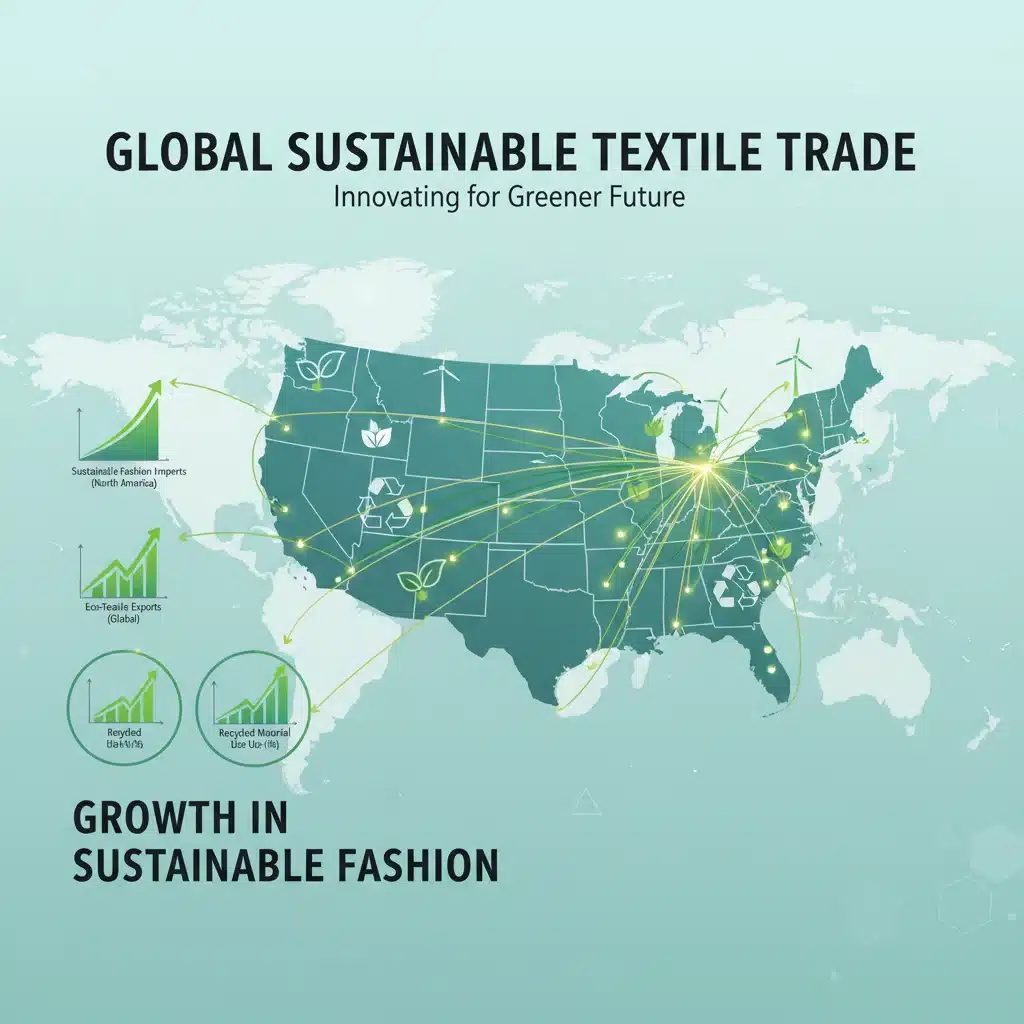
The Q2 2026 report paints a clear picture: the US market for sustainable fashion is experiencing significant growth, particularly on the import side. Total sustainable fashion imports saw an impressive 18% increase compared to Q2 2025, reaching an estimated value of $7.8 billion. This surge is attributed to several factors, including heightened consumer awareness, increased availability of sustainable options from international manufacturers, and proactive sourcing strategies by major US retailers keen to capture the eco-conscious market segment.
Anúncios
Dominant Categories in Sustainable Imports
Within the import data, certain categories stood out. Organic cotton apparel continued its strong performance, accounting for nearly 40% of all sustainable fashion imports. This indicates a robust demand for natural, chemical-free textiles. Recycled polyester and other recycled synthetic fibers also showed remarkable growth, increasing by 25% year-over-year. This reflects advancements in recycling technologies and a greater emphasis on circularity in textile production. Furthermore, imports of garments made from innovative bio-based materials, though still a smaller segment, demonstrated a promising 30% growth, suggesting future expansion in this cutting-edge area of sustainable fashion trends.
Geographic Origins of Sustainable Imports
The report identifies key regions driving these sustainable imports. Asia remains a dominant player, with countries like Vietnam, Bangladesh, and India showing significant increases in their sustainable textile exports to the US. These nations have invested heavily in sustainable manufacturing practices, driven by both international demand and local environmental regulations. European countries, particularly Portugal and Italy, also contributed substantially, especially in higher-value, niche sustainable products. The report notes a growing diversification of sourcing, as US companies seek out new partners aligned with their sustainability goals.
US Sustainable Fashion Exports: Signs of Maturation
While imports showed a dramatic increase, US sustainable fashion exports also demonstrated healthy growth, albeit at a more moderate pace. Q2 2026 saw a 9% rise in sustainable fashion exports, totaling $3.1 billion. This indicates a maturing domestic industry that is not only catering to local demand but also finding international markets for its ethically produced goods. The growth in exports is a positive sign for the US economy and its commitment to global sustainability initiatives.
Key Export Categories and Destinations
US exports of sustainable fashion were primarily concentrated in specialized areas. Performance wear made from recycled materials, particularly for outdoor and athletic apparel, was a strong performer, reflecting the US’s innovation in functional textiles. Upcycled denim and designer collections utilizing sustainable practices also found receptive markets abroad. Canada and Mexico remained the largest export destinations, benefiting from established trade agreements and geographical proximity. However, significant growth was also observed in exports to European Union countries, signaling a shared commitment to sustainable fashion trends across developed economies.
Challenges and Opportunities in the Sustainable Fashion Landscape
The report doesn’t shy away from highlighting the challenges that accompany the growth of sustainable fashion. One of the primary hurdles identified is the cost differential. Sustainable materials and ethical production processes often entail higher costs, which can translate to higher retail prices, potentially limiting accessibility for some consumers. Supply chain transparency also remains a complex issue, with many companies struggling to gain full visibility into every stage of their production process, from raw material sourcing to final garment assembly.

Overcoming Cost Barriers and Enhancing Transparency
However, these challenges also present significant opportunities. As economies of scale improve and technological innovations advance, the cost of sustainable production is expected to decrease. Government incentives, such as tax breaks for sustainable manufacturers or subsidies for eco-friendly material development, could further accelerate this trend. Furthermore, blockchain technology and advanced data analytics are emerging as powerful tools to enhance supply chain transparency, allowing consumers and businesses to track the journey of a garment from farm to closet. These innovations are crucial for solidifying consumer trust in sustainable fashion trends.
Policy Implications and Future Outlook
The Q2 2026 report underscores the critical role of policy in shaping the future of sustainable fashion. The Department of Commerce recommends continued investment in research and development for new sustainable materials and manufacturing processes. It also advocates for stronger international collaborations to harmonize sustainability standards and combat unfair trade practices that might undermine genuine sustainable efforts. The report suggests that policies promoting circular economy principles, such as extended producer responsibility (EPR) schemes for textiles, could significantly boost domestic recycling and reduce textile waste.
Looking ahead, the report projects continued robust growth in both sustainable fashion imports and exports for the remainder of 2026 and beyond. The increasing integration of AI and machine learning in supply chain optimization, coupled with a new generation of consumers prioritizing environmental and social values, will likely further accelerate the adoption of sustainable practices. The insights from this report are vital for any business looking to remain competitive and relevant in an industry that is rapidly moving towards a greener, more ethical future.
The Role of Technology in Advancing Sustainable Fashion
Technology is undeniably a cornerstone in the evolution of sustainable fashion trends. The Q2 2026 report implicitly and explicitly highlights how technological innovations are addressing some of the industry’s most pressing sustainability challenges. From material science breakthroughs to advanced manufacturing techniques, technology is making sustainable practices more feasible, efficient, and cost-effective.
Innovations in Sustainable Materials
The report’s data on the growth of bio-based materials and recycled synthetics is a direct testament to technological advancement. Scientists are continuously developing new fibers from unexpected sources like algae, mushrooms, and agricultural waste, offering alternatives to resource-intensive traditional materials. Simultaneously, improvements in chemical recycling processes are allowing for higher quality and more efficient recovery of fibers from post-consumer waste, reducing reliance on virgin resources. These material innovations are crucial for reducing the environmental footprint of fashion.
Smart Manufacturing and Supply Chain Optimization
Beyond materials, smart manufacturing technologies are revolutionizing production. Automation, 3D printing, and on-demand manufacturing are helping reduce waste, energy consumption, and overproduction. These technologies enable greater precision and customization, minimizing excess inventory – a major contributor to waste in the fashion industry. Furthermore, digital tools are enhancing supply chain visibility. Platforms utilizing blockchain ensure traceability and transparency, allowing consumers and brands to verify the ethical and environmental claims of products. This technological integration is pivotal for building trust and accountability within the sustainable fashion ecosystem.
Consumer Behavior and Market Dynamics
The driving force behind the robust growth in sustainable fashion trends, as evidenced by the Q2 2026 report, is the evolving consumer. A growing segment of the population is not only aware of the environmental and social impacts of their purchasing decisions but is actively seeking out alternatives. This shift in consumer values is reshaping market dynamics and forcing brands to adapt.
The Informed Consumer
Today’s sustainable consumer is increasingly informed. They scrutinize labels, research brand practices, and engage with social media to understand the true cost of their clothing. This demand for transparency has pushed brands to be more open about their supply chains and sustainability initiatives. The Q2 2026 report suggests that brands failing to meet these expectations are likely to lose market share to those with demonstrable commitments to sustainability.
The Influence of Social Media and Advocacy
Social media platforms play a significant role in amplifying sustainable fashion messages and connecting consumers with ethical brands. Influencers, activists, and educational content creators are raising awareness about issues like fast fashion’s impact and promoting conscious consumption. This digital advocacy creates a powerful feedback loop, encouraging more brands to adopt sustainable practices and further propelling sustainable fashion trends into the mainstream.
The Circular Economy: A Vision for Sustainable Fashion
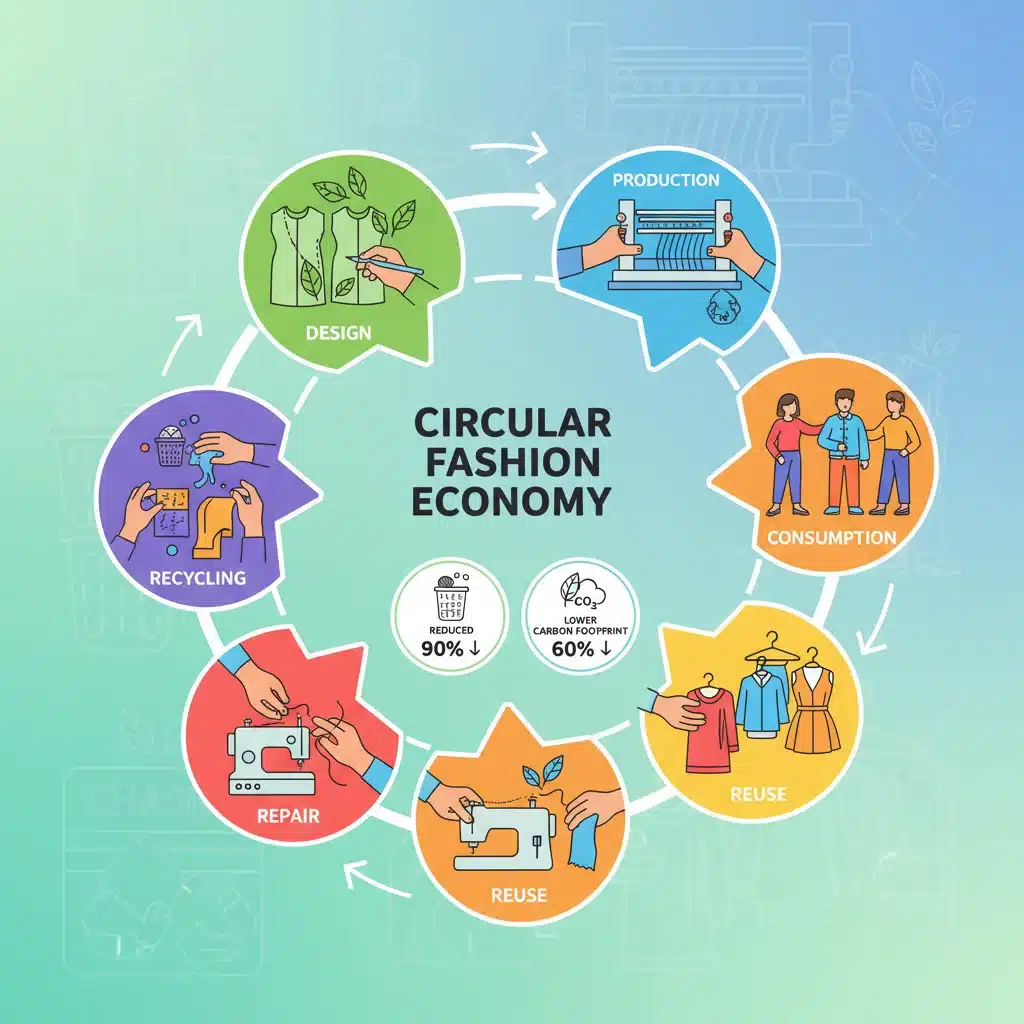
A recurring theme, implicitly woven throughout the Q2 2026 report, is the concept of the circular economy. This model, which aims to keep resources in use for as long as possible, extract the maximum value from them whilst in use, then recover and regenerate products and materials at the end of each service life, is the ultimate goal for sustainable fashion.
From Linear to Circular
Traditionally, the fashion industry has operated on a linear ‘take-make-dispose’ model, leading to massive waste and resource depletion. The shift towards circularity involves designing products for durability, repairability, and recyclability. It encourages business models that prioritize leasing, renting, or resale over outright ownership. The report’s data on recycled material growth and the emphasis on product longevity in certain export categories indicate early but significant steps towards this circular vision.
Investment in Infrastructure for Circularity
Achieving a truly circular fashion economy requires substantial investment in infrastructure – for collecting, sorting, disassembling, and recycling textiles at scale. The report hints at the need for greater public-private partnerships to build these capabilities. As more brands commit to circularity, the demand for such infrastructure will grow, creating new economic opportunities and solidifying the long-term viability of sustainable fashion trends.
Conclusion: Navigating the Future of Sustainable Fashion
The US Department of Commerce’s Q2 2026 Report on Sustainable Fashion Import/Export Trends provides a compelling narrative of an industry in transition. The robust growth in sustainable imports and the steady rise in exports underscore a fundamental shift towards more ethical and environmentally conscious practices. While challenges such as cost and supply chain complexity persist, technological innovation, evolving consumer behavior, and supportive policy frameworks are paving the way for a more sustainable future.
For businesses, the report serves as a clear indicator: embracing sustainability is no longer optional but a strategic imperative for long-term success. For policymakers, it highlights areas where targeted interventions can accelerate positive change. And for consumers, it offers reassurance that their choices are collectively driving a global movement towards a fashion industry that respects both people and the planet. As we move forward, the continuous monitoring and analysis of these sustainable fashion trends will be crucial for navigating this dynamic and increasingly important sector.