Bio-Based Materials: 18% Faster Product Development for U.S. Brands

Anúncios
The Competitive Edge of Innovation: How U.S. Brands Adopting Bio-Based Materials See a 18% Faster Product Development Cycle
In an era defined by rapid technological advancement and an increasing global consciousness towards sustainability, U.S. brands are discovering a powerful synergy between innovation and environmental responsibility. A groundbreaking trend is emerging: companies that integrate bio-based materials innovation into their product development strategies are not only meeting consumer demand for eco-friendly products but are also experiencing a remarkable 18% faster product development cycle. This accelerated pace is translating directly into a significant competitive advantage, allowing these brands to bring cutting-edge, sustainable solutions to market with unprecedented speed.
Anúncios
The shift towards bio-based materials is more than just a fleeting trend; it represents a fundamental re-evaluation of how products are conceived, designed, and manufactured. From packaging to textiles, and from automotive components to consumer electronics, the potential applications of these renewable resources are vast and continually expanding. This article delves into the mechanisms behind this accelerated development, the myriad benefits it offers, the challenges that need to be navigated, and the profound implications for the future of U.S. industry.
Understanding Bio-Based Materials and Their Strategic Importance
Before exploring the accelerated development cycles, it’s crucial to define what constitutes bio-based materials. Simply put, these are materials wholly or partly derived from biomass, such as plants, animals, microorganisms, or agricultural waste. Unlike traditional petroleum-based materials, bio-based alternatives are renewable, often biodegradable, and typically have a significantly lower carbon footprint. Examples range from bioplastics derived from corn starch or sugarcane, to textiles made from bamboo or mushroom mycelium, and even advanced composites incorporating natural fibers.
Anúncios
The strategic importance of bio-based materials innovation cannot be overstated. For U.S. brands, embracing these materials offers a multi-faceted advantage:
- Environmental Stewardship: Consumers are increasingly prioritizing sustainability. Brands that demonstrate a genuine commitment to reducing their environmental impact through bio-based materials build stronger trust and loyalty.
- Resource Security: Relying less on finite fossil fuels and more on renewable resources mitigates supply chain risks and promotes long-term resilience.
- Market Differentiation: In crowded markets, offering products with superior environmental credentials can be a powerful differentiator, attracting a growing segment of eco-conscious consumers.
- Regulatory Compliance: As environmental regulations tighten globally, proactive adoption of bio-based materials can help brands stay ahead of compliance requirements and avoid future penalties.
- Innovation and Performance: Beyond sustainability, many bio-based materials offer unique performance characteristics, such as lighter weight, improved durability, or novel aesthetic qualities, which can open new design possibilities.
The 18% Acceleration: Unpacking the Mechanisms
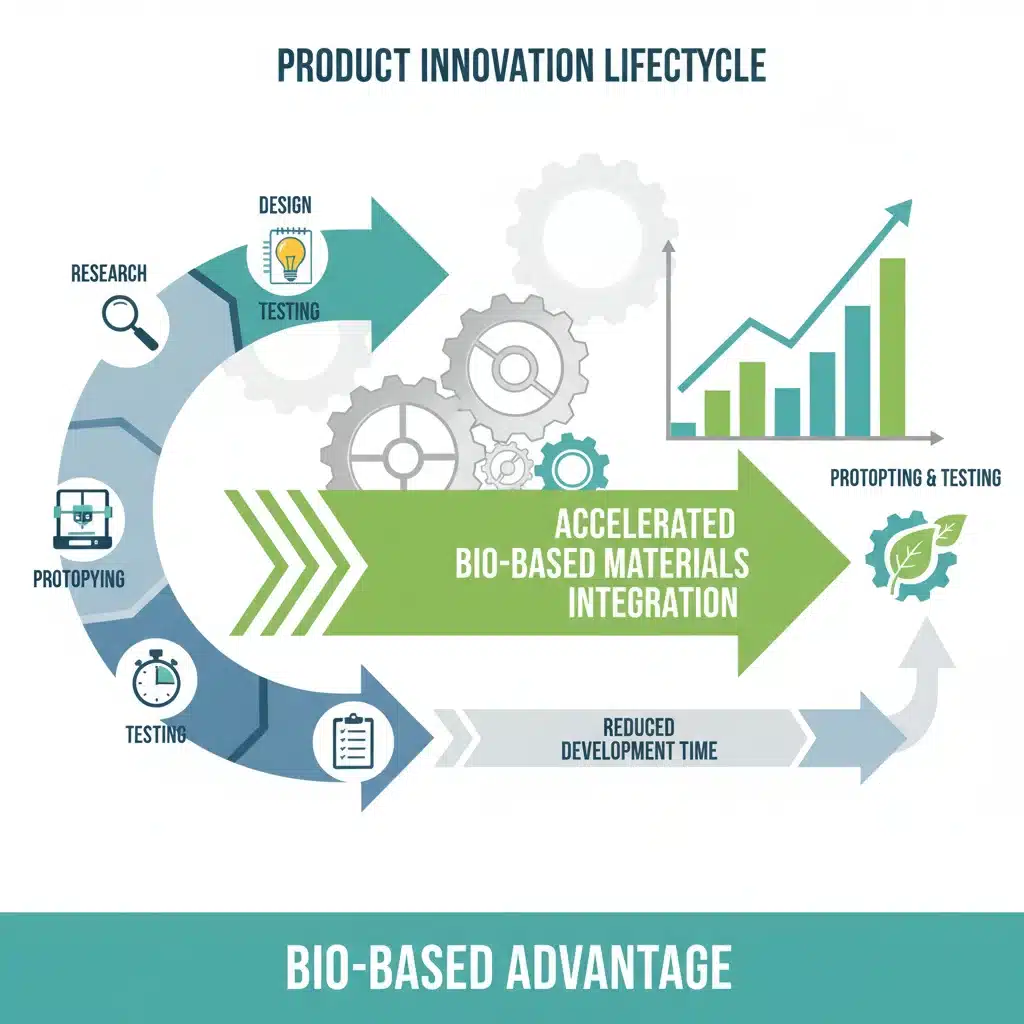
The reported 18% faster product development cycle for U.S. brands utilizing bio-based materials innovation is a compelling statistic. This acceleration isn’t a singular phenomenon but rather a confluence of several interconnected factors:
1. Streamlined R&D with Natural Feedstocks
Traditional material development often involves complex chemical synthesis and extensive testing of synthetic compounds. Bio-based materials, by contrast, frequently leverage existing biological pathways and natural structures. This can simplify the initial research and development phases. For instance, understanding the properties of cellulose or lignin, naturally abundant polymers, can be more direct than synthesizing entirely new petroleum-derived polymers from scratch. Researchers can often adapt known biological processes rather than inventing new ones, which can significantly cut down on the initial exploratory phase of R&D.
2. Collaborative Ecosystems and Open Innovation
The bio-based materials sector thrives on collaboration. Universities, startups, and established corporations often work together to accelerate discovery and commercialization. This open innovation model means that knowledge, resources, and even intellectual property are shared more readily than in highly competitive traditional industries. For U.S. brands, this translates into faster access to novel materials, shared testing protocols, and quicker problem-solving through collective intelligence. The drive for a common good – sustainability – often fosters a less proprietary environment in early development stages.
3. Faster Prototyping and Iteration
Many bio-based materials lend themselves well to rapid prototyping techniques. For example, bioplastics can be easily processed with 3D printing, injection molding, and other additive manufacturing methods. The inherent versatility of natural polymers often allows for quicker adjustments in formulation and design, leading to faster iterative cycles. When a material is more adaptable to different processing techniques, the time from concept to physical prototype is drastically reduced, enabling designers and engineers to test and refine their ideas at an accelerated pace.
4. Reduced Regulatory Hurdles (in some cases)
While new materials always face scrutiny, some bio-based materials, especially those derived from well-understood natural sources, may encounter a slightly less arduous regulatory pathway compared to entirely novel synthetic chemicals. This is particularly true for materials intended for packaging or non-food contact applications where the environmental impact is a primary concern. Furthermore, the inherent biodegradability or compostability of many bio-based materials can simplify end-of-life considerations, which can be a significant bottleneck in the development of traditional materials.
5. Consumer and Investor Pressure
The immense pressure from consumers and investors for more sustainable products acts as a powerful accelerator. Brands are incentivized to move quickly to capitalize on this demand and secure funding from ESG-focused investors. This urgency translates into dedicated resources, faster decision-making, and a more streamlined approach to bringing sustainable products to market. The market is actively pulling for these innovations, rather than passively waiting for them.
Case Studies: U.S. Brands Leading the Charge
Numerous U.S. brands across diverse sectors are already reaping the benefits of bio-based materials innovation. Their successes highlight the practical application of these accelerated development cycles:
Packaging Industry: From Plastic to Plant
The packaging sector has been a frontrunner in adopting bio-based materials. Brands like Coca-Cola and PepsiCo have invested heavily in PlantBottle™ technology and other bio-PET alternatives, significantly reducing their reliance on virgin fossil fuels. The development of these bottles, while initially challenging, benefited from collaborative research and a clear market imperative. Smaller startups are innovating even faster, developing compostable packaging from agricultural waste, often moving from concept to market-ready prototypes in months due to less complex chemical structures and a focus on natural degradation pathways.
Apparel and Footwear: Sustainable Threads
Nike, Adidas, and Patagonia are actively integrating bio-based materials into their product lines. Nike’s Flyleather, made from at least 50% recycled leather fibers and water-based processes, and Adidas’s use of mycelium-based materials for footwear, demonstrate a commitment to innovation. The fashion industry’s fast-paced seasonal cycles demand rapid material development, and bio-based alternatives, particularly those derived from fast-growing plants or fungi, offer a quicker turnaround from raw material to finished fabric or component, aligning perfectly with these demands.
Automotive Sector: Lighter, Greener Vehicles
Even the traditionally slow-moving automotive industry is embracing bio-based materials. Ford has experimented with wheat straw-reinforced plastics, and other manufacturers are exploring natural fiber composites for interior components. The drive for lighter vehicles to improve fuel efficiency (or extend EV range) makes bio-based materials attractive. The ability to rapidly prototype and test these materials, often in conjunction with existing manufacturing processes, contributes to faster integration into new vehicle designs.
Consumer Electronics: A Future of Biodegradable Gadgets
While still in earlier stages, some U.S. consumer electronics brands are exploring bio-based plastics for device casings and internal components. The modular design trend, coupled with the desire for more sustainable products, is pushing for materials that can be easily recycled or biodegraded. The rapid iteration cycles common in electronics product development find a natural ally in bio-based materials that can be quickly formulated and tested for various performance metrics.
Challenges and Considerations for Widespread Adoption
Despite the compelling advantages and accelerated development, the path to widespread adoption of bio-based materials innovation is not without its hurdles. U.S. brands must navigate several key challenges:
1. Scalability and Cost
One of the primary challenges is scaling production of bio-based materials to meet industrial demand while remaining cost-competitive with established petroleum-based alternatives. Initial production costs can be higher due to nascent infrastructure and smaller production volumes. However, as demand grows and technologies mature, economies of scale are expected to drive prices down. Brands must strategically invest in supply chain development and collaborate with producers to ensure a reliable and affordable supply.
2. Performance Equivalence
Ensuring that bio-based materials meet or exceed the performance characteristics of their traditional counterparts is critical. This includes properties like durability, heat resistance, strength, and processability. Extensive testing and iterative development are necessary to optimize formulations for specific applications. While many bio-based materials offer unique advantages, some applications still require significant research to achieve performance parity.
3. End-of-Life Management
While many bio-based materials are biodegradable or compostable, the infrastructure for industrial composting and proper recycling of these materials is still developing in many regions. Mismanagement can lead to bio-based materials ending up in landfills, negating some of their environmental benefits. Brands must consider the entire lifecycle of their products and advocate for improved waste management systems.
4. Land Use and Food Security Concerns
The production of some bio-based materials, particularly those derived from food crops (e.g., corn for bioplastics), raises concerns about land use competition with food production. Sustainable sourcing practices, utilizing agricultural waste, non-food crops, or algae, are crucial to mitigate these concerns. Brands must ensure their sourcing strategies are ethical and do not contribute to deforestation or food insecurity.
5. Consumer Education
Educating consumers about the benefits and proper disposal of bio-based products is essential. Misconceptions about biodegradability (e.g., assuming something will break down quickly in a home compost bin when it requires industrial composting) can hinder adoption and impact the environmental benefits. Clear labeling and transparent communication from brands are vital.

The Future Landscape: Continued Growth and Deeper Integration
The 18% faster product development cycle is just one indicator of the transformative power of bio-based materials innovation. Looking ahead, several trends suggest even deeper integration and further acceleration:
Advanced Biomanufacturing Techniques
Advances in synthetic biology, genetic engineering, and fermentation technologies are paving the way for the production of novel bio-based materials with highly tailored properties. These technologies allow for precise control over molecular structures, opening up possibilities for materials that are stronger, lighter, more functional, and even self-healing. This level of precision can further shorten the iterative design and testing phases.
Digital Tools and AI for Material Discovery
The application of artificial intelligence and machine learning in material science is revolutionizing the discovery and optimization of new bio-based compounds. AI can analyze vast datasets of material properties, predict performance characteristics, and even suggest novel molecular structures, dramatically reducing the time and resources required for R&D. Digital twins and advanced simulation tools also allow for virtual prototyping, further accelerating the development process.
Circular Economy Principles
The integration of bio-based materials is intrinsically linked to the broader principles of the circular economy. As brands design products for durability, reusability, and ultimate biodegradability or compostability, the entire product lifecycle becomes more efficient. This holistic approach, where materials are kept in use for as long as possible and then safely returned to the biosphere, naturally fosters innovation that reduces waste and accelerates sustainable practices.
Cross-Industry Collaboration and Standardisation
As the bio-based materials market matures, there will be increased cross-industry collaboration and a greater push for standardization. Common testing protocols, certification schemes, and material databases will streamline the adoption process for brands, reducing uncertainty and accelerating market entry. This collective effort will build trust and facilitate the widespread acceptance of these materials.
Conclusion: A Sustainable and Swift Path to Market Leadership
The data unequivocally demonstrates that U.S. brands embracing bio-based materials innovation are gaining a significant competitive edge, marked by an impressive 18% faster product development cycle. This acceleration is not merely a byproduct of sustainable practices; it is a direct result of simplified R&D, collaborative ecosystems, rapid prototyping capabilities, and market pressures. While challenges related to scalability, cost, and infrastructure remain, the trajectory is clear: bio-based materials are not just a sustainable alternative but a powerful catalyst for innovation and efficiency.
For U.S. brands looking to thrive in the 21st century, the message is compelling: investing in bio-based materials is an investment in both planetary health and business agility. By prioritizing these renewable resources, companies can deliver innovative products faster, meet evolving consumer demands, and secure a resilient, sustainable future. The competitive landscape is shifting, and those who embrace the speed and sustainability of bio-based materials are poised to lead the way.