Eco-Friendly Dyes: US Waterways & Consumer Health Impacts
Anúncios
Eco-friendly dyes significantly influence both US waterways and consumer health by reducing toxic chemical discharge and allergen exposure, promoting a more sustainable textile future.
Anúncios
Have you ever considered the invisible journey your clothes take before reaching your closet? Beyond the fibers, the dyeing process plays a critical role in its environmental footprint. This article dives into eco-friendly dyes impact on US waterways and consumer health, unraveling the science behind six specific types.
Anúncios
The hidden footprint of conventional textile dyes
The textile industry, while a cornerstone of global commerce, has long grappled with its environmental repercussions. Conventional dyeing processes are notoriously resource-intensive and often rely on synthetic chemicals that pose significant threats to both ecosystems and human well-being.
These traditional dyes, frequently derived from petroleum, contribute to a complex web of pollution. The wastewater generated from dyeing facilities, if not properly treated, often contains heavy metals, toxic organic compounds, and non-biodegradable substances. This effluent can severely contaminate local water sources, impacting aquatic life and potentially entering the human food chain.
Understanding the chemical cocktail
Many conventional dyes contain azo compounds, phthalates, and heavy metals like chromium and copper. These chemicals are not only resistant to degradation but can also be carcinogenic, mutagenic, or endocrine disruptors. When discharged into rivers and lakes, they reduce oxygen levels, block sunlight, and poison organisms, creating dead zones.
- Azo dyes: Known for vibrant colors but can release aromatic amines, some of which are carcinogenic.
- Heavy metals: Bioaccumulate in aquatic organisms and can pose long-term health risks to humans who consume contaminated seafood.
- Phthalates: Used as dye carriers and plasticizers, linked to hormonal disruptions.
The transition to more sustainable alternatives is not merely an ethical choice but an urgent scientific necessity to mitigate these widespread environmental and health hazards. Reducing the reliance on these harmful substances is a critical step towards a truly circular and responsible textile economy.
Natural dyes: a return to roots with modern science
Natural dyes, extracted from plants, insects, and minerals, represent a historical and increasingly relevant alternative to synthetic counterparts. While their use dates back millennia, modern scientific approaches are enhancing their efficacy, colorfastness, and scalability, making them viable options for contemporary textile production.
These dyes offer a distinct advantage: their biodegradability. Unlike many synthetic dyes that persist in the environment for extended periods, natural dyes break down more readily, reducing their long-term environmental burden. This inherent characteristic makes them a cornerstone of any strategy focused on mitigating the environmental impact of textile manufacturing.
Sources and sustainability benefits
Common sources for natural dyes include indigo (from the indigofera plant), madder (from the rubia tinctorum root), cochineal (from insects), and various barks, leaves, and flowers. The extraction processes for these dyes are generally less energy-intensive and produce less hazardous waste compared to synthetic dye synthesis.
- Indigo: Provides a range of blues; traditionally fermented, now often uses greener chemical reduction.
- Madder: Yields reds, oranges, and browns; requires mordants but is biodegradable.
- Cochineal: A crimson red dye, sustainable if farmed responsibly.
Beyond environmental benefits, natural dyes often provide unique aesthetic qualities, such as subtle variations in shade and a more organic feel. However, challenges remain in achieving consistent color, improving wash fastness, and scaling production efficiently without extensive land use or water consumption. Research continues to address these hurdles, aiming to maximize their potential as truly sustainable coloring agents.
Low-impact synthetic dyes: closing the gap
While natural dyes offer significant advantages, their scalability and color range can sometimes be limited. This is where low-impact synthetic dyes come into play, bridging the gap between performance and environmental responsibility. These dyes are engineered to minimize their ecological footprint throughout their life cycle, from manufacturing to wastewater discharge.
The key distinction lies in their chemical composition and production methods. Low-impact synthetics are designed to be free from heavy metals, formaldehyde, and other notorious toxins found in conventional dyes. They often boast higher rates of dye fixation, meaning more dye adheres to the fabric and less ends up in the wastewater, dramatically reducing pollution loads.
Improved manufacturing processes
The development of these dyes involves significant research into cleaner chemistry. Manufacturers focus on creating dyes with simpler molecular structures, which are easier to treat in wastewater and less likely to form harmful byproducts. They also prioritize closed-loop systems and efficient resource utilization in their production facilities.
- Reactive dyes: High fixation rates, especially when used with optimized dyeing techniques, reducing dye runoff.
- Disperse dyes: Used for synthetic fibers; newer versions are free from problematic carriers and heavy metals.
- Sulfur dyes: Offer good fastness properties and are often used for dark shades; advancements are reducing their sulfide content.
Choosing low-impact synthetic dyes allows for a broader spectrum of colors and better performance characteristics than many natural dyes, while still adhering to stringent environmental standards. Their continuous improvement is vital for the textile industry’s journey towards comprehensive sustainability, offering a practical solution for brands seeking both vibrant colors and reduced ecological harm.
The science of eco-friendly dye fixation and water treatment
The environmental impact of textile dyeing isn’t just about the dyes themselves, but also how they are applied and how the wastewater is managed. Eco-friendly dye fixation techniques and advanced water treatment technologies are critical components in minimizing pollution, particularly for US waterways.
Traditional dyeing often involves high temperatures, large volumes of water, and chemical auxiliaries to ensure dye adherence. A significant portion of the unfixed dye, along with these chemicals, is discharged as effluent. Eco-friendly practices aim to reduce this discharge by improving dye uptake and implementing sophisticated treatment methods.
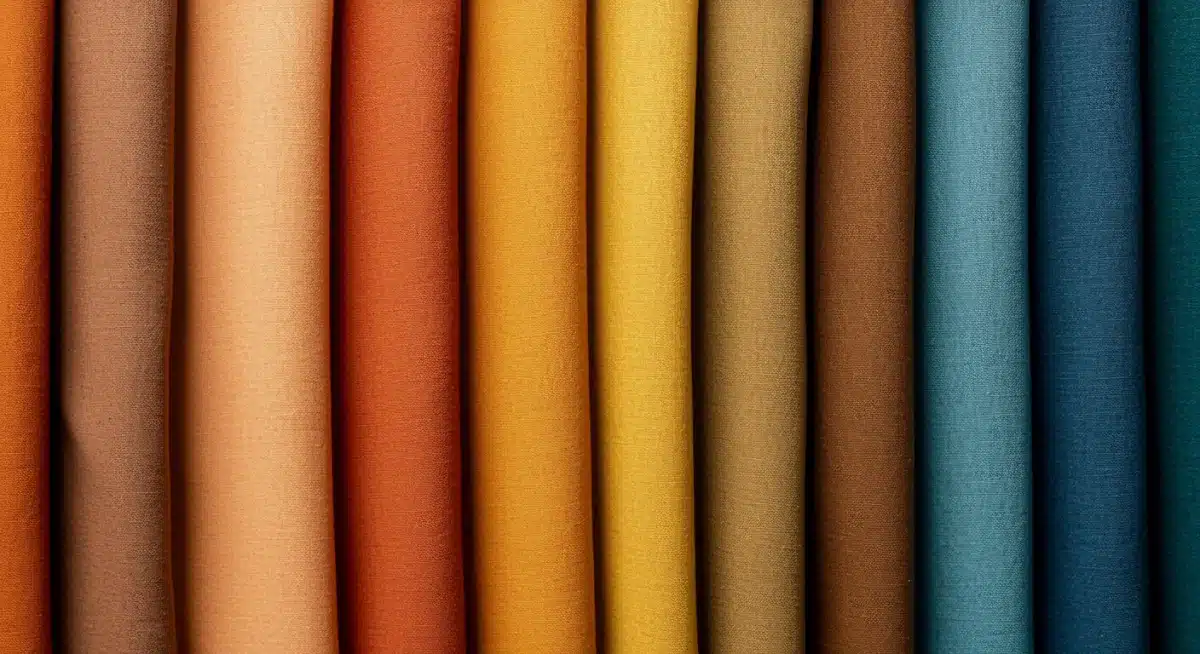
The science behind eco-friendly dye fixation focuses on optimizing the bond between the dye molecule and the fiber, thereby leaving less residual dye in the bath. This not only conserves dye but also reduces the chemical oxygen demand (COD) and biological oxygen demand (BOD) of the wastewater.
Advanced treatment technologies
Once dyeing is complete, the wastewater must be treated before discharge. Modern eco-friendly facilities employ a range of technologies:
- Membrane filtration: Uses semi-permeable membranes to remove suspended solids, dyes, and other pollutants.
- Biological treatment: Microorganisms break down organic pollutants, including certain dye molecules.
- Advanced oxidation processes (AOPs): Utilize strong oxidants like ozone or hydrogen peroxide to degrade persistent organic compounds.
These methods are crucial for safeguarding US waterways. By effectively removing or neutralizing harmful substances, they prevent contamination of rivers, lakes, and oceans, protecting aquatic ecosystems and ensuring safer water resources for communities. The continuous innovation in these treatment technologies is indispensable for the widespread adoption of sustainable dyeing practices.
Consumer health: beyond the environmental benefits
The benefits of eco-friendly dyes extend directly to consumer health, offering a safer alternative to garments dyed with conventional, chemical-laden methods. While environmental impact often takes center stage, the direct contact of dyed fabrics with human skin underscores the importance of non-toxic coloring agents.
Many conventional synthetic dyes contain allergens, irritants, and even carcinogens that can leach from the fabric onto the skin. This exposure can lead to skin rashes, allergic reactions, and in some cases, more serious health issues over prolonged periods. Eco-friendly dyes, by their nature, significantly reduce these risks.
Reducing exposure to harmful chemicals
Eco-friendly dyes typically avoid substances known to be toxic or allergenic. For instance, natural dyes, when processed without harsh chemicals, are often hypoallergenic. Low-impact synthetic dyes are formulated to be free from heavy metals, formaldehyde, and certain aromatic amines, which are common culprits in skin sensitivities and other health concerns.
- Allergen reduction: Less likelihood of skin irritation and allergic dermatitis.
- Carcinogen avoidance: Eliminating dyes that can release carcinogenic aromatic amines.
- Respiratory health: Reduced exposure to volatile organic compounds (VOCs) that can be emitted from conventionally dyed fabrics, impacting indoor air quality.
For consumers, choosing products dyed with eco-friendly alternatives means peace of mind. It translates to wearing clothing that is not only better for the planet but also safer for their bodies, particularly for individuals with sensitive skin, children, and infants. This direct link to personal well-being is a powerful motivator for the growing demand for sustainable fashion.
Policy, certification, and the future of sustainable dyeing in the US
The transition to eco-friendly dyeing practices in the US is not solely driven by consumer demand and scientific innovation; it is also heavily influenced by evolving policy, stringent certifications, and collaborative industry efforts. These frameworks are essential for standardizing sustainable practices and ensuring accountability.
Regulatory bodies, such as the Environmental Protection Agency (EPA), play a role in setting standards for wastewater discharge and chemical use within the textile industry. While specific legislation directly targeting textile dyes is continually evolving, broader environmental protection acts indirectly compel manufacturers to adopt cleaner processes.
Key certifications and their role
Several certifications guide both manufacturers and consumers towards more sustainable textile products. These certifications often cover the entire production chain, from fiber sourcing to dyeing and finishing, ensuring transparency and adherence to environmental and social criteria.
- GOTS (Global Organic Textile Standard): Certifies organic fibers and restricts the use of toxic chemicals in all processing stages, including dyeing.
- OEKO-TEX Standard 100: Tests for harmful substances in textiles, ensuring products are safe from a human-ecological perspective.
- bluesign®: Focuses on minimizing environmental impact throughout the textile supply chain, with strict criteria for chemical use and water management.
These certifications provide a verifiable benchmark for eco-friendly dyes impact, giving consumers confidence in their purchasing decisions. The future of sustainable dyeing in the US hinges on continued policy development, broader adoption of these certifications, and collaborative research to develop even greener technologies. This multi-faceted approach is crucial for achieving a truly sustainable textile industry that protects both the environment and public health.
| Key Impact Area | Brief Description of Eco-Friendly Dye Impact |
|---|---|
| US Waterways | Reduced discharge of toxic chemicals, heavy metals, and non-biodegradable substances. |
| Consumer Health | Lower exposure to carcinogens, allergens, and skin irritants found in conventional dyes. |
| Biodegradability | Natural dyes break down more easily, minimizing long-term environmental persistence. |
| Regulatory Compliance | Adherence to stricter environmental standards and certifications like GOTS and OEKO-TEX. |
Frequently asked questions about eco-friendly dyes
Eco-friendly dyes primarily fall into two categories: natural dyes (derived from plants, insects, or minerals) and low-impact synthetic dyes. Both aim to reduce environmental harm compared to conventional synthetic dyes, focusing on biodegradability, non-toxicity, and efficient resource use in their application and production.
They protect US waterways by significantly reducing the discharge of harmful chemicals, heavy metals, and persistent organic compounds into water bodies. Their production often involves less water and energy, and wastewater from their application is generally easier to treat, minimizing contamination and preserving aquatic ecosystems.
Yes, eco-friendly dyes are generally safer for consumer health. They are formulated to avoid known carcinogens, allergens, and skin irritants commonly found in conventional dyes. This reduces the risk of allergic reactions, skin sensitivities, and exposure to harmful chemicals through direct contact with clothing.
To ensure a product uses eco-friendly dyes, look for certifications such as GOTS (Global Organic Textile Standard), OEKO-TEX Standard 100, and bluesign®. These certifications verify that the dyeing process adheres to strict environmental and human health criteria, from chemical use to wastewater management.
Despite their benefits, eco-friendly dyes face challenges like achieving consistent colorfastness, expanding the available color palette, and scaling production efficiently. Natural dyes can also have higher costs and require more resources to produce certain shades, hindering broader adoption in mass-market fashion.
Conclusion
The journey to a truly sustainable textile industry is complex, but the advancements in eco-friendly dyes offer a clear path forward. By understanding the scientific principles behind these innovative coloring agents, we see a tangible reduction in pollution to US waterways and a significant improvement in consumer health. From the ancient wisdom of natural dyes to the cutting-edge chemistry of low-impact synthetics, the industry is steadily moving towards practices that honor both environmental integrity and human well-being. Continued research, robust policy, and informed consumer choices will be paramount in accelerating this vital transition.