Digitalization’s Impact on US Fashion Education 2026: Industry 4.0 & Sustainability

Anúncios
The fashion industry, a dynamic and ever-evolving behemoth, is currently undergoing a profound transformation driven by technological advancements and an urgent call for sustainability. This seismic shift is not just impacting how clothes are designed, produced, and consumed, but also how the next generation of fashion professionals is educated. By 2026, the landscape of U.S. fashion education will be irrevocably reshaped by the pervasive influence of digitalization, the principles of Industry 4.0, and an unwavering commitment to sustainable practices. This article delves into the critical impact of digitalization on U.S. fashion education, exploring how institutions are preparing students for an industry that demands both technological prowess and ethical responsibility.
The traditional fashion curriculum, once heavily reliant on manual sketching, pattern making, and textile knowledge, is now being augmented and redefined by digital tools and processes. This evolution is crucial for ensuring that graduates are not only competitive but also innovative in a rapidly changing global market. The integration of digitalization is about more than just introducing new software; it’s about fostering a new mindset, one that embraces technological solutions for complex design, production, and supply chain challenges, all while keeping sustainability at its core.
Anúncios
The Dawn of Digitalization in Fashion Education
Digitalization in fashion education encompasses a broad spectrum of technologies, from 3D design software and virtual prototyping to artificial intelligence (AI) and blockchain. These tools are no longer niche applications but essential components of the modern fashion workflow. Fashion schools in the U.S. are increasingly investing in state-of-the-art labs and curricula that expose students to these cutting-edge technologies from day one.
One of the most significant advancements is the widespread adoption of 3D design software. Programs like CLO 3D, Optitex, and Browzwear allow students to visualize garments in a virtual space, experiment with different fabrics and silhouettes, and create realistic prototypes without the need for physical samples. This not only reduces material waste and costs but also significantly accelerates the design process. Students can iterate faster, receive instant feedback, and present their collections in a more dynamic and engaging manner.
Virtual reality (VR) and augmented reality (AR) are also making their way into fashion classrooms. VR can transport students to virtual showrooms, allowing them to experience digital fashion shows or explore virtual stores. AR, on the other hand, can overlay digital information onto the real world, enabling students to visualize how a garment might look on a customer or interact with digital patterns in a physical space. These immersive technologies provide a richer learning experience and prepare students for a future where digital fashion experiences are becoming increasingly common.
Anúncios
The impact of digitalization extends beyond design. Digital textile printing offers unprecedented opportunities for customization and reduces water and dye consumption compared to traditional methods. Digital supply chain management tools, powered by AI and machine learning, allow for better inventory control, demand forecasting, and traceability, all of which are crucial for sustainable operations. Understanding and utilizing these digital tools is becoming a fundamental skill for any aspiring fashion professional.
Industry 4.0: Reshaping the Fashion Production Pipeline
Industry 4.0, characterized by the convergence of digital and physical technologies, is revolutionizing manufacturing processes across various sectors, and fashion is no exception. For U.S. fashion education, this means preparing students for smart factories, automated production lines, and interconnected supply chains. The traditional linear model of fashion production is giving way to a more agile, data-driven, and responsive ecosystem.
Key components of Industry 4.0 in fashion include:
- Automation and Robotics: While not yet fully ubiquitous, robotic sewing and cutting machines are becoming more sophisticated, offering precision and efficiency. Fashion students need to understand how to design for automated production and how to manage these advanced manufacturing systems.
- Internet of Things (IoT): IoT devices embedded in machinery and garments can collect vast amounts of data, providing insights into production efficiency, product usage, and environmental impact. Analyzing this data is critical for optimizing processes and developing smarter products.
- Cloud Computing: Cloud platforms enable seamless collaboration across global teams, secure storage of design files and production data, and access to powerful computing resources for complex simulations and analyses.
- Big Data Analytics: The ability to collect, process, and interpret large datasets is invaluable for understanding consumer behavior, predicting trends, and optimizing supply chains. Fashion education is increasingly incorporating data science principles to equip students with these analytical skills.
- Additive Manufacturing (3D Printing): Beyond prototyping, 3D printing is being used to create intricate components, accessories, and even entire garments, opening up new possibilities for customization and on-demand production.
Integrating these concepts into the curriculum requires a multidisciplinary approach. Fashion students are now expected to have a foundational understanding of engineering, data science, and computer programming, alongside their creative design skills. This holistic approach ensures that graduates are not just designers or marketers, but well-rounded professionals capable of navigating the complexities of an Industry 4.0-driven fashion landscape.
Sustainability: The Ethical Imperative in Fashion Education
Perhaps the most pressing challenge and opportunity facing the fashion industry today is sustainability. The environmental and social impact of fast fashion has reached a critical point, and consumers, regulators, and industry leaders are demanding change. U.S. fashion education is at the forefront of instilling sustainable practices and ethical considerations into the minds of future designers and business leaders.
By 2026, sustainability will not be an elective but a foundational pillar of every fashion program. This includes:
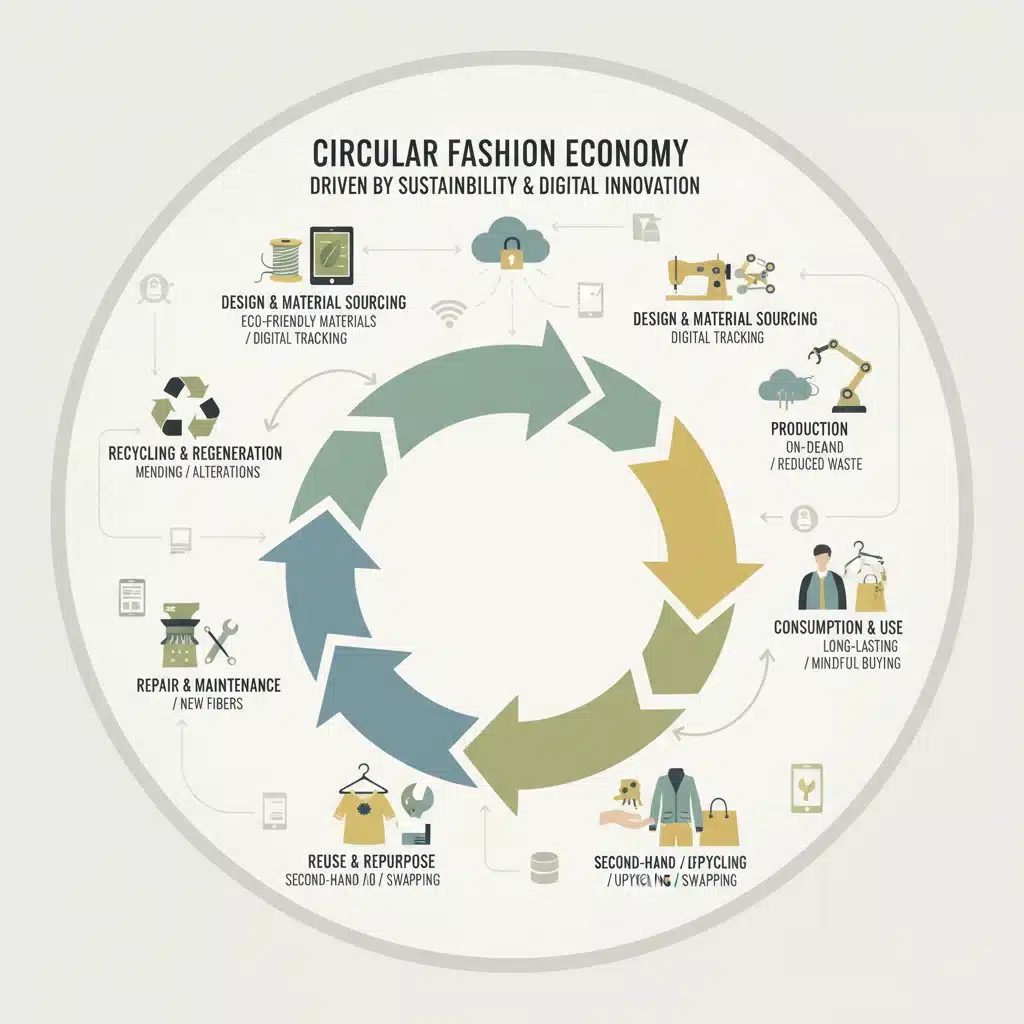
- Circular Economy Principles: Moving away from a linear ‘take-make-dispose’ model, fashion education is emphasizing circular design, where products are designed for durability, repair, reuse, and recycling. Students learn about material lifecycles, waste reduction, and innovative recycling technologies.
- Sustainable Materials and Sourcing: A deep understanding of eco-friendly fabrics, such as organic cotton, recycled polyester, hemp, and innovative bio-based materials, is crucial. Students are taught to evaluate the environmental footprint of different materials and to source them responsibly, considering fair labor practices and ethical supply chains.
- Reduced Waste Design: Techniques like zero-waste pattern cutting, upcycling, and modular design are being integrated into design courses to minimize textile waste during production and at the end of a garment’s life.
- Transparency and Traceability: Digital tools like blockchain are being explored to ensure greater transparency across the supply chain, allowing consumers to track the origin and journey of their clothes. Fashion education is preparing students to implement and advocate for these transparent practices.
- Ethical Production and Labor Practices: Beyond environmental concerns, fashion education is emphasizing the importance of fair wages, safe working conditions, and respect for human rights throughout the global fashion supply chain. Social sustainability is as critical as environmental sustainability.
The fusion of digitalization and sustainability is particularly powerful. Digital tools can help track carbon footprints, analyze material consumption, optimize logistics to reduce emissions, and facilitate the design of more durable and recyclable products. For example, 3D prototyping significantly reduces the need for physical samples, thereby cutting down on material waste and transportation emissions. Data analytics can identify inefficiencies in the supply chain that contribute to environmental degradation, allowing for targeted improvements.

Curriculum Evolution: Adapting to the New Paradigm
To effectively prepare students for the demands of 2026 and beyond, U.S. fashion education institutions are undergoing significant curriculum overhauls. This involves not only introducing new courses but also rethinking teaching methodologies and fostering interdisciplinary collaboration.
Key areas of curriculum evolution include:
Integrated Technology Courses
Instead of offering technology as an add-on, it’s being woven into the fabric of core design and business courses. Students are learning 3D design, CAD, and digital illustration alongside traditional design principles. Specialized modules on AI in fashion, blockchain for supply chain, and data analytics for trend forecasting are becoming standard.
Project-Based Learning
To simulate real-world industry challenges, fashion programs are increasingly adopting project-based learning. Students work on complex problems that require them to apply both their creative and technical skills, often in collaboration with industry partners. These projects might involve designing a sustainable collection using only recycled materials and presenting it virtually, or optimizing a supply chain using data analytics.
Interdisciplinary Collaboration
The future of fashion is inherently interdisciplinary. Fashion schools are fostering collaborations with departments such as computer science, engineering, business, and environmental studies. This allows students to gain diverse perspectives and develop solutions that are both innovative and practical. For instance, a fashion design student might collaborate with an engineering student to develop smart textiles or with a computer science student to create an AI-powered styling app.
Emphasis on Critical Thinking and Problem-Solving
Beyond technical skills, fashion education is placing a greater emphasis on critical thinking, adaptability, and problem-solving. The industry is changing so rapidly that specific tools and technologies may become obsolete. What remains constant is the need for professionals who can analyze complex situations, propose creative solutions, and embrace continuous learning.
Ethical Leadership and Advocacy
Future fashion leaders must possess a strong ethical compass. Education is focusing on developing responsible leaders who can advocate for sustainable practices, fair labor, and social justice within the industry. This includes understanding policy, engaging in activism, and driving systemic change.
Challenges and Opportunities for Fashion Education Digitalization
While the benefits of integrating digitalization, Industry 4.0, and sustainability into fashion education are clear, there are also significant challenges.
Challenges:
- Funding and Resources: Investing in state-of-the-art technology, specialized faculty, and updated infrastructure requires substantial financial resources, which can be a hurdle for many institutions.
- Faculty Training: Existing faculty members may need extensive training to become proficient in new digital tools and sustainable practices, requiring ongoing professional development programs.
- Keeping Pace with Technology: The rapid pace of technological change means that curricula must be constantly updated to remain relevant, posing a continuous challenge for educators.
- Balancing Tradition and Innovation: Striking the right balance between preserving foundational fashion skills (like draping and hand sketching) and embracing digital innovation is crucial to ensure a well-rounded education.
- Accessibility and Equity: Ensuring that all students, regardless of their socioeconomic background, have access to the necessary technology and resources is vital to promote equity in fashion education.
Opportunities:
- Enhanced Student Engagement: Digital tools and immersive technologies can make learning more interactive and engaging, fostering creativity and innovation.
- Improved Industry Relevance: Graduates equipped with cutting-edge digital and sustainable skills are highly sought after by employers, leading to better career opportunities.
- Global Collaboration: Digital platforms facilitate international collaboration, allowing students to work with peers and mentors from around the world, broadening their perspectives.
- Innovation and Entrepreneurship: The integration of technology and sustainability fosters an environment ripe for innovation, encouraging students to develop new business models, products, and solutions for the fashion industry.
- Driving Systemic Change: By educating a new generation of fashion professionals committed to sustainability and ethical practices, institutions have the power to drive positive systemic change within the industry itself.
The Future Fashion Professional: A Hybrid Skillset
The fashion professional of 2026 will be a hybrid individual, possessing a unique blend of creativity, technical expertise, and ethical awareness. They will be:
- Digitally Fluent: Proficient in 3D design software, data analytics tools, and potentially AI and VR applications.
- Sustainability Advocates: Deeply knowledgeable about circular economy principles, sustainable materials, and ethical production practices.
- Systems Thinkers: Able to understand and optimize complex supply chains and production processes.
- Collaborative Innovators: Capable of working across disciplines and leveraging diverse perspectives to solve problems.
- Adaptable and Resilient: Prepared to continuously learn and adapt to new technologies and industry shifts.
U.S. fashion education institutions are rising to the occasion, transforming their programs to cultivate these essential skills. They are becoming incubators for the next generation of fashion innovators who will not only shape aesthetic trends but also lead the industry towards a more responsible and technologically advanced future.
Conclusion: A Sustainable and Digital Future for Fashion Education
The impact of digitalization on U.S. fashion education by 2026 is profound and multifaceted. It’s not merely an upgrade of tools but a fundamental shift in pedagogy, curriculum design, and industry relevance. By embracing Industry 4.0 technologies and embedding sustainable practices into every facet of learning, fashion schools are preparing students to navigate a complex, dynamic, and increasingly conscious industry.
The challenges are significant, requiring continuous investment, faculty development, and a willingness to adapt. However, the opportunities are even greater, promising a future where fashion is not only creative and innovative but also responsible, transparent, and environmentally sound. As we move towards 2026, the U.S. fashion education system will continue to evolve, ensuring that its graduates are not just ready for the future of fashion, but are actively shaping it.