Greenwashing Crackdown 2026: Impact on US Fashion Consumer Trust

Anúncios
The Impending Storm: Analyzing the Impact of the 2026 Federal Greenwashing Crackdown on US Fashion Consumer Trust
Anúncios
The year 2026 looms large on the horizon for the United States fashion industry, not merely as another calendar year, but as a pivotal moment marking the enforcement of a sweeping federal greenwashing crackdown. This legislative and regulatory shift is poised to fundamentally alter how fashion brands communicate their sustainability efforts, directly impacting the delicate balance of consumer trust. For too long, the term ‘greenwashing’ has been a whispered accusation, but with the greenwashing crackdown 2026, it transforms into a legally actionable offense. This comprehensive analysis delves into the multifaceted implications of this impending regulatory environment, exploring its origins, its mechanisms, and its profound consequences for consumer confidence in an industry often criticized for its environmental footprint.
Understanding the Genesis of the Greenwashing Crackdown 2026
The journey towards the greenwashing crackdown 2026 is not a sudden leap but the culmination of years of growing public concern, advocacy from environmental groups, and increasing scrutiny from regulatory bodies. Consumers, particularly younger generations, have become increasingly discerning about the environmental and social impact of their purchases. This shift in consumer behavior has, in turn, spurred many fashion brands to adopt more sustainable practices and, crucially, to market these efforts. However, the lack of standardized definitions and verifiable claims has led to a proliferation of vague, misleading, or outright false environmental assertions – the essence of greenwashing.
Federal agencies, primarily the Federal Trade Commission (FTC), have been developing and refining guidelines to combat deceptive environmental marketing claims for decades. The ‘Green Guides,’ first issued in 1992 and periodically updated, provide a framework for marketers to avoid making claims that could mislead consumers. Yet, the rapid evolution of sustainability language and practices, coupled with the fashion industry’s unique complexities (e.g., supply chains, materials, production processes), has often outpaced existing enforcement capabilities. The greenwashing crackdown 2026 represents a significant escalation, moving beyond mere guidelines to a more robust, proactive, and punitive enforcement regime. This crackdown is expected to introduce stricter requirements for substantiating environmental claims, clearer definitions of terms like ‘sustainable,’ ‘eco-friendly,’ and ‘recycled,’ and potentially higher penalties for non-compliance. The aim is to create a level playing field where genuine sustainable efforts are rewarded, and deceptive practices are effectively eradicated.
Anúncios
The Erosion of Consumer Trust: A Pre-Crackdown Landscape
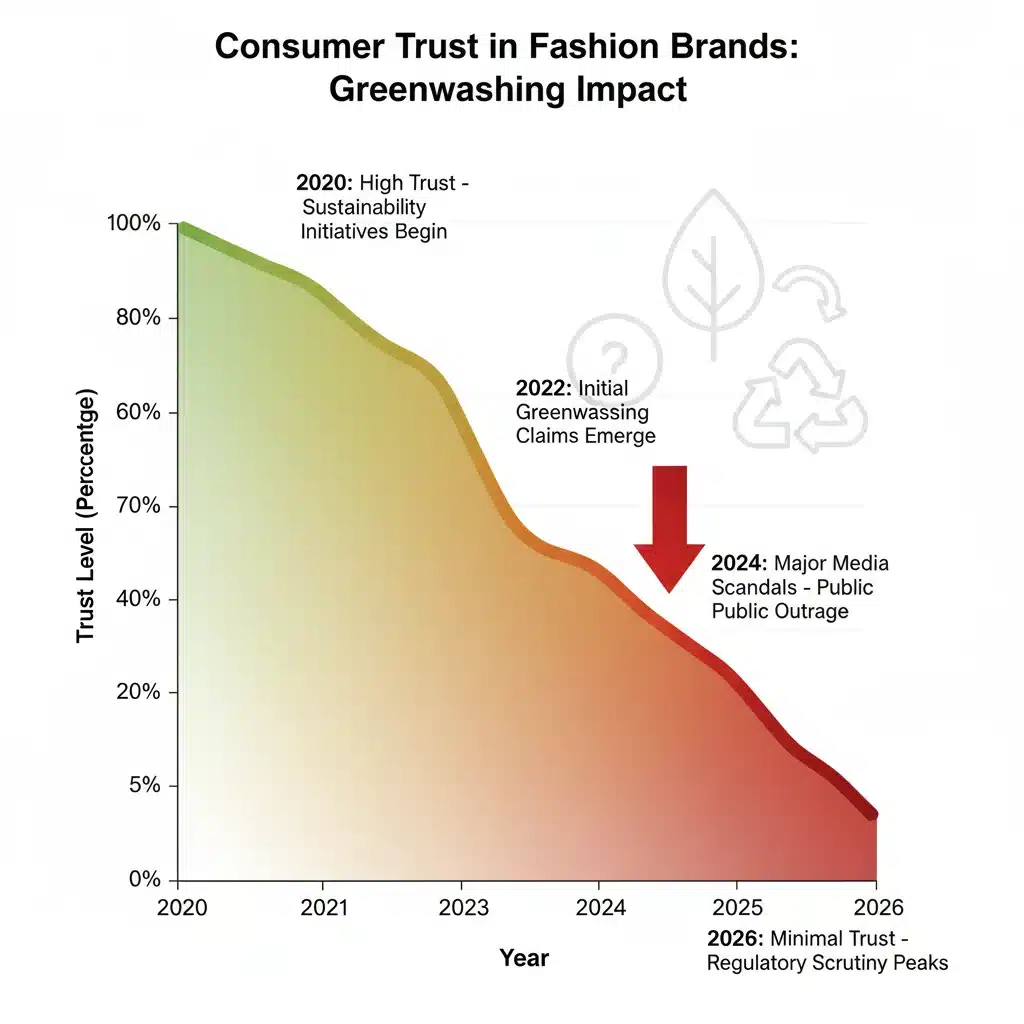
Before the full force of the greenwashing crackdown 2026 takes effect, the US fashion market has already witnessed a significant erosion of consumer trust. A recent study indicated that over 70% of consumers are skeptical of environmental claims made by fashion brands. This skepticism stems from numerous high-profile cases where brands were exposed for making exaggerated or false sustainability claims. Consumers are increasingly sophisticated; they are not only looking for ethical products but also for transparency and authenticity from the brands they support. The prevalence of greenwashing has created a ‘trust deficit,’ where even genuinely sustainable brands struggle to differentiate themselves from those merely paying lip service to environmental responsibility.
This deficit has tangible consequences. Consumers are less willing to pay a premium for ‘sustainable’ products if they doubt the veracity of the claims. They are also more likely to switch brands or actively boycott those perceived as disingenuous. The rise of social media and activist groups has amplified this issue, allowing information (and misinformation) to spread rapidly, often leading to swift public backlash against perceived greenwashers. The greenwashing crackdown 2026 is, in many ways, a response to this market failure – an attempt to restore integrity to environmental marketing and rebuild the broken bridges of consumer trust.
Mechanisms of the 2026 Federal Crackdown: What to Expect
While the precise details of the greenwashing crackdown 2026 are still being finalized, several key mechanisms are expected to be at its core. These will likely include:
- Stricter Substantiation Requirements: Brands will be required to provide clear, verifiable, and scientifically sound evidence for all environmental claims. Vague terms like ‘natural’ or ‘eco-friendly’ without specific, measurable backing will be heavily scrutinized. This means detailed life cycle assessments, third-party certifications, and transparent reporting will become the norm, not the exception.
- Expanded Enforcement Powers: The FTC and potentially other federal agencies will likely be granted enhanced powers to investigate, fine, and mandate corrective actions for brands found guilty of greenwashing. This could include significant financial penalties, mandatory public disclosures of non-compliance, and even product recalls.
- Clearer Definitions and Standards: The crackdown is expected to introduce more precise federal definitions for commonly used sustainability terms, reducing ambiguity and preventing brands from exploiting linguistic loopholes. This might involve setting specific thresholds for recycled content, biodegradability, or carbon neutrality claims.
- Focus on Supply Chain Transparency: Given the fashion industry’s complex global supply chains, the regulations will likely extend to claims made about the origin, production processes, and environmental impact throughout the entire product lifecycle. Brands will need to demonstrate due diligence in verifying claims made by their suppliers.
- Consumer Complaint Mechanisms: Easier and more robust avenues for consumers to report suspected greenwashing will likely be established, empowering the public to play a more active role in enforcement.
These mechanisms collectively aim to shift the burden of proof firmly onto the brands, compelling them to invest in genuine sustainable practices rather than merely in clever marketing. The greenwashing crackdown 2026 is not just about punishing bad actors; it’s about fundamentally reshaping the industry’s approach to environmental responsibility.
Impact on US Fashion Brands: Challenges and Opportunities
The impending greenwashing crackdown 2026 presents both formidable challenges and significant opportunities for US fashion brands. For those currently engaged in deceptive practices, the challenge is existential. They face not only financial penalties but also irreparable damage to their brand reputation and consumer loyalty. The cost of compliance – investing in sustainable materials, ethical production, and robust verification processes – will be substantial, particularly for smaller brands.
Challenges for Fashion Brands:
- Increased Costs: Implementing genuinely sustainable practices and providing rigorous substantiation requires significant investment in research, development, new technologies, and supply chain auditing.
- Complexity of Compliance: Navigating the new regulatory landscape will be complex, requiring legal expertise, environmental specialists, and robust internal reporting systems.
- Reputational Risks: Non-compliance or even the perception of greenwashing can lead to severe reputational damage, impacting sales and market share.
- Supply Chain Overhaul: Many brands will need to fundamentally re-evaluate and restructure their global supply chains to ensure transparency and verifiable sustainability at every stage.
Opportunities for Fashion Brands:
- Enhanced Consumer Trust: Brands that genuinely embrace sustainability and comply with the new regulations will be able to differentiate themselves, build stronger consumer trust, and command premium pricing.
- Innovation Catalyst: The crackdown will spur innovation in sustainable materials, production processes, and business models, leading to a more resilient and forward-thinking industry.
- Competitive Advantage: Early adopters and truly sustainable brands will gain a significant competitive edge over those slow to adapt.
- Attracting Talent and Investment: Companies with strong, verifiable sustainability credentials are more likely to attract top talent and impact investors.
The greenwashing crackdown 2026 will act as a powerful filter, separating those committed to genuine sustainability from those merely capitalizing on a trend. This distinction will be crucial for long-term success in the evolving fashion landscape.
Rebuilding Consumer Trust: A Post-Crackdown Paradigm
The ultimate goal of the greenwashing crackdown 2026 is to rebuild and solidify consumer trust in the environmental claims made by fashion brands. In a post-crackdown paradigm, consumers should theoretically be able to rely on the accuracy of sustainability labels and marketing messages, leading to more informed and confident purchasing decisions. This shift will have several profound implications for consumer behavior and market dynamics.
Key Aspects of Rebuilding Trust:
- Clarity and Transparency: Consumers will benefit from clearer, more standardized information, making it easier to compare products and understand their environmental impact. This increased transparency will reduce the cognitive burden on consumers, allowing them to make choices with greater confidence.
- Empowered Purchasing: With reliable information, consumers can align their purchasing decisions more closely with their values, supporting brands that genuinely champion sustainability. This empowerment can lead to a virtuous cycle, further incentivizing brands to improve their practices.
- Reduced Skepticism: Over time, as the effectiveness of the crackdown becomes apparent and instances of greenwashing diminish, consumer skepticism is expected to decrease. This renewed trust can translate into greater brand loyalty and a willingness to invest in sustainable products.
- Education and Awareness: The crackdown will likely be accompanied by public awareness campaigns, educating consumers on what constitutes a legitimate environmental claim and how to identify greenwashing. This increased literacy will further empower consumers.
The success of the greenwashing crackdown 2026 in rebuilding trust will hinge on consistent enforcement and the industry’s willingness to embrace the spirit, not just the letter, of the new regulations. It’s a long-term endeavor, but the initial steps are critical for resetting the relationship between fashion brands and their environmentally conscious consumers.
The Role of Technology in Ensuring Compliance and Transparency
In the wake of the greenwashing crackdown 2026, technology will play an indispensable role in helping fashion brands achieve compliance and foster transparency. From supply chain management to consumer-facing communication, technological advancements offer powerful tools to meet the rigorous demands of the new regulatory environment.
Technological Solutions for a Sustainable Future:
- Blockchain Technology: Blockchain can provide an immutable and transparent ledger for tracking materials from their origin through the entire supply chain to the final product. This can verify claims about organic sourcing, recycled content, fair labor practices, and carbon footprint, making greenwashing significantly harder.
- AI and Data Analytics: Artificial intelligence and advanced data analytics can be used to analyze vast amounts of data related to production processes, energy consumption, waste generation, and material sourcing. This allows brands to identify areas for improvement, optimize their environmental impact, and substantiate claims with concrete data.
- Digital Product Passports (DPPs): Increasingly, regulations are moving towards requiring Digital Product Passports, which are digital records attached to products containing comprehensive information about their origin, materials, repairability, and end-of-life options. These will be crucial for compliance with the greenwashing crackdown 2026.
- IoT Sensors: Internet of Things (IoT) sensors can monitor various environmental parameters throughout the manufacturing process, such as water usage, energy consumption, and emissions, providing real-time data for substantiation.
- Advanced Certification Platforms: Digital platforms will streamline the process of obtaining and verifying third-party certifications, ensuring that claims are backed by credible, independent assessments.
Embracing these technologies will not only aid compliance but also offer brands a competitive edge by demonstrating a proactive commitment to transparency and genuine sustainability. The greenwashing crackdown 2026 is, therefore, also a catalyst for technological adoption within the fashion sector.
Global Implications and the Future of Sustainable Fashion
While the greenwashing crackdown 2026 is a federal initiative within the US, its implications extend far beyond national borders. The global nature of the fashion industry means that US regulations often set precedents and influence practices worldwide. International brands operating in the US market will be compelled to adhere to these new standards, potentially leading to a ripple effect across their global operations.
Furthermore, other nations and regional blocs, such as the European Union, are also intensifying their efforts to combat greenwashing. The EU, for instance, is moving towards similar legislation requiring verifiable environmental claims and banning misleading advertising. This convergence of regulatory efforts suggests a global shift towards greater accountability in environmental marketing. The greenwashing crackdown 2026 in the US is a significant piece of this larger international puzzle, contributing to a future where sustainable fashion is not just a marketing buzzword but a verifiable reality.
The future of sustainable fashion, post-2026, will likely be characterized by:
- Standardization: Greater alignment on definitions and metrics for sustainability across the industry and globally.
- Accountability: Brands will be held to higher standards, with real consequences for deceptive practices.
- Innovation-Driven Sustainability: Continuous investment in new materials, processes, and technologies that genuinely reduce environmental impact.
- Consumer-Centric Transparency: Information will be readily available and easily understandable, empowering consumers to make truly sustainable choices.
The greenwashing crackdown 2026 is not merely a regulatory hurdle; it is a transformative event that will accelerate the industry’s journey towards a more ethical, transparent, and genuinely sustainable future.
Conclusion: A New Era of Authenticity for US Fashion
The arrival of the greenwashing crackdown 2026 signals a new era for the US fashion industry – an era defined by authenticity, transparency, and genuine commitment to sustainability. While the path to compliance will undoubtedly be challenging for many brands, the long-term benefits of rebuilding consumer trust and fostering a truly sustainable market are undeniable. Consumers, armed with reliable information, will be empowered to make choices that reflect their values, rewarding brands that walk the talk and penalizing those that continue to engage in deceptive practices.
This federal intervention is a necessary corrective measure, designed to restore integrity to environmental marketing and ensure that the promise of sustainable fashion is not merely a fleeting trend but a fundamental shift in how the industry operates. The brands that proactively embrace the spirit of the greenwashing crackdown 2026, investing in verifiable sustainable practices and transparent communication, will be the ones that thrive in this evolving landscape, solidifying their place in the hearts and minds of an increasingly conscious consumer base. The time for vague claims and empty promises is drawing to a close; the future of fashion demands nothing less than truth and genuine environmental stewardship.