Navigating SEC’s 2026 Climate Disclosure Rules: Financial Impact & Compliance for Public Companies
Anúncios
Understanding the SEC’s 2026 Climate Disclosure Rules: Financial Implications for Public Companies
The financial landscape for public companies is set to undergo a significant transformation with the impending enforcement of the U.S. Securities and Exchange Commission’s (SEC) 2026 Climate Disclosure Rules. These rules, aimed at enhancing transparency and providing investors with consistent, comparable, and reliable information about climate-related risks, will have profound financial implications for businesses across virtually all sectors. As the deadline approaches, understanding the intricacies of these regulations, their potential impact on financial statements, and the necessary steps for compliance becomes paramount for every public company. This comprehensive guide delves into the specifics of the SEC Climate Disclosure rules, exploring their scope, the challenges they present, and the strategic opportunities they create for forward-thinking organizations.
The SEC’s decision to mandate climate-related disclosures stems from a growing recognition of climate change as a systemic financial risk. Investors are increasingly demanding more robust and standardized environmental, social, and governance (ESG) data to inform their investment decisions, assess long-term value, and manage portfolio risks. The new rules are designed to meet this demand, ensuring that climate-related information is integrated into mainstream financial reporting, making it as rigorous and reliable as traditional financial data. This shift represents a pivotal moment, moving climate considerations from voluntary sustainability reports to mandatory financial disclosures, thereby elevating their importance within corporate governance and financial strategy.
Anúncios
The Genesis and Scope of the SEC Climate Disclosure Rules
The journey towards mandatory climate disclosures has been a long one, marked by increasing pressure from investors, environmental advocates, and international regulatory bodies. The SEC’s final rules, adopted in March 2024, require registrants to disclose climate-related risks that are reasonably likely to have a material impact on their business, results of operations, or financial condition. These disclosures are to be included in registration statements and annual reports (e.g., Form 10-K).
Key Elements of the Rules:
- Climate-Related Risks: Companies must identify and disclose material climate-related risks, including physical risks (e.g., extreme weather events, sea-level rise) and transition risks (e.g., policy changes, technological advancements, market shifts towards lower-carbon alternatives).
- Impacts on Strategy, Business Model, and Outlook: Disclosures must explain how identified climate-related risks have had or are reasonably likely to have a material impact on the company’s strategy, business model, and outlook. This includes impacts on operations, revenue, expenditures, and capital allocation.
- Governance and Risk Management: Companies are required to disclose their governance processes for climate-related risks and their processes for identifying, assessing, and managing such risks. This sheds light on how climate considerations are integrated into corporate decision-making.
- Greenhouse Gas (GHG) Emissions: The most contentious aspect of the rules, registrants must disclose their Scope 1 and/or Scope 2 GHG emissions if those emissions are material. Larger accelerated filers and accelerated filers are also required to obtain independent assurance for their Scope 1 and/or Scope 2 emissions disclosures. Importantly, the final rules removed the requirement for Scope 3 emissions disclosure, which would have covered indirect emissions from a company’s value chain, though companies are still encouraged to disclose them if they deem them material.
- Climate-Related Financial Statement Metrics: Companies must disclose the capitalized costs, expenditures expensed, charges, and losses incurred as a result of severe weather events and other natural conditions, as well as the impact of climate-related risks on their financial estimates and assumptions.
The phased implementation of these rules begins in fiscal year 2025 for large accelerated filers, with disclosures appearing in 2026 reports. Accelerated filers and smaller reporting companies will have later compliance dates. This staggered approach provides companies with some time to prepare, but the complexity and breadth of the requirements mean that preparation should be well underway.
Anúncios
Financial Implications: A Deep Dive
The SEC Climate Disclosure rules are not merely an exercise in reporting; they carry significant financial implications that will reshape corporate finance, investment decisions, and market valuations. Companies must prepare for direct and indirect costs, potential shifts in capital allocation, and increased scrutiny from investors and regulators.
Increased Compliance Costs:
The most immediate financial impact will be the costs associated with compliance. Companies will need to invest in:
- Data Collection and Management Systems: Establishing robust systems to collect, track, and manage vast amounts of climate-related data, including energy consumption, emissions, and climate risk assessments. This often requires new software, processes, and personnel.
- Expertise and Personnel: Hiring or training staff with expertise in climate science, sustainability reporting, and financial accounting to ensure accurate and compliant disclosures. This may involve environmental consultants, legal counsel, and dedicated ESG teams.
- Assurance Costs: Large accelerated filers and accelerated filers will incur costs for obtaining independent assurance over their Scope 1 and/or Scope 2 GHG emissions disclosures, similar to financial statement audits.
- Internal Controls: Developing and implementing internal controls over climate-related financial information, analogous to SOX compliance, to ensure the reliability and integrity of the disclosed data.
These compliance costs, while substantial, are an investment in future transparency and risk management. Companies that proactively invest in these areas may find themselves better positioned to meet regulatory demands and gain a competitive edge.
Impact on Financial Statements and Valuations:
The rules mandate the disclosure of climate-related financial statement metrics, which will directly affect reported financial figures. This includes:
- Capitalized Costs and Expenditures: Investments in climate mitigation (e.g., renewable energy projects, energy efficiency upgrades) or adaptation (e.g., resilient infrastructure) will be reflected as capitalized costs or operating expenditures.
- Charges and Losses: Financial impacts from severe weather events, such as asset damage, supply chain disruptions, and business interruption, will be quantified and disclosed as charges or losses. This could lead to increased volatility in earnings for companies highly exposed to physical climate risks.
- Impairment Charges: Assets vulnerable to climate transition risks (e.g., fossil fuel reserves, carbon-intensive infrastructure) may face impairment charges if their economic viability is reduced by policy changes or market shifts.
- Changes in Estimates and Assumptions: Climate risks will influence critical accounting estimates, such as asset useful lives, fair value measurements, and contingent liabilities (e.g., potential litigation related to climate change).
These disclosures will provide investors with a clearer picture of a company’s climate-related financial exposures, potentially influencing their valuation models, cost of capital, and investment allocations. Companies with significant climate risks that are not adequately managed or mitigated may see a higher cost of capital or a lower market valuation.

Strategic Shifts and Capital Allocation:
Beyond direct financial reporting, the SEC Climate Disclosure rules will necessitate strategic shifts in how companies operate and allocate capital. Boards and management teams will need to integrate climate considerations more deeply into strategic planning, capital expenditure decisions, and risk management frameworks.
- Investment in Decarbonization: Companies, particularly those in high-emitting sectors, will face pressure to invest in decarbonization technologies and strategies to reduce their Scope 1 and Scope 2 emissions. This could include transitioning to renewable energy, improving energy efficiency, or adopting cleaner production processes. Such investments, while costly initially, can lead to long-term operational savings and enhanced brand reputation.
- Supply Chain Resilience: The focus on climate risks will extend to supply chains. Companies will need to assess the climate resilience of their suppliers and potentially invest in diversifying supply chains or collaborating with suppliers on sustainability initiatives. While Scope 3 emissions are not mandated, understanding and managing supply chain climate risks will be crucial for overall business resilience.
- Product and Service Innovation: The rules may spur innovation as companies develop new climate-friendly products, services, and business models to meet evolving consumer preferences and regulatory demands. This could open new market opportunities and revenue streams.
- Mergers and Acquisitions: Climate risk assessments will become an integral part of due diligence for M&A activities. Companies with high climate exposure or poor climate performance may become less attractive acquisition targets, or their valuations may be discounted.
Reputational and Competitive Advantages:
While compliance presents challenges, it also offers opportunities. Companies that excel in their SEC Climate Disclosure and demonstrate robust climate risk management can:
- Enhance Investor Confidence: Transparent and high-quality disclosures can build trust with investors, potentially attracting ESG-focused capital and lowering the cost of financing.
- Improve Brand Reputation: A strong commitment to sustainability and climate action can enhance a company’s brand image, appeal to environmentally conscious consumers, and attract top talent.
- Gain Competitive Edge: Early adopters and leaders in climate disclosure and performance may gain a competitive advantage by demonstrating foresight, resilience, and a commitment to long-term value creation.
Challenges and Considerations for Compliance
Achieving compliance with the SEC Climate Disclosure rules will be a complex undertaking, presenting several challenges for companies.
Data Granularity and Reliability:
Collecting granular, accurate, and consistent climate-related data across diverse operations and global footprints is a significant hurdle. Many companies currently lack the sophisticated systems and processes needed to gather this information with the rigor required for financial reporting. Ensuring the reliability and auditability of this data will be critical, especially for GHG emissions that require assurance.
Materiality Assessments:
Determining what constitutes a ‘material’ climate-related risk or impact is subjective and will require careful judgment. Companies will need to develop robust internal processes and frameworks for conducting materiality assessments, considering both quantitative and qualitative factors, and aligning with SEC guidance.
Scope 3 Emissions Dilemma:
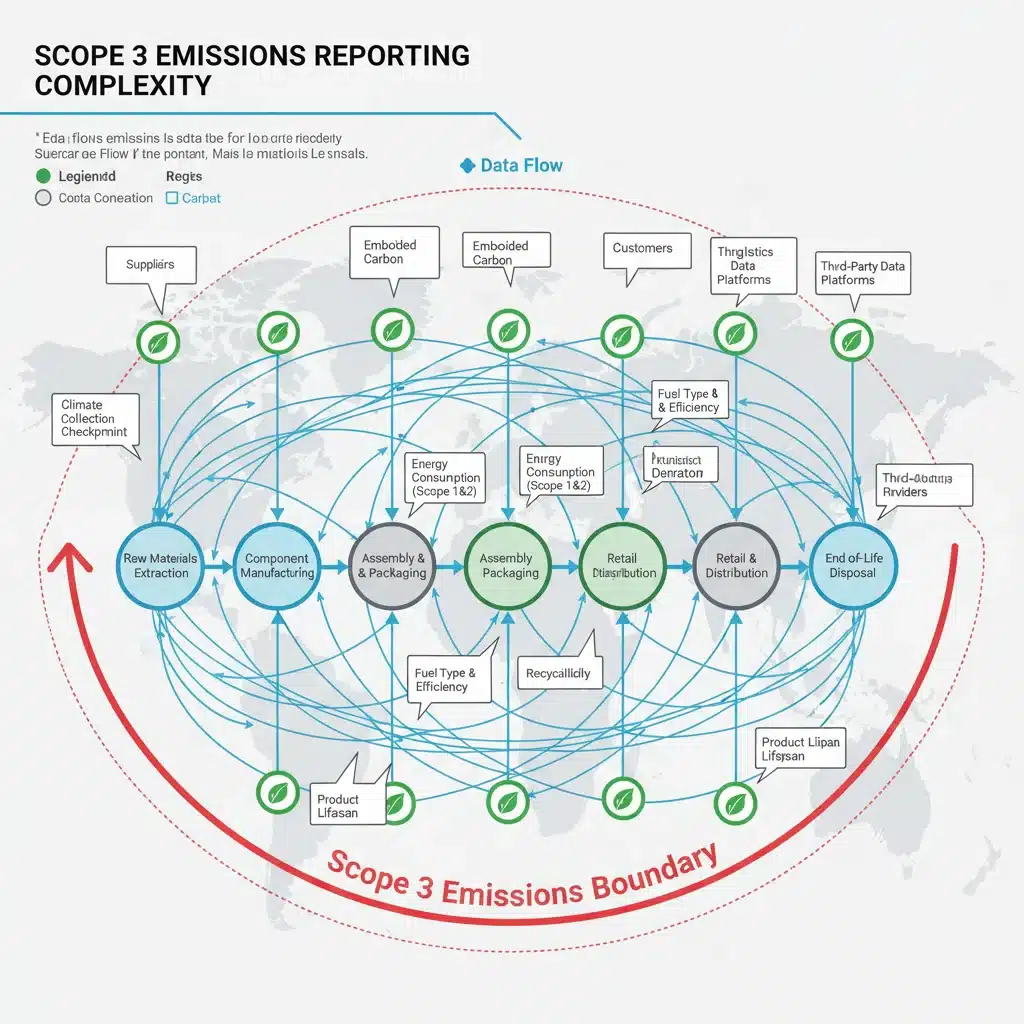
While the final rules removed the mandatory Scope 3 disclosure, the pressure from investors and other stakeholders for this data remains. Companies that choose to disclose Scope 3 emissions voluntarily will face immense challenges in data collection, as these emissions occur across the entire value chain, often involving numerous third-party suppliers and customers. The complexity and potential for inaccuracy in Scope 3 data could lead to reputational risks if not managed carefully.
Legal and Litigation Risks:
The increased transparency provided by these disclosures could expose companies to greater legal and litigation risks. Inaccurate or misleading climate disclosures could lead to shareholder lawsuits or enforcement actions by the SEC. Companies will need to work closely with legal counsel to ensure their disclosures are legally sound and defensible.
Integration with Existing Reporting:
Integrating climate disclosures into existing financial reporting processes and internal controls will require significant coordination between finance, sustainability, legal, and operational teams. This integration is crucial to ensure consistency, accuracy, and efficiency in reporting.
Strategies for Effective SEC Climate Disclosure Compliance
To navigate the complexities of the new rules, companies should adopt a proactive and integrated approach to compliance.
1. Establish a Cross-Functional Task Force:
Form a dedicated team comprising representatives from finance, legal, sustainability, operations, investor relations, and internal audit. This task force will be responsible for overseeing the entire compliance process, from data collection to final disclosure.
2. Conduct a Comprehensive Climate Risk Assessment:
Identify and assess all potential physical and transition climate-related risks relevant to the business. This should involve scenario analysis to understand potential impacts under different climate futures (e.g., 1.5°C vs. 2°C warming scenarios). Engage external experts if internal capabilities are lacking.
3. Enhance Data Infrastructure and Systems:
Invest in technology and systems capable of collecting, aggregating, and analyzing climate-related data with the necessary granularity and accuracy. This may involve upgrading existing ERP systems, implementing specialized ESG reporting software, or developing custom solutions. Ensure data quality protocols are in place.
4. Develop Robust Internal Controls:
Implement internal controls over climate-related information, similar to those for financial reporting, to ensure the reliability and integrity of the disclosed data. This includes documentation of processes, segregation of duties, and regular reviews.
5. Refine Governance and Risk Management Frameworks:
Clearly define the roles and responsibilities of the board and management in overseeing climate-related risks and opportunities. Integrate climate risk management into existing enterprise risk management (ERM) frameworks.
6. Prepare for GHG Emissions Reporting and Assurance:
For companies subject to Scope 1 and/or Scope 2 GHG emissions disclosure, begin collecting and verifying emissions data now. Engage with assurance providers early to understand their requirements and prepare for the assurance process.
7. Transparent Communication with Stakeholders:
Maintain open communication with investors, employees, and other stakeholders about the company’s approach to climate risk management and disclosure. This can help manage expectations and build trust.
8. Continuous Monitoring and Adaptation:
The climate regulatory landscape is evolving. Companies should continuously monitor developments, assess the effectiveness of their compliance strategies, and adapt as needed. This includes staying abreast of international standards and frameworks like the ISSB (International Sustainability Standards Board).
The Future of ESG Reporting and the SEC’s Role
The SEC Climate Disclosure rules are a significant step towards standardizing and mandating ESG reporting in the U.S., but they are likely not the final word. The global regulatory environment for sustainability reporting is rapidly evolving, with frameworks like the ISSB gaining traction internationally. While the SEC’s rules currently diverge from some international standards, particularly on Scope 3 emissions, there is an ongoing movement towards greater harmonization.
Companies should view these rules not just as a compliance burden but as an opportunity to build a more resilient, sustainable, and transparent business. Integrating climate considerations into core business strategy and financial reporting will become a hallmark of well-managed and future-proof organizations. The ability to effectively measure, manage, and disclose climate-related risks and opportunities will increasingly differentiate companies in the eyes of investors, customers, and employees.
Moreover, the focus on materiality within the SEC rules means that companies will need to continually assess how climate change impacts their specific business model and financial performance. This dynamic assessment will require ongoing engagement with stakeholders, robust analytical capabilities, and a commitment to continuous improvement in climate risk management and disclosure practices.
Conclusion
The SEC’s 2026 Climate Disclosure Rules represent a fundamental shift in corporate reporting, bringing climate-related financial risks and opportunities into the mainstream of public company disclosures. While the path to compliance will be challenging, requiring significant investment in systems, expertise, and processes, the long-term benefits of enhanced transparency, improved risk management, and increased investor confidence are substantial. Public companies that proactively embrace these rules, integrate climate considerations into their strategic decision-making, and commit to robust and reliable disclosures will be better positioned to navigate the evolving financial landscape, mitigate risks, and seize the opportunities presented by a global economy transitioning towards sustainability. The era of mandatory SEC Climate Disclosure is here, and companies must prepare to meet its demands head-on.