Biodegradable Fabric Breakthroughs: US Research Leads Sustainable Textile Future

Anúncios
In an era increasingly defined by environmental consciousness and the urgent need for sustainable practices, the textile industry stands at a critical juncture. For decades, traditional textile production has been a significant contributor to pollution, resource depletion, and landfill waste. However, a wave of innovation is sweeping through the sector, driven by dedicated researchers and institutions committed to forging a more sustainable path. This month, major breakthroughs in biodegradable fabric development announced by US research institutions are signaling a profound shift, offering glimpses into a future where our clothing and textiles not only perform exceptionally but also gracefully return to nature when their utility ends. These biodegradable fabric breakthroughs are not just incremental improvements; they represent fundamental paradigm shifts in how we conceive, produce, and dispose of textiles, promising a greener, more circular economy for fashion and beyond.
Anúncios
The urgency for such innovations is undeniable. Fast fashion’s relentless cycle of production and consumption has led to an unprecedented accumulation of textile waste, much of which is composed of synthetic, non-biodegradable materials that can persist in landfills for hundreds of years. The environmental footprint extends beyond disposal, encompassing vast water usage, chemical pollution from dyeing and finishing processes, and significant carbon emissions throughout the supply chain. Addressing these multifaceted challenges requires a holistic approach, and at the heart of this approach lies the development of truly sustainable materials. The recent announcements from US research institutions highlight a promising trajectory, showcasing novel materials and processing techniques that are set to redefine the very essence of textiles. These biodegradable fabric breakthroughs are poised to revolutionize everything from everyday apparel to specialized industrial applications, making sustainability an inherent property rather than an aftermarket add-on.
This article will delve into the specifics of these groundbreaking developments, exploring the science behind the new materials, the institutions leading the charge, and the potential implications for various industries. We will examine how these innovations are not only addressing environmental concerns but also opening up new avenues for design, performance, and consumer engagement. From plant-based polymers to advanced microbial manufacturing, the landscape of textile science is rapidly evolving, and the United States is emerging as a pivotal hub for this transformation. Understanding these biodegradable fabric breakthroughs is crucial for anyone interested in the future of sustainable living, ethical consumption, and technological advancement in materials science.
The Environmental Imperative: Why Biodegradable Fabrics Matter Now More Than Ever
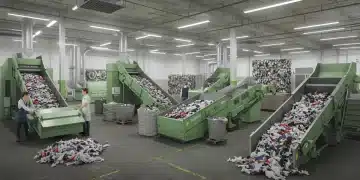
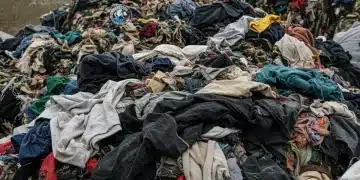
The global textile industry is one of the largest and most polluting industries in the world. Its environmental impact is staggering, touching upon every aspect of the production lifecycle, from raw material sourcing to manufacturing, transportation, and disposal. The reliance on synthetic fibers like polyester, nylon, and acrylic, derived from fossil fuels, contributes significantly to carbon emissions and microplastic pollution. These materials, while durable, are virtually indestructible in natural environments, leading to vast quantities of textile waste accumulating in landfills, incinerators, and even our oceans.
Anúncios
Consider the scale of the problem: an estimated 92 million tons of textile waste are generated globally each year, a number projected to rise dramatically in the coming decades. Only a small fraction of this waste is recycled, and even then, the recycling processes for mixed-fiber textiles are often complex and energy-intensive, sometimes resulting in downcycled products. This linear ‘take-make-dispose’ model is unsustainable and incompatible with the planet’s finite resources and delicate ecosystems. The fashion industry alone is responsible for 10% of global carbon emissions, more than all international flights and maritime shipping combined. Furthermore, textile dyeing and treatment contribute significantly to water pollution, with countless toxic chemicals discharged into waterways, impacting both aquatic life and human health.
This stark reality underscores the critical importance of biodegradable fabric breakthroughs. Biodegradable materials offer a fundamental solution by designing textiles that can naturally decompose at the end of their life cycle, returning their organic components to the earth without harming the environment. This circular approach minimizes waste, reduces reliance on virgin resources, and lessens the burden on landfills. By harnessing natural processes, biodegradable fabrics can break down into harmless components like water, carbon dioxide, and biomass, effectively completing a natural cycle. This not only mitigates pollution but also conserves valuable resources and reduces the overall ecological footprint of the textile industry.
Moreover, the rise of microplastic pollution from synthetic textiles has become a major environmental concern. Every time synthetic clothing is washed, tiny plastic fibers shed and enter our water systems, eventually making their way into oceans, contaminating marine life, and even entering the human food chain. Biodegradable alternatives, particularly those derived from natural or bio-based polymers, offer a viable solution to this pervasive problem. By breaking down completely, these fabrics prevent the release of persistent microplastics, thereby protecting ecosystems and public health. The push for biodegradable fabric breakthroughs is thus not merely about waste management; it’s about safeguarding biodiversity, preserving natural resources, and promoting a healthier planet for future generations. The recent developments from US research institutions are directly addressing these multifaceted environmental challenges, paving the way for a textile industry that is not only innovative but also inherently sustainable and regenerative.
Leading the Charge: US Research Institutions and Their Groundbreaking Contributions
The United States has long been a powerhouse of scientific and technological innovation, and its research institutions are now at the forefront of the global effort to develop sustainable textile solutions. Universities, government labs, and private research facilities are investing heavily in materials science, biotechnology, and engineering to unlock the potential of biodegradable fabrics. These institutions are not just conducting theoretical research; they are actively developing scalable, commercially viable solutions that could soon transform the textile landscape.
University-Led Innovations
Universities across the US are playing a pivotal role in these biodegradable fabric breakthroughs. Institutions like the Massachusetts Institute of Technology (MIT), Stanford University, Cornell University, and North Carolina State University (NCSU) are home to world-renowned materials scientists and textile engineers. Their work spans a wide range of approaches, from engineering new bio-based polymers to developing novel manufacturing processes that minimize environmental impact.
- MIT: Researchers at MIT have been exploring advanced bio-fabrication techniques. One notable area of focus is the development of textiles from cellulose, a ubiquitous plant polymer. Their work often involves modifying cellulose at the molecular level to enhance properties like strength, flexibility, and dye uptake, making it suitable for a wider range of applications while maintaining its biodegradability. They are also investigating self-healing materials and textiles that can adapt to environmental conditions, pushing the boundaries of what fabrics can do.
- Stanford University: Stanford has made significant strides in sustainable polymer chemistry. Their teams are developing new types of plastics and fibers that are not only biodegradable but also compostable, meaning they can break down in industrial composting facilities or even home composting environments. This includes research into polyhydroxyalkanoates (PHAs), a class of polyesters produced by bacteria, which offer excellent biodegradability and versatility.
- Cornell University: Known for its strong programs in fiber science and apparel design, Cornell is actively researching natural fibers and their enhanced performance. This includes optimizing the processing of traditional natural fibers like cotton, linen, and wool to reduce their environmental footprint, as well as exploring less common bio-based fibers from agricultural waste streams. They are also researching enzyme-based degradation processes to accelerate the natural breakdown of textiles.
- North Carolina State University (NCSU): As a leader in textile technology, NCSU’s College of Textiles is a hub for innovation in sustainable materials. Their research encompasses everything from developing new spinning technologies for bio-based fibers to creating functional finishes that are eco-friendly. Recent work has focused on circular textile systems, where garments can be easily disassembled and their components reused or biodegraded, embodying the principles of a true circular economy.
Government and Private Sector Research
Beyond academia, government laboratories and private research firms are also contributing significantly to biodegradable fabric breakthroughs. Organizations like the US Department of Agriculture (USDA) are exploring agricultural waste products as feedstocks for new biodegradable polymers, turning potential pollutants into valuable resources. Private companies, often in partnership with universities, are commercializing these innovations, bringing them from the lab to market.
For example, several startups are focusing on mycelium-based materials, growing ‘leather-like’ fabrics from fungi. Others are developing algae-based fibers or textiles woven from regenerated proteins. These diverse approaches highlight the breadth of research underway, all converging on the goal of creating textiles that are both high-performing and environmentally benign. The collaborative environment, where academic rigor meets industrial application, is accelerating the pace of these biodegradable fabric breakthroughs, promising a future where sustainable textiles are the norm, not the exception.
Key Technologies and Materials Driving Biodegradable Fabric Breakthroughs
The recent announcements are not confined to a single technology or material; rather, they represent a diverse portfolio of innovations. These biodegradable fabric breakthroughs are leveraging advancements in biotechnology, materials science, and chemical engineering to create materials that mimic or even surpass the performance of traditional textiles while offering complete biodegradability.
Bio-based Polymers and Fibers
One of the most significant areas of development is the creation of bio-based polymers. Unlike petroleum-derived synthetics, these polymers are sourced from renewable biomass, such as corn starch, sugarcane, cellulose, and even algae. Polylactic Acid (PLA) is a well-known example, already used in some textile applications, but research is pushing beyond PLA to develop polymers with enhanced properties.
- Polyhydroxyalkanoates (PHAs): As mentioned, PHAs are naturally occurring polyesters produced by bacteria. Researchers are optimizing microbial fermentation processes to produce PHAs more efficiently and in larger quantities. These polymers are fully biodegradable in various environments, including soil and marine water, and can be spun into fibers that rival the strength and durability of conventional synthetics. Recent US research has focused on tuning the properties of PHAs to create fabrics with specific characteristics, such as elasticity or water resistance.
- Cellulose-based Fibers: While cotton and linen are natural cellulose fibers, new methods are being developed to create regenerated cellulose fibers from wood pulp or agricultural waste. Lyocell (Tencel) is an existing example, known for its sustainable closed-loop production process. US institutions are further innovating in this space, exploring novel solvents and processing techniques to create cellulose fibers with superior performance, such as enhanced breathability and drape, while ensuring full biodegradability. They are also working on methods to incorporate functional properties directly into the cellulose structure.
- Algae and Protein-based Materials: Emerging research is exploring the potential of algae and various proteins as feedstocks for textile fibers. Algae can be grown with minimal resources and sequester carbon, making them an incredibly sustainable source. Protein-based fibers, often derived from agricultural byproducts like milk casein or soy protein, are being engineered to possess textile-like qualities, offering softness and biodegradability. These are still in earlier stages of development but show immense promise for future biodegradable fabric breakthroughs.
Advanced Manufacturing and Processing
It’s not just about the raw materials; how fabrics are made also plays a crucial role in their sustainability and biodegradability. US research institutions are developing advanced manufacturing techniques that reduce chemical use, water consumption, and energy input, while also enabling the creation of truly biodegradable textiles.
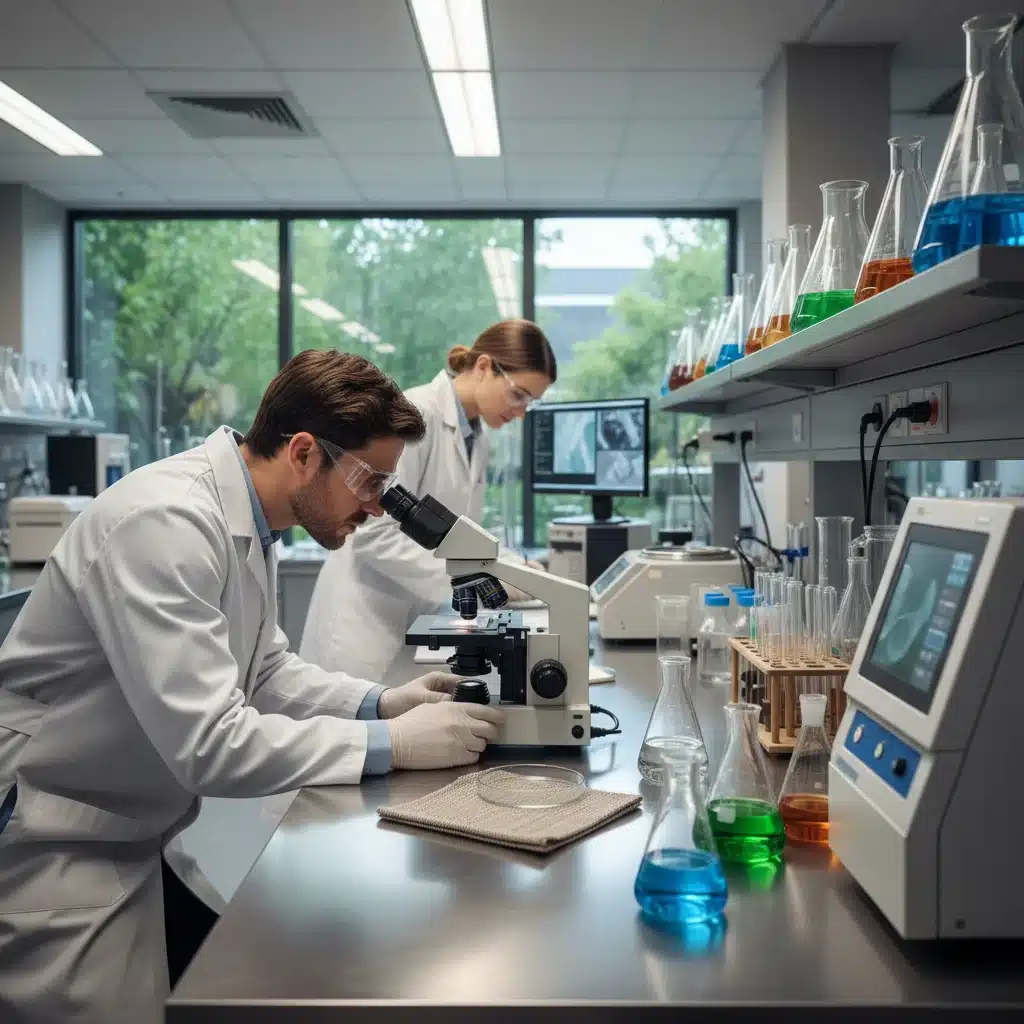
- Enzyme-assisted Processing: Enzymes are biological catalysts that can be used to break down or modify materials in a highly specific and environmentally friendly way. Researchers are developing enzyme-assisted processes for fiber extraction, fabric finishing, and even for accelerating the biodegradation of textiles at the end of their life. This approach significantly reduces the need for harsh chemicals.
- 3D Printing and Additive Manufacturing: The advent of 3D printing for textiles allows for precise material deposition, minimizing waste. When combined with biodegradable polymer inks, this technology can create complex textile structures that are inherently sustainable. US labs are exploring how to 3D print functional fabrics that are customized for performance and designed for easy biodegradation.
- Circular Design Principles: Beyond material science, a significant breakthrough is the integration of circular design principles from the outset. This means designing textiles that are not only biodegradable but also easy to disassemble, repair, and ultimately return to the biological cycle. Research focuses on designing fabrics with single material compositions or easily separable components to simplify end-of-life processing. These design considerations are integral to ensuring the long-term impact of biodegradable fabric breakthroughs.
These diverse technological advancements underscore a concerted effort to tackle the textile industry’s environmental challenges from multiple angles. By focusing on both novel materials and sustainable manufacturing processes, US research institutions are laying the groundwork for a future where textiles are a part of a regenerative, rather than extractive, economy.
Implications Across Industries: From Fashion to Functional Textiles
The impact of these biodegradable fabric breakthroughs extends far beyond the realm of sustainable fashion. While the fashion industry is a major focus due to its significant environmental footprint, the potential applications for biodegradable textiles are vast, touching upon numerous sectors that rely heavily on fabric-based materials. These innovations promise to revolutionize everything from medical implants to agricultural covers, offering sustainable alternatives where none previously existed or where existing options posed environmental challenges.
Fashion and Apparel
For the fashion industry, the implications are transformative. Biodegradable fabrics offer a pathway to truly sustainable clothing lines, allowing brands to offer stylish, high-quality garments that do not contribute to landfill waste. Consumers are increasingly demanding eco-friendly options, and these new materials provide brands with the means to meet that demand authentically. Imagine clothing that, after years of wear, can be composted in a home garden or an industrial facility, enriching the soil rather than polluting it. This shift not only addresses the end-of-life problem but also encourages a more conscious approach to consumption and disposal.
Furthermore, these biodegradable fabric breakthroughs are not sacrificing aesthetics or performance. Researchers are developing biodegradable alternatives that offer the same, if not superior, qualities as traditional fabrics – from the softness of silk to the durability of denim and the stretch of activewear. This means sustainable fashion will no longer be synonymous with compromise but rather with cutting-edge innovation and responsible luxury.
Home Textiles and Interiors
The home textile sector, encompassing everything from bedding and upholstery to curtains and carpets, also stands to benefit immensely. Many home textiles are currently made from synthetic blends that are difficult to recycle and contribute to indoor air pollution through off-gassing. Biodegradable alternatives can provide healthier, more sustainable options for our living spaces. Imagine carpets that can be composted at the end of their lifespan, or furniture upholstery that biodegrades naturally, reducing the environmental burden of interior design and furnishing.
Medical and Healthcare Textiles
The medical field utilizes a vast array of textiles, from surgical gowns and drapes to wound dressings and implantable devices. The demand for single-use medical textiles is immense, leading to significant waste generation. Biodegradable fabrics offer a compelling solution. For instance, biodegradable sutures and scaffolds for tissue engineering are already in use, designed to dissolve harmlessly within the body. Future biodegradable fabric breakthroughs could lead to disposable medical textiles that can be safely composted after use, reducing biohazard waste and environmental impact in hospitals and clinics.
Technical and Industrial Textiles
Beyond consumer goods, technical textiles used in agriculture, construction, and automotive industries also present significant opportunities. Biodegradable geotextiles, for example, can be used for erosion control or soil stabilization and are designed to degrade once their function is complete, eliminating the need for removal and disposal. Biodegradable packaging materials derived from textile technologies can offer sustainable alternatives to conventional plastics, reducing waste in supply chains. Even in the automotive sector, biodegradable composites could contribute to lighter, more sustainable car components. These diverse applications highlight the versatility and broad applicability of current biodegradable fabric breakthroughs.
Outdoor and Performance Wear
For outdoor enthusiasts and athletes, performance is paramount. Traditionally, synthetic fibers have dominated this sector due to their moisture-wicking, quick-drying, and durable properties. However, researchers are now developing biodegradable alternatives that maintain these crucial performance characteristics. Imagine hiking gear, rain jackets, or athletic wear that biodegrades after its functional life, without shedding microplastics into natural environments. This is a significant step towards truly sustainable adventure and sport.
The breadth of these potential applications underscores the profound impact that these biodegradable fabric breakthroughs will have. They are not merely niche solutions but represent a fundamental re-imagining of materials across virtually every industry that utilizes textiles, pushing us closer to a truly circular and sustainable global economy.
Challenges and the Road Ahead for Biodegradable Fabrics
While the recent biodegradable fabric breakthroughs are incredibly promising, the path to widespread adoption is not without its challenges. Scaling up production, ensuring cost-effectiveness, and educating consumers are critical hurdles that need to be overcome for these innovations to achieve their full potential. Addressing these challenges requires concerted effort from researchers, industry, policymakers, and consumers alike.
Scaling Production and Cost-Effectiveness
One of the primary challenges is scaling up the production of new biodegradable materials from laboratory quantities to industrial volumes. Many novel bio-based polymers and fibers are currently produced in smaller batches, making them more expensive than their conventional synthetic counterparts. Achieving economies of scale will require significant investment in new manufacturing infrastructure and optimization of production processes. This involves not only technological advancements but also the development of robust supply chains for renewable feedstocks.
The cost factor is crucial for market penetration. Consumers and businesses are often reluctant to adopt more sustainable options if they come with a substantial price premium. Research is therefore focused on developing more efficient and less resource-intensive production methods to bring down costs. Government incentives and subsidies for sustainable manufacturing can also play a vital role in bridging this cost gap during the initial stages of market adoption.
Performance and Durability
Another perception challenge is ensuring that biodegradable fabrics can match or exceed the performance and durability of traditional textiles. Early biodegradable plastics sometimes suffered from poorer mechanical properties or shorter lifespans. However, current biodegradable fabric breakthroughs are specifically engineered to overcome these limitations. Researchers are developing materials that are robust enough for their intended use, whether it’s a durable outdoor jacket or a long-lasting piece of furniture, while still maintaining their ability to biodegrade at the end of their life.
The balance between performance and biodegradability is delicate. A fabric that breaks down too quickly would not be practical, while one that takes too long defeats the purpose of biodegradability. Precise control over degradation rates, tailored to the specific application, is a key area of ongoing research and development.
Infrastructure for End-of-Life Management
For biodegradable fabrics to be truly effective, the necessary infrastructure for their end-of-life management must be in place. This includes robust industrial composting facilities capable of processing textiles, as well as clear labeling and collection systems to ensure these materials are diverted from landfills. Currently, such infrastructure is nascent in many regions, including parts of the US. Without proper disposal channels, even the most advanced biodegradable fabric might end up in a landfill, where conditions are often not conducive to biodegradation.
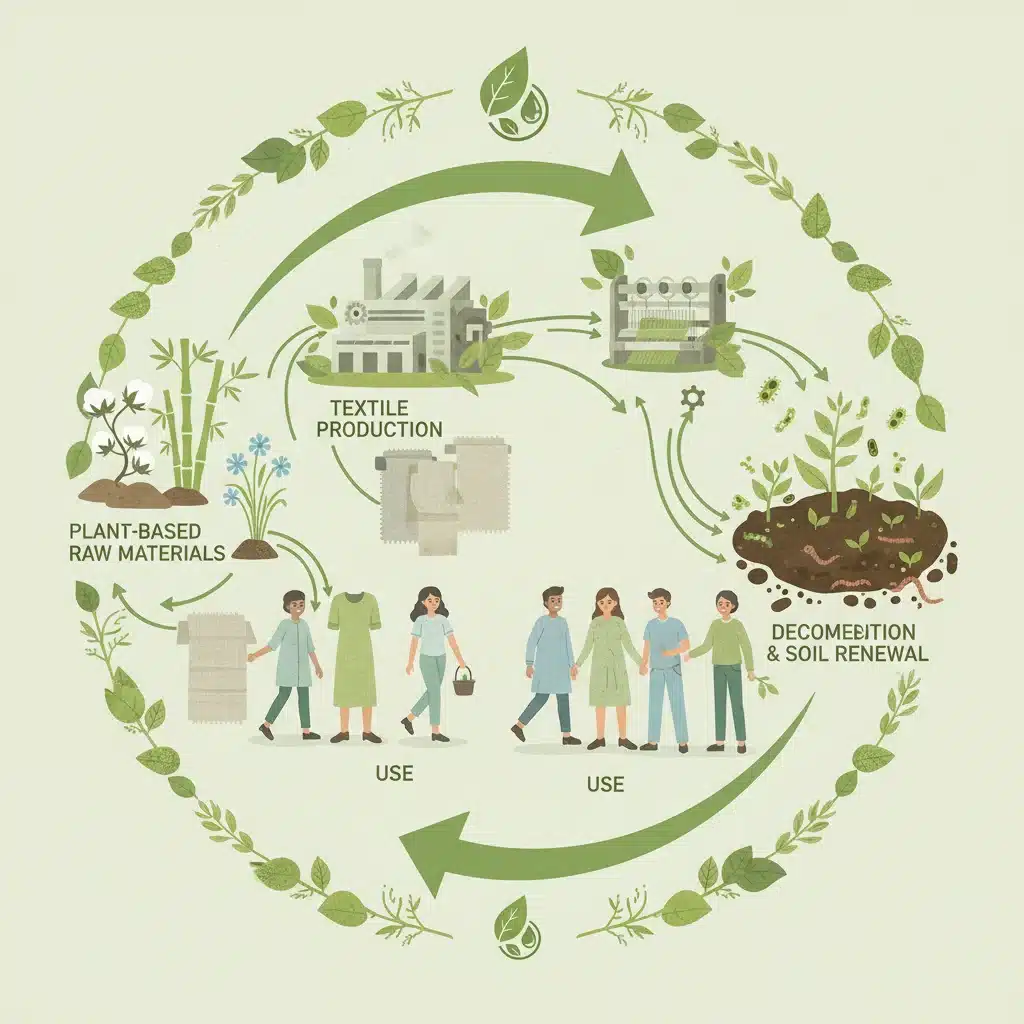
Public and private investment in composting and anaerobic digestion facilities, alongside educational campaigns for consumers on how to properly dispose of biodegradable textiles, will be essential. Standards and certifications for biodegradability and compostability also need to be harmonized and widely recognized to build consumer trust and guide industry practices.
Consumer Education and Acceptance
Finally, consumer education is paramount. Many consumers are still unaware of the environmental impact of their clothing choices or the benefits of biodegradable materials. Clear communication from brands about the biodegradability of their products, along with transparent labeling, will be crucial. Addressing misconceptions about biodegradability (e.g., that all ‘natural’ fibers are biodegradable or that biodegradable means instant decomposition) is also important. As these biodegradable fabric breakthroughs become more prevalent, fostering consumer understanding and acceptance will be key to driving demand and accelerating market transformation.
Despite these challenges, the momentum behind biodegradable fabric development is undeniable. The concerted efforts of US research institutions, coupled with increasing industry commitment and consumer awareness, suggest a bright future for sustainable textiles. The road ahead requires continued innovation, strategic investment, and collaborative action, but the potential rewards – a cleaner planet and a truly circular textile economy – are well worth the effort.
The Future Landscape: What’s Next for Sustainable Textiles?
The major breakthroughs in biodegradable fabric development announced by US research institutions this month are not merely isolated achievements; they are significant milestones on a much longer journey towards a fully sustainable textile ecosystem. The future landscape of textiles will be characterized by continued innovation, deeper integration of circular economy principles, and a holistic approach to material science and product design. These biodegradable fabric breakthroughs lay the groundwork for a textile industry that is not only environmentally responsible but also economically resilient and socially equitable.
Integration of AI and Machine Learning
The application of artificial intelligence (AI) and machine learning (ML) is set to accelerate the pace of innovation in sustainable textiles. AI can be used to optimize material formulations, predict the performance of new biodegradable polymers, and even design novel fiber structures with specific properties. Machine learning algorithms can analyze vast datasets on material properties, processing conditions, and degradation rates to identify optimal pathways for developing next-generation biodegradable fabrics. This data-driven approach will significantly reduce development time and costs, bringing new biodegradable fabric breakthroughs to market faster.
Biomimicry and Nature-Inspired Design
The future of sustainable textiles will increasingly draw inspiration from nature itself. Biomimicry – the imitation of models, systems, and elements of nature for the purpose of solving complex human problems – will play a crucial role. Researchers are studying how natural fibers like spider silk or abalone shells achieve their remarkable strength and resilience, aiming to replicate these properties in bio-based, biodegradable materials. This approach not only leads to high-performance textiles but also ensures inherent compatibility with natural degradation processes. Imagine fabrics that self-clean like lotus leaves or adapt to temperature like pinecones, all while being fully biodegradable.
Advanced Recycling and Upcycling for Circularity
While biodegradability is key for materials that cannot be economically recycled, the ultimate goal is a fully circular economy where textile waste is minimized. This means that alongside biodegradable fabrics, there will be continued advancements in textile recycling technologies. Innovations in chemical recycling, which can break down mixed-fiber textiles into their original polymer components for reuse, will complement biodegradable solutions. The future will likely see a hybrid approach: textiles designed for multiple life cycles through recycling, and those designed for safe biological degradation when recycling is no longer feasible. These two approaches will work in tandem to achieve true circularity.
Policy and Regulatory Support
The widespread adoption of biodegradable fabrics will also be influenced by policy and regulatory frameworks. Governments, both in the US and globally, are increasingly recognizing the need for sustainable textile policies. This could include mandates for brands to use a certain percentage of recycled or biodegradable materials, extended producer responsibility schemes that hold companies accountable for their products’ end-of-life, and incentives for consumers to choose sustainable options. Such policies will create a more favorable environment for biodegradable fabric breakthroughs to thrive and become mainstream.
Consumer Demand and Ethical Consumption
Ultimately, the driving force behind these transformations will be evolving consumer demand. As awareness of environmental issues grows, consumers are becoming more discerning about their purchases, seeking products that align with their values. The demand for ethically produced, sustainable, and biodegradable textiles will continue to grow, pushing brands and manufacturers to invest further in these innovations. The future will see consumers actively engaging with the lifecycle of their products, making informed choices that support a regenerative textile industry.
In conclusion, the recent biodegradable fabric breakthroughs from US research institutions are more than just scientific achievements; they are harbingers of a fundamental shift in our relationship with textiles. They offer hope for a future where fashion and function coexist with environmental stewardship, where materials are designed to nourish the earth rather than pollute it. The journey is ongoing, but with continued dedication to innovation and collaboration, the vision of a truly sustainable textile future is well within reach.