California’s Textile EPR Bill: A National Precedent for Sustainability
Anúncios
The fashion industry, a global economic powerhouse, has long grappled with a significant environmental footprint. From resource-intensive production to mountains of textile waste clogging landfills, the need for systemic change is undeniable. In a groundbreaking move, California is stepping up to address this challenge head-on with its pioneering Extended Producer Responsibility (EPR) bill for textiles. This ambitious legislation, anticipated to gain significant national momentum for adoption by 2026, aims to fundamentally redefine how textile products are managed throughout their entire lifecycle, placing the onus of responsibility squarely on the producers. The California Textile EPR initiative is not merely a state-level policy; it is a potential blueprint for a more sustainable and circular fashion economy across the United States and beyond.
For decades, the ‘take-make-dispose’ linear model of consumption has dominated the textile industry, leading to alarming levels of waste, pollution, and resource depletion. Consumers purchase fast fashion items, use them briefly, and then discard them, often without a second thought for their ultimate destination. Landfills globally are overflowing with textiles, many of which could be reused, repaired, or recycled. The environmental cost of this linear model is staggering, contributing to greenhouse gas emissions, water pollution, and microplastic contamination. Recognizing the urgency of this crisis, California, often a trailblazer in environmental policy, has taken a decisive step towards a more sustainable future with its proposed California Textile EPR legislation.
Anúncios
Understanding Extended Producer Responsibility (EPR) in the Textile Sector
At its core, Extended Producer Responsibility (EPR) is an environmental policy approach that extends a producer’s responsibility for a product to the post-consumer stage of a product’s life cycle. This means that instead of society or municipalities bearing the full cost and burden of managing discarded products, producers are held accountable for the collection, recycling, and disposal of their goods. In the context of the California Textile EPR bill, this principle is being applied to clothing, footwear, and other textile products, aiming to incentivize more sustainable design, production, and end-of-life management practices. The goal is to shift the financial and physical responsibility for textile waste from taxpayers and local governments to the brands and companies that put these products into the market.
The concept of EPR is not entirely new; it has been successfully implemented in various sectors, including electronics, batteries, and packaging, in numerous countries. However, its application to textiles, particularly on a comprehensive scale like that envisioned by the California Textile EPR bill, represents a significant and transformative step. The complexity of textile waste, which comprises a vast array of natural, synthetic, and blended fibers, often with intricate constructions and embellishments, presents unique challenges for collection, sorting, and recycling. The California Textile EPR legislation seeks to address these complexities by requiring producers to develop and fund systems that effectively manage these materials at the end of their useful life.
Anúncios
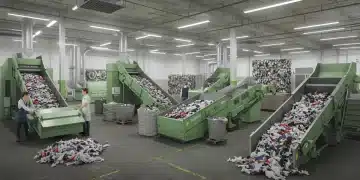
The proposed California Textile EPR framework would likely entail producers either individually or collectively (through Producer Responsibility Organizations, or PROs) establishing programs for the collection, sorting, reuse, repair, and recycling of textiles. This could involve setting up convenient drop-off points, funding innovative recycling technologies, and investing in market development for recycled textile materials. By internalizing these costs, the California Textile EPR bill aims to create a powerful economic incentive for brands to design products that are more durable, repairable, and easily recyclable, thereby reducing overall waste and promoting a truly circular economy. This shift in financial responsibility is a critical component of the California Textile EPR’s potential to drive widespread change.
The Genesis of California’s Textile EPR Bill: A Response to Growing Waste
California’s journey towards a textile EPR bill is a direct response to the escalating crisis of textile waste. The state, like the rest of the nation, generates millions of tons of textile waste annually, with the vast majority ending up in landfills. This waste stream not only occupies valuable landfill space but also contributes to methane emissions, a potent greenhouse gas, as natural fibers decompose anaerobically. Synthetic fibers, on the other hand, persist for centuries, leaching microplastics into the environment. The environmental and economic burden on local municipalities to manage this ever-growing volume of discarded textiles has become unsustainable.
Beyond the sheer volume, the complexity of textile waste further exacerbates the problem. The rise of fast fashion, characterized by low-cost, trend-driven garments with short lifespans, has dramatically increased the rate at which textiles enter the waste stream. Many of these items are made from mixed materials, making them difficult to recycle using current technologies. Furthermore, a significant portion of discarded textiles is still perfectly usable and could find new life through reuse or repair, yet lacks efficient collection and sorting infrastructure. The California Textile EPR initiative seeks to build out this critical infrastructure.
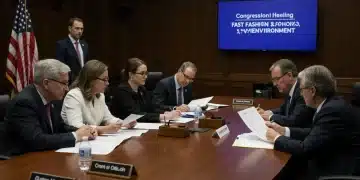
Recognizing these pressing issues, environmental advocates, waste management professionals, and increasingly, forward-thinking fashion brands, have been calling for legislative action. The California Textile EPR bill emerges from this growing consensus, aiming to create a comprehensive, statewide system that tackles textile waste at its source. It builds upon California’s history of leadership in environmental policy, following successful EPR programs for other product categories. The legislative process for the California Textile EPR bill has involved extensive stakeholder engagement, seeking to balance environmental objectives with the economic realities of the diverse textile industry, ensuring that the eventual framework is both effective and implementable. The anticipation surrounding the California Textile EPR’s 2026 adoption reflects the urgent need for such a solution.
Key Provisions and Potential Impact of the California Textile EPR
While the final details of the California Textile EPR bill are still being refined, several key provisions are expected to form its backbone. These typically include:
- Producer Responsibility Organizations (PROs): The establishment of PROs, funded by producers, to manage the collection, sorting, and processing of discarded textiles. These organizations would be responsible for achieving specific performance targets for reuse, repair, and recycling.
- Collection Infrastructure: The development of a robust and accessible statewide collection network for all types of textiles, making it easier for consumers to divert unwanted items from landfills. This could include curbside collection, drop-off centers, and retail take-back programs.
- Recycling and Reuse Targets: Mandatory targets for the reuse, repair, and recycling of textiles, which would increase incrementally over time. These targets would push producers to invest in innovative solutions and develop markets for recycled content.
- Eco-modulation of Fees: A system where fees paid by producers are adjusted based on the environmental impact of their products. For instance, products designed for durability, repairability, or ease of recycling would incur lower fees, thereby incentivizing sustainable design practices. This is a crucial aspect of the California Textile EPR.
- Transparency and Reporting: Requirements for producers to report on their textile waste management activities, including collection rates, recycling volumes, and environmental impacts, ensuring accountability and public access to data.
The potential impact of the California Textile EPR bill is far-reaching. Environmentally, it promises a significant reduction in landfill waste, lower greenhouse gas emissions, and decreased pollution from textile manufacturing. Economically, it could foster innovation in textile recycling technologies, create new green jobs in the collection and processing sectors, and stimulate the market for recycled textile materials. For consumers, it would provide more convenient options for responsibly disposing of unwanted textiles. Furthermore, the California Textile EPR could encourage brands to adopt more sustainable business models, from design to end-of-life, leading to higher quality, longer-lasting products. This shift towards a circular economy is a cornerstone of the California Textile EPR’s vision.
National Momentum: How California’s Bill Could Influence Other States
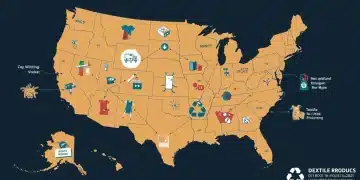
California has a well-established track record of pioneering environmental legislation that subsequently influences policy-making across the United States. Its large economy and population often mean that industries adapt their practices to meet California’s standards, which then become de facto national standards. The California Textile EPR bill is poised to follow this trajectory, gathering significant national momentum for adoption by 2026. Other states, facing similar challenges with textile waste and recognizing the success of California’s past EPR programs, are closely watching the development and implementation of this legislation.
There are several reasons why the California Textile EPR bill is likely to inspire national action. Firstly, the problem of textile waste is not unique to California; it is a nationwide issue. Other states are struggling with overflowing landfills and the environmental consequences of textile disposal. Secondly, having a patchwork of different EPR laws across states can be cumbersome and inefficient for national and international brands. A unified approach, or at least a set of harmonized standards, driven by a leading state like California, would be preferable for industry. Thirdly, the success of California’s EPR programs for other product categories provides a proven model for effective waste management and resource recovery. The California Textile EPR builds on this legacy.
As the California Textile EPR bill moves towards full implementation by 2026, it will provide a living laboratory for best practices, challenges, and solutions in textile circularity. The data and insights gained from California’s experience will be invaluable for other states contemplating similar legislation. Lobbying efforts from environmental groups and progressive industry players are also likely to intensify at the national level, advocating for a federal framework or encouraging state-by-state adoption based on the California model. The California Textile EPR is more than just a state law; it’s a catalyst for a national conversation and, potentially, a national movement towards sustainable textile management.
Challenges and Opportunities for the Fashion Industry
The implementation of the California Textile EPR bill will undoubtedly present both significant challenges and unparalleled opportunities for the fashion industry. For many brands, particularly those operating under a fast fashion model, the new responsibilities will require a fundamental shift in business practices and investment in new infrastructure. The financial implications of funding collection, sorting, and recycling programs could be substantial, potentially leading to increased operating costs. Furthermore, the technical complexities of recycling diverse textile materials at scale remain a hurdle, requiring significant research and development. Brands will need to re-evaluate their supply chains, design processes, and end-of-life strategies to comply with the California Textile EPR requirements.
However, these challenges also pave the way for immense opportunities. The California Textile EPR bill incentivizes innovation in sustainable design, material science, and recycling technologies. Brands that proactively embrace circularity will gain a competitive advantage, appealing to a growing consumer base that prioritizes environmental responsibility. The demand for recycled fibers and materials will likely surge, creating new markets and fostering a more resilient and localized textile industry. Collaborations between brands, recyclers, and technology providers will be essential, driving collective solutions to complex problems. The California Textile EPR could also lead to a stronger domestic textile economy, reducing reliance on overseas production and its associated environmental impacts.
For smaller brands and startups, the California Textile EPR framework could level the playing field by providing access to shared recycling infrastructure through PROs, which might otherwise be prohibitively expensive to develop individually. It also encourages transparency and accountability, rewarding brands with genuinely sustainable practices. Ultimately, the California Textile EPR is an opportunity for the fashion industry to transform itself from a linear, extractive model to a circular, regenerative one, securing its long-term viability and contributing positively to planetary health. Embracing the spirit of the California Textile EPR means embracing a future where fashion is synonymous with sustainability.

Preparing for 2026: What Brands and Consumers Need to Know
With the California Textile EPR bill gaining national momentum and a target for significant adoption by 2026, both brands and consumers need to start preparing for the impending changes. For brands, this means conducting a thorough assessment of their current product lifecycles, identifying areas for improvement in design for durability, repairability, and recyclability. Engaging with industry associations and potential Producer Responsibility Organizations (PROs) will be crucial to understand the evolving regulatory landscape and to contribute to the development of effective collection and recycling systems. Investing in research and development for new materials and recycling technologies will also be key. Brands should also begin to educate their consumers about the upcoming changes and how they can participate in textile take-back and recycling programs mandated by the California Textile EPR.
Consumers also have a vital role to play in the success of the California Textile EPR initiative. Understanding the importance of responsible textile disposal is the first step. This includes making conscious purchasing decisions, opting for durable and high-quality garments, and actively seeking out brands that demonstrate a commitment to sustainability. Once the California Textile EPR programs are in place, consumers will need to utilize the new collection infrastructure, properly sorting and depositing their unwanted textiles for reuse, repair, or recycling. This shift in consumer behavior, supported by accessible and convenient systems, will be instrumental in diverting textiles from landfills and closing the loop on textile waste. The California Textile EPR relies on collective action.
Education campaigns will be essential to inform both industry stakeholders and the general public about the requirements and benefits of the California Textile EPR. Clear communication regarding what can be recycled, where to drop off items, and how the system works will be paramount. The transition to a circular textile economy will not happen overnight, but with proactive planning, collaboration, and a shared commitment to sustainability, California’s pioneering efforts can pave the way for a more responsible and environmentally sound fashion industry nationwide. The 2026 timeline for the California Textile EPR represents a critical juncture for this transformative change, urging all stakeholders to prepare and participate actively.
The Future of Fashion: A Circular Economy Vision
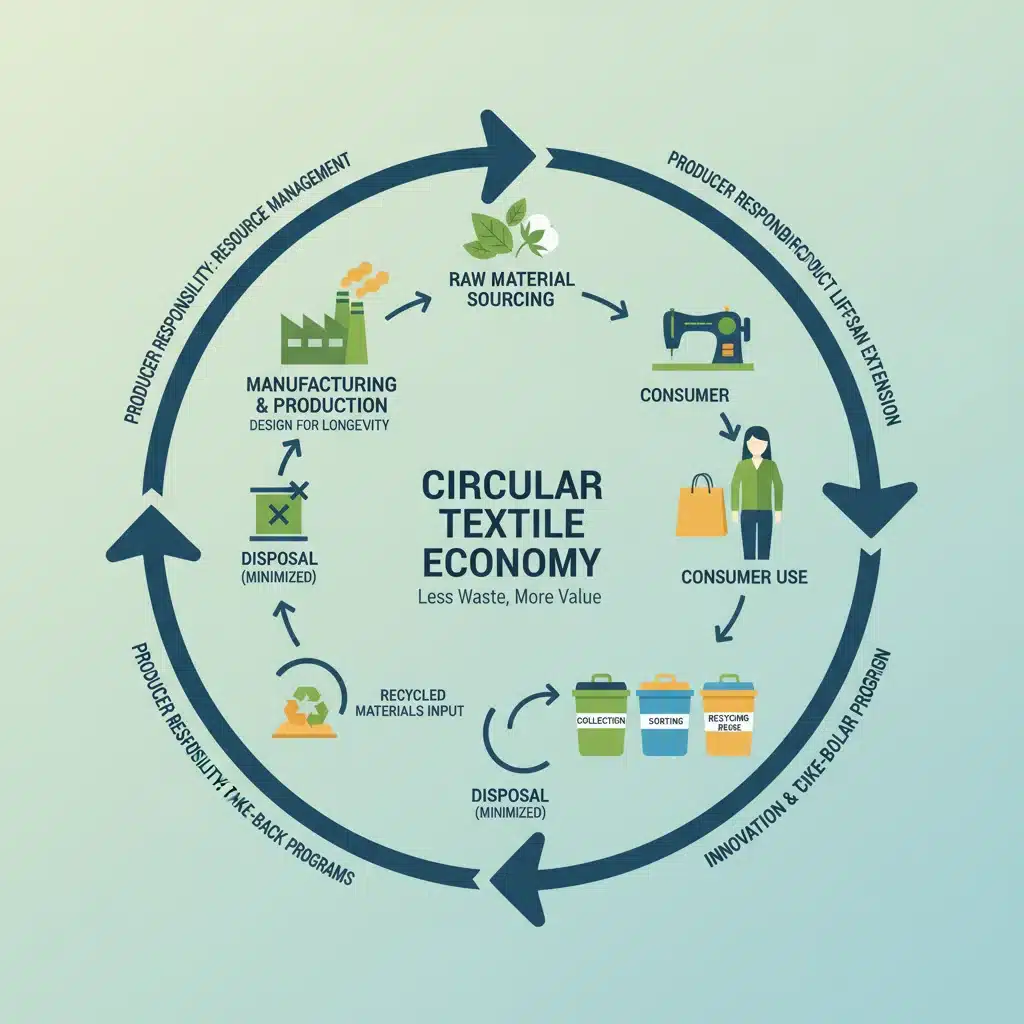
The California Textile EPR bill is a significant step towards realizing a true circular economy within the fashion industry. A circular economy is a systemic approach to economic development designed to benefit businesses, society, and the environment. In contrast to the traditional linear ‘take-make-dispose’ model, a circular economy aims to keep resources in use for as long as possible, extract the maximum value from them whilst in use, then recover and regenerate products and materials at the end of each service life. For textiles, this means designing products with longevity, repairability, and recyclability in mind from the very beginning. It means establishing robust systems for collecting, sorting, and processing used textiles, and developing markets for recycled content. The California Textile EPR is a legislative embodiment of this vision.
The long-term implications of the California Textile EPR, should it gain national traction, are profound. We could see a dramatic reduction in textile waste, a decrease in the demand for virgin resources, and a significant cut in the environmental footprint of clothing production. Innovation in fiber-to-fiber recycling technologies, which currently face significant challenges, would receive a massive boost, leading to more efficient and scalable solutions. The fashion industry could transform from a major polluter into a leader in sustainable practices, showcasing how economic growth can be decoupled from environmental degradation. The California Textile EPR is not just about waste management; it’s about fundamentally rethinking the entire value chain of textiles.
Ultimately, the success of the California Textile EPR and its potential national replication hinges on sustained commitment from all stakeholders: policymakers, brands, consumers, and innovators. It requires a collaborative spirit and a willingness to invest in a more sustainable future. As the 2026 target approaches, the focus will be on effective implementation, continuous improvement, and the ability to adapt to the evolving landscape of textile science and consumer behavior. California’s bold move with the California Textile EPR bill offers a beacon of hope and a practical pathway towards a fashion industry that is truly sustainable and regenerative, setting a powerful precedent for environmental responsibility on a national scale.