US Startups Revolutionize Fashion Recycling: 2026 Outlook
Anúncios
The fashion industry, a colossal global enterprise, has long grappled with an inconvenient truth: its immense environmental footprint. From resource-intensive production to mountains of textile waste, the traditional linear model of ‘take, make, dispose’ is unsustainable. However, a significant shift is underway, spearheaded by visionary US startups that are harnessing emerging technologies to revolutionize fashion material recycling. As we look towards 2026, these innovations promise not only to mitigate environmental damage but also to redefine the very fabric of sustainable fashion.
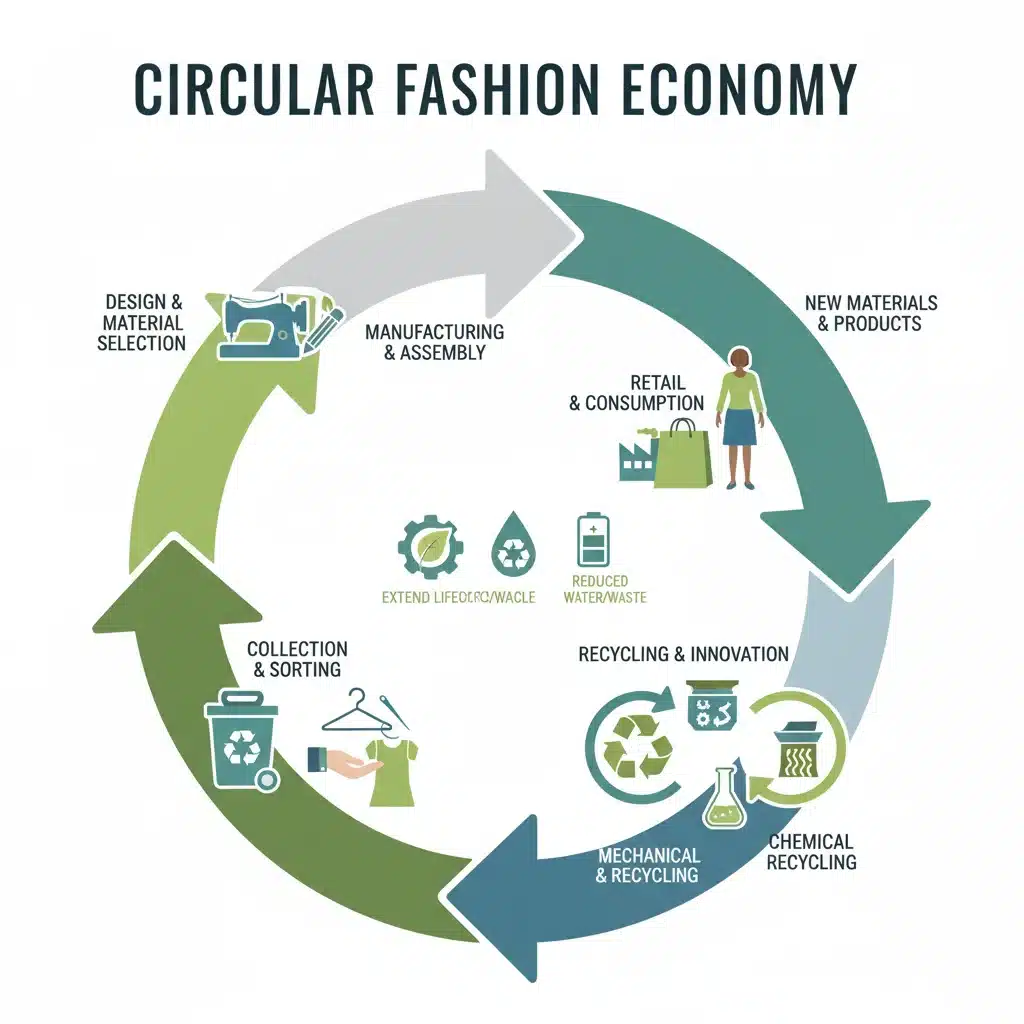
The scale of the problem is staggering. Annually, millions of tons of textile waste end up in landfills, contributing to greenhouse gas emissions and polluting ecosystems. Less than 1% of materials used to produce clothing are recycled into new clothing, representing a colossal loss of valuable resources. This grim reality has spurred a new generation of entrepreneurs and technologists to seek disruptive solutions, focusing intensely on advanced fashion material recycling techniques. Their efforts are not just about incremental improvements; they are about fundamental systemic change, poised to create a truly circular economy for fashion.
Anúncios
The Imperative for Innovation in Fashion Material Recycling
The urgency for innovative fashion material recycling solutions has never been greater. Consumers are increasingly demanding sustainable options, regulatory pressures are mounting, and brands are recognizing the economic and reputational benefits of embracing circularity. This confluence of factors has created a fertile ground for startups to flourish, attracting significant investment and talent. The goal is clear: transform textile waste from a liability into a valuable resource, closing the loop on fashion production.
Traditional textile recycling often faces challenges, particularly with blended fabrics (e.g., cotton-polyester). Separating these materials economically and efficiently has been a major hurdle. Moreover, the quality of recycled fibers can sometimes be inferior, limiting their application in high-value garments. US startups are directly addressing these limitations, developing sophisticated technologies that promise to overcome these long-standing obstacles. Their work is critical to achieving a future where waste is minimized, and resources are continually reused.
Anúncios
Chemical Recycling: A Game Changer for Blended Fabrics
One of the most promising avenues in fashion material recycling is chemical recycling. Unlike mechanical recycling, which often degrades fiber quality, chemical recycling breaks down textile waste into its molecular components, allowing for the regeneration of virgin-quality fibers. This is particularly effective for complex blends that are otherwise difficult to recycle.
Several US startups are at the forefront of this technology. Companies like Renewcell (though based in Sweden, its technology is gaining traction and investment in the US market) and emerging US-based ventures are developing processes to dissolve cellulose from cotton and other plant-based fibers, then reconstitute it into new, high-quality textile fibers like lyocell. Similarly, innovations are emerging for polyester, depolymerizing it back into its basic monomers, which can then be repolymerized into new polyester, endlessly, without loss of quality. By 2026, we can expect to see these chemical recycling processes scaled up, making a significant dent in textile waste and reducing reliance on virgin resources.
The beauty of chemical recycling lies in its ability to handle post-consumer waste, which is notoriously challenging due to varying compositions and contaminants. By effectively separating and purifying different fiber types, these technologies are paving the way for a truly circular textile economy, where old clothes can become new clothes, repeatedly. This is a radical departure from current practices and represents a monumental leap forward in sustainability.
Advanced Mechanical Recycling and Fiber-to-Fiber Innovation
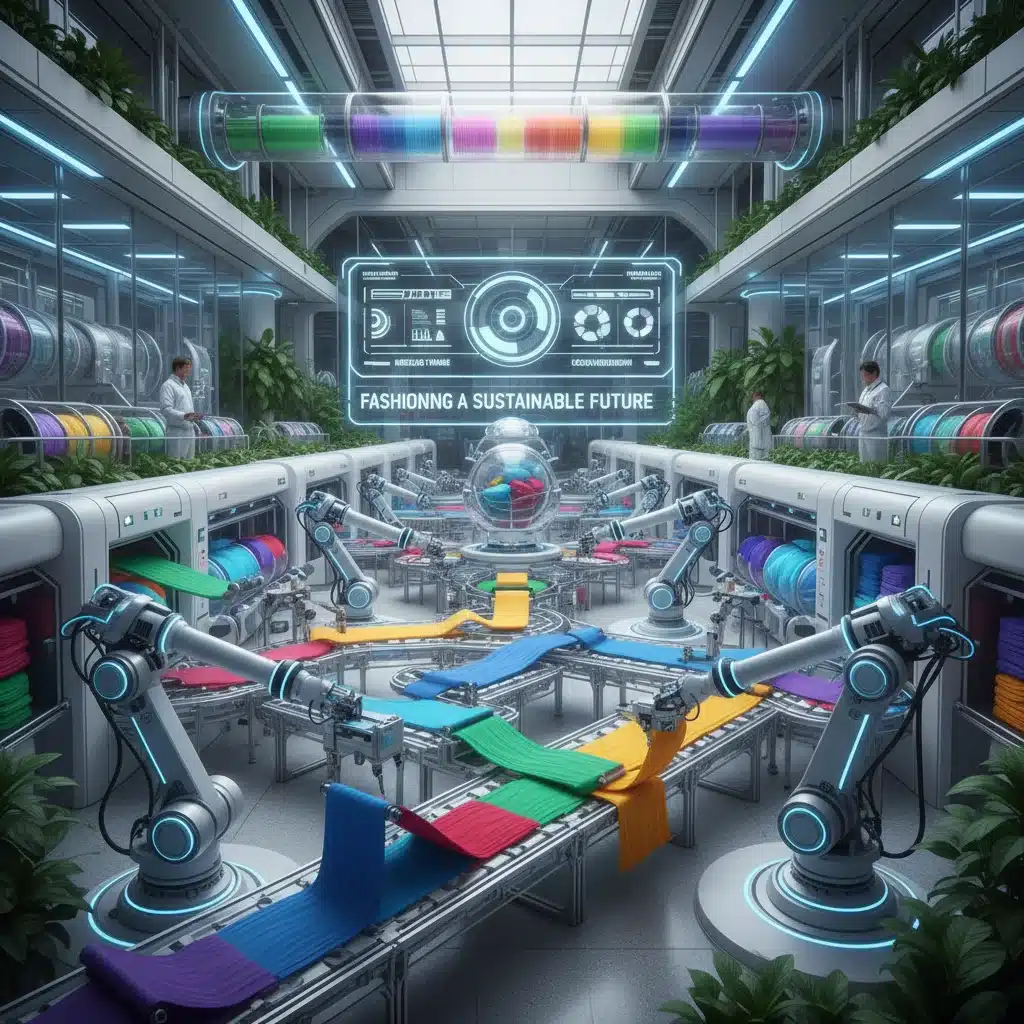
While chemical recycling offers groundbreaking solutions, advancements in mechanical fashion material recycling are also crucial. New sorting technologies, often leveraging AI and robotics, are making it possible to efficiently sort textiles by fiber type, color, and even quality, before they enter the recycling stream. This precision sorting is essential for maximizing the value of recycled materials.
Startups are also refining mechanical processes to produce higher-quality recycled fibers. This includes innovations in shredding, defragmentation, and spinning techniques that minimize fiber damage and maintain strength. The goal is to create ‘fiber-to-fiber’ recycling systems where discarded garments can be directly transformed into new yarn and fabrics, reducing the need for virgin materials. This approach is particularly effective for single-material textiles like 100% cotton or 100% polyester, offering a more direct and often less energy-intensive recycling route.
The synergy between advanced sorting and improved mechanical processing means that a wider range of textile waste can be effectively recycled, expanding the feedstock for sustainable fashion. By 2026, these integrated systems will be more prevalent, enabling brands to incorporate recycled content into their collections with greater ease and confidence.
The Role of Digitalization and AI in Optimizing Fashion Material Recycling
The revolution in fashion material recycling isn’t just about chemistry and mechanics; it’s also deeply intertwined with digital transformation. Artificial intelligence (AI), machine learning, and blockchain technology are playing increasingly vital roles in optimizing every stage of the recycling process, from collection to material valorization.
AI-powered sorting systems, for example, can identify and categorize textiles at an unprecedented speed and accuracy, far surpassing human capabilities. These systems can distinguish between different fiber compositions, colors, and even detect hazardous materials, ensuring that only suitable textiles enter specific recycling streams. This level of precision is critical for the efficiency and economic viability of high-tech recycling operations.
Blockchain technology, on the other hand, is enhancing transparency and traceability within the supply chain. By creating an immutable record of a garment’s journey – from its raw materials, through manufacturing, to its eventual recycling – blockchain can provide consumers and brands with verifiable proof of sustainability claims. This builds trust and encourages greater participation in circular initiatives. Imagine scanning a QR code on a garment and seeing its entire lifecycle, including where its materials were recycled. This is the future that US startups are building.

Smart Collection and Reverse Logistics
Effective fashion material recycling begins with efficient collection. US startups are developing smart collection systems and reverse logistics networks that make it easier for consumers to return unwanted clothing for recycling. This includes innovative drop-off points, take-back programs, and even at-home collection services, often integrated with digital platforms that incentivize participation.
Optimizing reverse logistics – the process of moving goods from their typical final destination for the purpose of capturing value or proper disposal – is crucial. AI algorithms can predict optimal collection routes, identify areas with high volumes of textile waste, and streamline the transportation of materials to recycling facilities. This reduces logistical costs and environmental impact, making the entire recycling ecosystem more efficient. By 2026, we anticipate a significant improvement in the infrastructure for collecting and sorting textile waste, driven by these smart solutions.
Key Players and Emerging Technologies in 2026
The landscape of fashion material recycling in the US is dynamic, with several startups making significant strides. While specific company names can change rapidly, the types of technologies they are developing provide a clear picture of the future:
- Fiber Regeneration Pioneers: Companies focusing on chemical processes to break down and reconstitute fibers like cotton, polyester, and nylon into virgin-quality materials. These technologies are crucial for handling complex blends and achieving true circularity.
- Automated Sorting Specialists: Startups developing AI and robotic systems for high-speed, accurate sorting of textile waste by composition, color, and quality. This pre-processing step is fundamental to efficient recycling.
- Bio-based Material Innovators: While not strictly recycling, some startups are also focusing on creating new, biodegradable materials from agricultural waste or other sustainable sources, which can then be more easily recycled or composted at the end of their life, further closing the loop.
- Decentralized Micro-Recycling Hubs: A concept gaining traction is the creation of smaller, localized recycling facilities that can process textile waste closer to its source, reducing transportation emissions and fostering local circular economies.
- Digital Traceability Platforms: Companies leveraging blockchain and other digital tools to provide transparency and accountability throughout the fashion supply chain, ensuring that recycled materials are genuinely integrated and tracked.
These diverse approaches collectively contribute to a robust ecosystem for fashion material recycling. The synergy between these different technological advancements is what will truly accelerate the transition to a sustainable fashion industry.
Investment and Collaboration Fueling Growth
The burgeoning field of fashion material recycling has attracted significant investment from venture capitalists, corporate sustainability funds, and even fashion brands themselves. Major fashion labels are increasingly investing in or partnering with these startups, recognizing that embracing circularity is not just an ethical imperative but a business necessity. These collaborations provide startups with much-needed capital, market access, and industrial expertise, accelerating their journey from pilot projects to commercial scale.
Government initiatives and grants also play a crucial role in fostering innovation, providing support for research and development in sustainable technologies. As the regulatory environment becomes more favorable for circular practices, we can expect even greater acceleration in the adoption of these recycling solutions. By 2026, these partnerships will have solidified, leading to more widespread implementation of advanced recycling technologies across the fashion supply chain.
Challenges and Opportunities Ahead for Fashion Material Recycling
Despite the remarkable progress, the journey towards a fully circular fashion industry through advanced fashion material recycling is not without its challenges. Scaling up these innovative technologies from laboratory or pilot stages to industrial capacity requires substantial investment, infrastructure development, and consistent feedstock supply. The economics of recycling must also become more competitive with virgin material production, which often benefits from established supply chains and lower costs.
Consumer behavior also remains a critical factor. Encouraging widespread participation in take-back programs and ensuring that textiles are sorted correctly at the household level are essential for providing clean and consistent feedstock for recyclers. Education and incentive programs will be vital in shifting consumer habits towards greater responsibility.
However, these challenges also present immense opportunities. The development of a robust fashion material recycling infrastructure can create new jobs, stimulate economic growth, and position the US as a leader in sustainable manufacturing. For brands, embracing circularity can enhance brand loyalty, reduce supply chain risks, and open new avenues for product innovation. The demand for recycled materials is projected to grow significantly, creating a lucrative market for those who can supply high-quality, sustainably sourced fibers.
The Vision for 2026 and Beyond
By 2026, the landscape of fashion material recycling in the US will be markedly different from today. We will see:
- Increased Availability of Recycled Fibers: A wider range of high-quality recycled cotton, polyester, and other fibers will be commercially available, making it easier for brands to integrate them into their collections.
- Mainstream Chemical Recycling: Chemical recycling facilities, particularly for polyester and cellulose-based fibers, will be operating at scale, processing significant volumes of post-consumer waste.
- Smarter Supply Chains: AI and blockchain will be standard tools for optimizing collection, sorting, and tracing recycled materials, enhancing efficiency and transparency.
- Stronger Brand-Recycler Partnerships: Collaborations between fashion brands and recycling startups will be deeper and more integrated, driving innovation and market adoption.
- Evolving Design for Circularity: Designers will increasingly incorporate circularity principles from the outset, using materials that are easier to recycle and designing garments for longevity and end-of-life considerations.
The shift towards a circular economy for fashion is not merely a trend; it is an irreversible transformation. US startups, with their innovative spirit and technological prowess, are at the vanguard of this movement. Their relentless pursuit of advanced fashion material recycling solutions is not only addressing an urgent environmental crisis but also laying the groundwork for a more resilient, resource-efficient, and sustainable fashion industry for generations to come.
The journey is ongoing, but the trajectory is clear: by 2026, the impact of these emerging technologies and the dedication of US startups will have fundamentally reshaped how we think about, produce, and consume fashion. The future of fashion is circular, and it’s being built here and now.