Eco-Fashion Sustainability: Top 5 Materials for 2026
Anúncios
Is Your Eco-Fashion Truly Sustainable? A Comparison of Long-Term Benefits for 5 Popular Materials in 2026
The fashion industry, historically a significant contributor to environmental degradation, is undergoing a profound transformation. As consumers become increasingly aware of their ecological footprint, the demand for eco-fashion has surged. But what exactly constitutes truly sustainable fashion, and how can we discern between genuine efforts and mere “greenwashing”? In 2026, the landscape of sustainable materials is more diverse and innovative than ever. This comprehensive guide will delve into the long-term benefits of five popular materials, helping you make informed choices for a more ethical and environmentally conscious wardrobe. Our focus is on understanding the full lifecycle impact, from production to disposal, to determine which materials genuinely contribute to eco-fashion sustainability.
Anúncios
Understanding the Pillars of Eco-Fashion Sustainability
Before we explore specific materials, it’s crucial to define what makes a material truly sustainable. It’s not just about being “natural” or “organic.” True eco-fashion sustainability encompasses a holistic approach, considering several key factors:
- Resource Efficiency: How much water, energy, and land are required to produce the material? Are renewable resources prioritized?
- Environmental Impact: What is the material’s carbon footprint? Does its production lead to pollution (air, water, soil) or biodiversity loss? Are harmful chemicals used?
- Ethical Production: Are fair labor practices and safe working conditions ensured throughout the supply chain?
- Durability and Longevity: How long will the garment last? Durable items reduce the need for frequent replacements, thus minimizing waste.
- End-of-Life Options: Can the material be recycled, biodegraded, or composted without releasing harmful substances? Does it contribute to a circular economy?
- Innovation and Circularity: Does the material support a closed-loop system where waste is minimized and resources are continually reused?
These pillars form the foundation upon which we will evaluate our chosen materials, providing a robust framework for assessing their contribution to eco-fashion sustainability.
Anúncios
1. Organic Cotton: The Enduring Classic of Eco-Fashion Sustainability
Organic cotton has long been a staple in the sustainable fashion movement, and its benefits continue to resonate in 2026. Unlike conventional cotton, which is notoriously chemical-intensive, organic cotton is grown without synthetic pesticides, herbicides, or genetically modified organisms (GMOs). This significantly reduces its environmental impact.
Long-Term Benefits of Organic Cotton:
- Reduced Chemical Exposure: By eliminating harmful chemicals, organic cotton farming protects soil health, water quality, and the health of farmers and local communities. This is a critical aspect of eco-fashion sustainability.
- Improved Soil Health: Organic farming practices, such as crop rotation and composting, enrich soil fertility, enhance water retention, and promote biodiversity. Healthy soil acts as a carbon sink, sequestering atmospheric carbon dioxide.
- Lower Water Footprint (potentially): While cotton is generally water-intensive, organic farming methods can improve soil’s water-holding capacity, potentially reducing irrigation needs over time, especially in rain-fed systems.
- Biodegradability: As a natural fiber, organic cotton is fully biodegradable, returning its nutrients to the earth at the end of its life cycle, provided it hasn’t been treated with non-biodegradable dyes or finishes.
- Durability and Comfort: Organic cotton garments are often known for their softness, breathability, and durability, offering a long lifespan if cared for properly.
Challenges and Considerations:
Despite its many advantages, organic cotton faces challenges. Its production can still be water-intensive in certain regions, and the certification process can be costly for farmers. Furthermore, the global demand for organic cotton still significantly lags behind conventional cotton, limiting its overall impact. However, ongoing innovations in water-efficient farming and regenerative agriculture practices are continually improving its eco-fashion sustainability profile.

2. Recycled Polyester (rPET): A Circular Solution for Eco-Fashion Sustainability
Recycled polyester, often referred to as rPET, is a synthetic fiber made from recycled plastic, primarily post-consumer PET bottles. It has gained immense popularity as a sustainable alternative to virgin polyester, which is derived from petroleum – a finite resource.
Long-Term Benefits of rPET:
- Waste Reduction: rPET diverts plastic waste from landfills and oceans, addressing a major environmental crisis. This directly contributes to a more circular economy and enhances eco-fashion sustainability.
- Reduced Energy Consumption: Producing rPET uses significantly less energy (up to 59% less) compared to virgin polyester, leading to a smaller carbon footprint.
- Lower Greenhouse Gas Emissions: The energy savings translate into a substantial reduction in greenhouse gas emissions.
- Resource Conservation: By reusing existing plastic, rPET reduces the reliance on crude oil, a non-renewable resource.
- Durability and Performance: rPET retains the desirable qualities of virgin polyester, such as strength, wrinkle resistance, and quick-drying properties, making it suitable for activewear and outerwear, ensuring garments last longer.
Challenges and Considerations:
While rPET offers significant environmental advantages, it’s not without its drawbacks. The recycling process itself can be energy-intensive, and microplastic shedding during washing remains a concern, contributing to ocean pollution. The quality of recycled polyester can degrade with each recycling cycle, making true “closed-loop” recycling challenging. However, advancements in chemical recycling technologies promise to address these issues, paving the way for higher quality and infinitely recyclable rPET, further bolstering its role in eco-fashion sustainability.
3. Tencel Lyocell: A Regenerative Fiber for the Future of Eco-Fashion
Tencel Lyocell is a brand of lyocell fiber produced by Lenzing AG. It’s made from sustainably sourced wood pulp, typically eucalyptus, using a closed-loop solvent spinning process. This innovative manufacturing method sets it apart as a leader in eco-fashion sustainability.
Long-Term Benefits of Tencel Lyocell:
- Sustainable Sourcing: The wood pulp comes from sustainably managed forests, often certified by organizations like the Forest Stewardship Council (FSC). Eucalyptus trees grow quickly and require less water and land than cotton.
- Closed-Loop Production: The defining feature of Tencel Lyocell is its closed-loop manufacturing process. Over 99% of the solvent and water used in production are recovered and reused, minimizing waste and pollution.
- Low Water and Energy Usage: Compared to conventional cotton, Tencel Lyocell production requires significantly less water and energy.
- Biodegradability and Compostability: As a cellulose-based fiber, Tencel Lyocell is fully biodegradable and compostable under industrial conditions, returning to nature at the end of its life.
- Luxurious Feel and Performance: Tencel Lyocell is renowned for its exceptional softness, smooth drape, breathability, and moisture-wicking properties, making it a comfortable and versatile fabric. Its durability contributes to the longevity of garments, a key aspect of eco-fashion sustainability.
- Hypoallergenic: Its smooth fiber surface makes it gentle on skin, suitable for sensitive individuals.
Challenges and Considerations:
The primary challenge for Tencel Lyocell is its relatively higher cost compared to more conventional fibers, which can limit its accessibility. While the closed-loop system is highly efficient, the initial sourcing of wood pulp still requires careful oversight to prevent deforestation. However, Lenzing’s commitment to sustainable forestry and continuous innovation solidifies Tencel Lyocell’s position as a top contender for eco-fashion sustainability.
4. Hemp: The Resilient and Regenerative Eco-Fiber
Hemp, derived from the Cannabis sativa plant, is one of humanity’s oldest cultivated crops and is experiencing a resurgence in the sustainable fashion world. Its inherent resilience and minimal environmental impact make it an excellent choice for eco-fashion sustainability.
Long-Term Benefits of Hemp:
- Minimal Water and Land Use: Hemp requires significantly less water than cotton to grow and thrives in various climates, often without the need for irrigation. It also yields a high amount of fiber per acre.
- No Pesticides or Herbicides: Hemp is naturally pest-resistant and grows densely, suppressing weeds, thus eliminating the need for harmful chemical inputs. This preserves soil health and biodiversity.
- Soil Regeneration: Hemp’s deep root system helps to prevent soil erosion and can even remediate contaminated soil, making it a regenerative crop.
- Carbon Sequestration: Hemp plants are highly efficient at absorbing CO2 from the atmosphere, acting as a powerful carbon sink.
- Exceptional Durability: Hemp fiber is incredibly strong and durable, becoming softer with each wash without losing its integrity. This longevity is paramount for eco-fashion sustainability.
- Biodegradability: Like organic cotton, raw hemp fiber is fully biodegradable.
- Versatility: Hemp can be blended with other fibers to create a wide range of textiles, from soft and drapey to rugged and structured.
Challenges and Considerations:
The main hurdles for hemp are processing difficulties (decortication can be energy-intensive) and a lack of established infrastructure in many regions due to historical legal restrictions. The texture of pure hemp can sometimes be perceived as rough, though modern processing techniques are improving its softness. As regulations ease and demand grows, investment in processing technology is increasing, making hemp a more viable and scalable option for eco-fashion sustainability.
5. Piñatex: Innovative Plant-Based Leather for Eco-Fashion Sustainability
Piñatex is an innovative, natural, and sustainable non-woven material made from pineapple leaf fibers, a byproduct of the pineapple harvest. It serves as an exciting alternative to animal leather and petroleum-based synthetics, pushing the boundaries of eco-fashion sustainability.
Long-Term Benefits of Piñatex:
- Waste Valorization: Piñatex utilizes agricultural waste (pineapple leaves) that would otherwise be discarded or burned, providing an additional income stream for farming communities.
- No Additional Land, Water, or Pesticides: Since the fibers are a byproduct, no extra resources are needed for their cultivation.
- Low Environmental Impact: The production process for Piñatex is significantly less impactful than traditional leather tanning (which uses toxic chemicals) or the manufacturing of synthetic leathers.
- Cruelty-Free: As a plant-based material, Piñatex offers an ethical choice for those seeking alternatives to animal products.
- Biodegradability (partial): The core fiber is biodegradable, though current versions often incorporate a PU-based coating for durability, which affects full biodegradability. Ongoing research aims to develop fully biodegradable coatings.
- Versatility: Piñatex can be used for a wide range of products, including bags, shoes, and accessories, offering a stylish and durable option.
Challenges and Considerations:
The main challenge for Piñatex lies in its current need for a petroleum-based coating to achieve desired durability and water resistance, which compromises its full biodegradability. However, the company behind Piñatex, Ananas Anam, is actively researching bio-based coatings to address this. Scalability can also be an issue, as it relies on pineapple harvest byproducts. Despite these, Piñatex represents a significant step forward in innovative, plant-based materials for eco-fashion sustainability.
The Future of Eco-Fashion Sustainability: Beyond Materials
While the choice of material is fundamental, true eco-fashion sustainability extends beyond the fabric itself. In 2026, the industry is increasingly focusing on:
Regenerative Agriculture:
Moving beyond “sustainable” to “regenerative,” this approach aims to restore and enhance ecosystems rather than merely minimizing harm. It involves practices that improve soil health, increase biodiversity, and sequester carbon, creating a net positive environmental impact. This is particularly relevant for natural fibers like cotton and hemp.
Circular Economy Models:
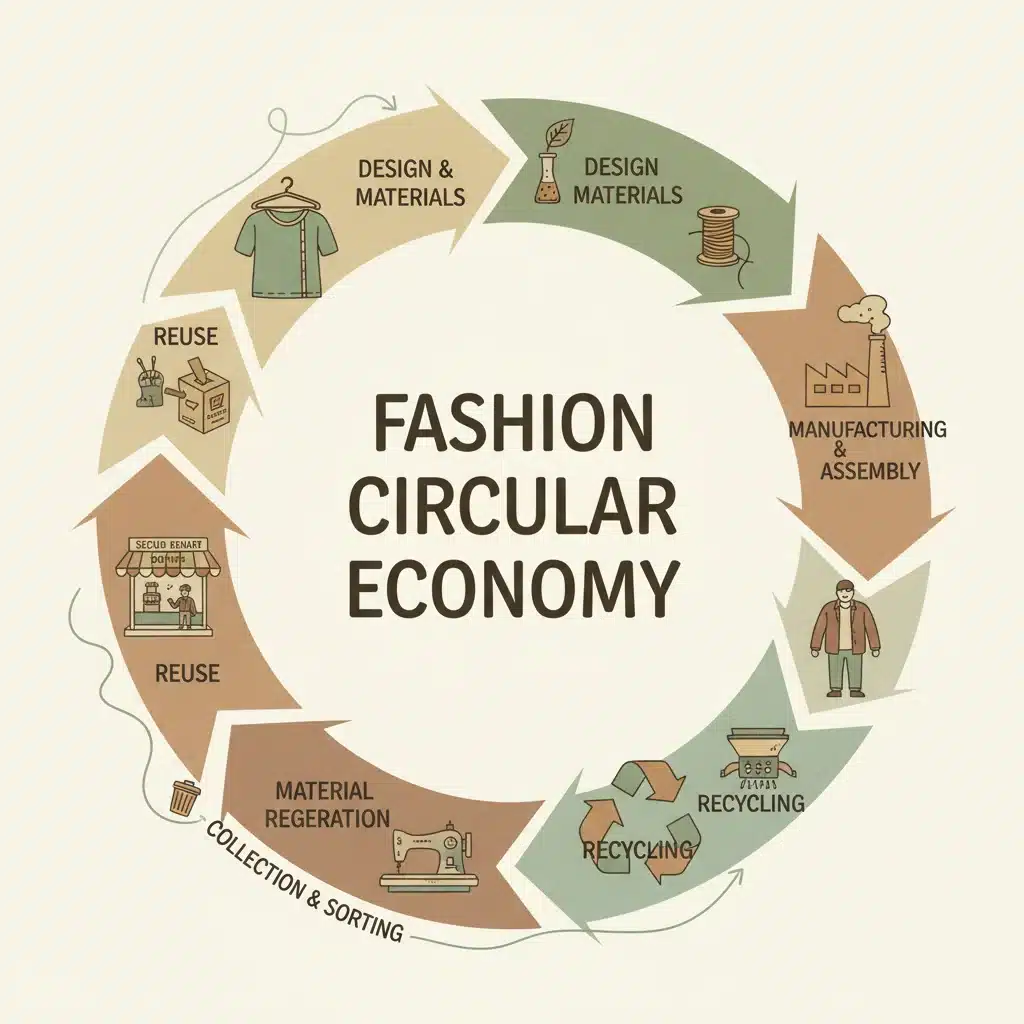
The goal is to design out waste and pollution, keep products and materials in use, and regenerate natural systems. This includes take-back programs, repair services, and advanced recycling technologies for all types of fibers. The shift from a linear “take-make-dispose” model to a circular one is essential for long-term eco-fashion sustainability.
Transparency and Traceability:
Consumers are demanding greater transparency about where and how their clothes are made. Blockchain technology and other digital tools are enabling brands to provide detailed information about their supply chains, ensuring ethical practices and environmental responsibility.
Longevity and Quality:
The fastest way to reduce fashion’s environmental impact is to buy fewer, higher-quality items that last longer. Brands are increasingly focusing on timeless designs and durable construction to encourage conscious consumption and combat fast fashion’s disposable culture.
Innovative Dyes and Finishes:
The dyeing and finishing processes in fashion can be highly polluting. Innovations in natural dyes, waterless dyeing techniques, and non-toxic finishes are crucial for reducing the chemical footprint of clothing.
Making Sustainable Choices: Your Role in Eco-Fashion Sustainability
As consumers, our choices hold immense power. By understanding the long-term benefits and challenges of materials like organic cotton, recycled polyester, Tencel Lyocell, hemp, and Piñatex, we can contribute to a more sustainable fashion industry. Here are some actionable steps:
- Read Labels Carefully: Look for certifications (GOTS for organic cotton, FSC for wood-based fibers, OEKO-TEX for chemical safety) and material compositions.
- Prioritize Durability: Invest in well-made garments that will stand the test of time, reducing the need for frequent purchases.
- Support Transparent Brands: Choose brands that openly share information about their supply chains and environmental commitments.
- Consider the Entire Lifecycle: Think about how a garment is made, how long it will last, and what will happen to it at the end of its life. Can it be repaired, repurposed, or recycled?
- Educate Yourself: Stay informed about new sustainable innovations and industry best practices.
- Care for Your Clothes: Extend the life of your garments by following care instructions, washing less frequently, and repairing minor damage.
The journey towards full eco-fashion sustainability is ongoing, but the progress made by these materials and the industry’s evolving focus on circularity and regeneration offer a hopeful vision for 2026 and beyond. By collectively demanding better, we can drive meaningful change and ensure that our fashion choices contribute positively to the planet and its people.
The comparison of these five materials highlights a crucial truth: there is no single “perfect” sustainable material. Each comes with its own set of environmental trade-offs and benefits. The key lies in understanding these nuances and supporting continuous innovation across the board. Organic cotton excels in natural biodegradability and soil health, while recycled polyester addresses plastic waste. Tencel Lyocell offers a closed-loop system for wood-based fibers, hemp provides unparalleled resilience and regenerative qualities, and Piñatex showcases the potential of agricultural waste. The future of eco-fashion sustainability will likely involve a blend of these materials, chosen strategically for their specific applications and optimized for their entire lifecycle impact.
Furthermore, the conversation around eco-fashion sustainability is increasingly moving beyond just raw materials to encompass the entire design philosophy. “Design for longevity” means creating pieces that are not only durable but also timeless in style, reducing the impetus for consumers to constantly seek new trends. “Design for recyclability” means constructing garments with single-fiber compositions or easily separable components to facilitate end-of-life processing. These design principles are becoming just as vital as material selection in achieving true eco-fashion sustainability.
Another significant aspect is the role of technology. Advances in biotechnology are leading to the development of entirely new bio-fabricated materials, such as those grown from mycelium (mushrooms) or lab-grown fibers that mimic silk or wool without animal input. These innovations, while still in early stages of commercialization, hold immense promise for revolutionizing the material landscape and pushing the boundaries of eco-fashion sustainability even further. Digitalization also plays a part, with virtual prototyping reducing sample waste and AI-driven supply chain optimization minimizing inefficiencies.
The long-term benefits of investing in truly sustainable materials are not just environmental; they are also economic and social. Brands that commit to eco-fashion sustainability often build stronger consumer trust and loyalty, attract ethical investors, and contribute to healthier communities. The shift towards sustainable practices fosters innovation, creates new green jobs, and reduces business risks associated with resource scarcity and environmental regulations. Ultimately, the move towards eco-fashion sustainability is about building a resilient and responsible industry that can thrive in harmony with the planet.
In conclusion, navigating the world of eco-fashion in 2026 requires a critical eye and a commitment to continuous learning. By understanding the intricate details of material sourcing, production, and end-of-life, consumers can make choices that genuinely support eco-fashion sustainability. The materials discussed – organic cotton, recycled polyester, Tencel Lyocell, hemp, and Piñatex – represent the vanguard of this movement, each offering unique contributions to a greener, more ethical fashion future. Your choice today shapes tomorrow’s fashion landscape.